Erweiterte Tracking Requests mit ChatGPT

Management Summary
Server Side Tracking
Server-side tracking has emerged as a powerful alternative to traditional client-side tracking, offering digital marketers greater precision and control over their data collection processes. As privacy regulations tighten and web browsers continue to implement anti-tracking measures, server-side tracking provides a robust solution to maintain accurate data while respecting user privacy. By shifting the data processing from the user’s device to a secure server, this method minimizes the risk of data loss or manipulation, ensures faster page load times, and bypasses browser-based limitations, such as cookie restrictions.
Server Side Tracking in the GTM
Server-side tracking with Google Tag Manager (GTM) offers a seamless way to manage and process data from various sources while mitigating privacy concerns and enhancing performance. This approach requires setting up a dedicated server environment to handle data processing, which is achieved through the creation of a GTM Server Container. The container, hosted on a server using options such as Google Cloud Platform’s App Engine, Cloud Run or other environments supporting Node.js, intercepts and processes incoming HTTP requests before forwarding them to the desired platforms. The client-side GTM container sends data to the server-side container, which is then responsible for managing tags, triggers, and variables for efficient data processing. This configuration allows for centralized data processing and control, improved data accuracy, and compliance with evolving privacy regulations, making server-side tracking with GTM a powerful tool for digital marketers.
Enriching requests with a tracking server
The enrichment of tracking requests with the tracking server refers to the process of augmenting collected data with additional information, enhancing the insights gained through analysis. With server-side tracking in Google Tag Manager (GTM), this enrichment is achieved by leveraging the server-side container’s capabilities to modify, supplement, or transform the data before forwarding it to the desired platforms.
By enriching tracking requests, digital marketers can reap several benefits, including:
- Improved data quality: Enriching tracking data ensures that the collected information is more accurate, complete, and reliable, ultimately leading to better-informed decision-making.
- Enhanced privacy: Sensitive user information can be anonymized, aggregated, or removed on the server-side, ensuring compliance with privacy regulations and protecting user privacy.
- Cross-platform consistency: Data enrichment on the server-side allows for consistent tracking parameters and values across multiple platforms, simplifying data analysis and reporting.
In GTM, the enrichment process typically involves setting up custom tags, triggers, and variables within the server-side container. These custom configurations allow marketers to manipulate data by adding new parameters, adjusting existing values, or transforming data formats before it reaches the target platforms. Additionally, server-side tracking in GTM enables integration with third-party APIs or databases to further augment the data with external information. By leveraging GTM’s server-side tracking capabilities for data enrichment, marketers can unlock valuable insights and optimize their digital marketing strategies.
Implementing Request Enrichment
In Google Tag Manager (GTM), there are multiple ways to enrich tracking data, providing valuable insights for your digital marketing strategies. Two of the most commonly used methods include custom clients and custom variables. Custom clients allow you to intercept and manipulate incoming requests, enabling you to modify or add parameters before sending the data to the desired platforms. Custom variables, on the other hand, provide a flexible way to generate or manipulate data that can be used within your tags or other variables to enrich the tracking information. In this blog post, we will focus on custom clients and custom variables.
Enrichment through Custom Variables
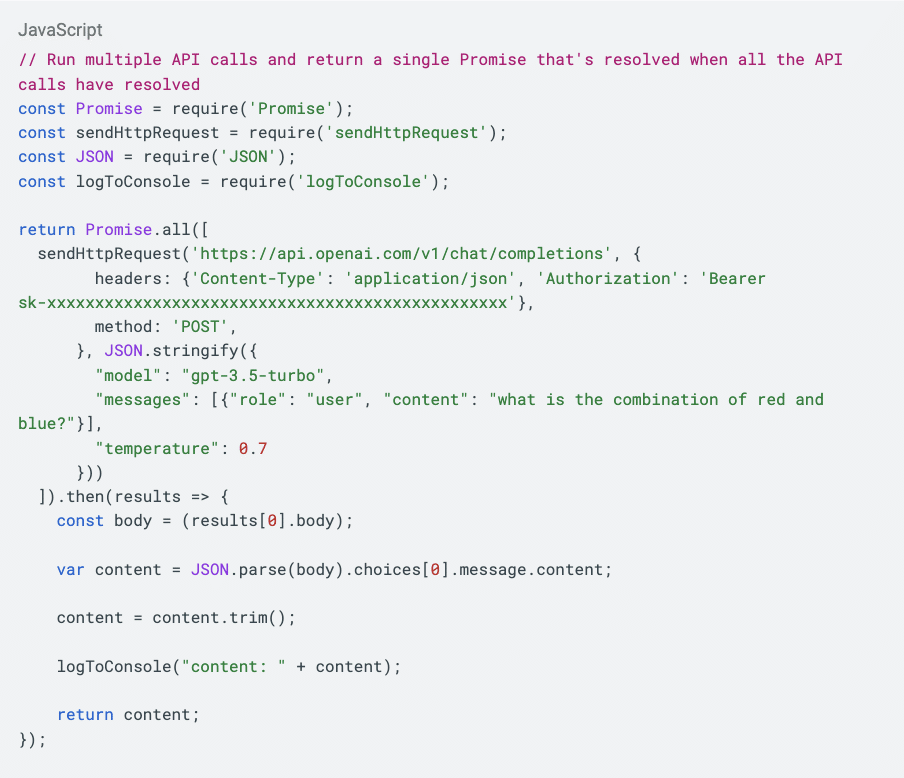
Using a custom variable it is possible to access HTTP endpoints. Following is an example of a simple variable accessing chatGPT. In my test scenario I’ve named the variable “answer machine”. A real use case would most likely include a parameter sent to the HTTP endpoint for the request, the user or a product to be identified.
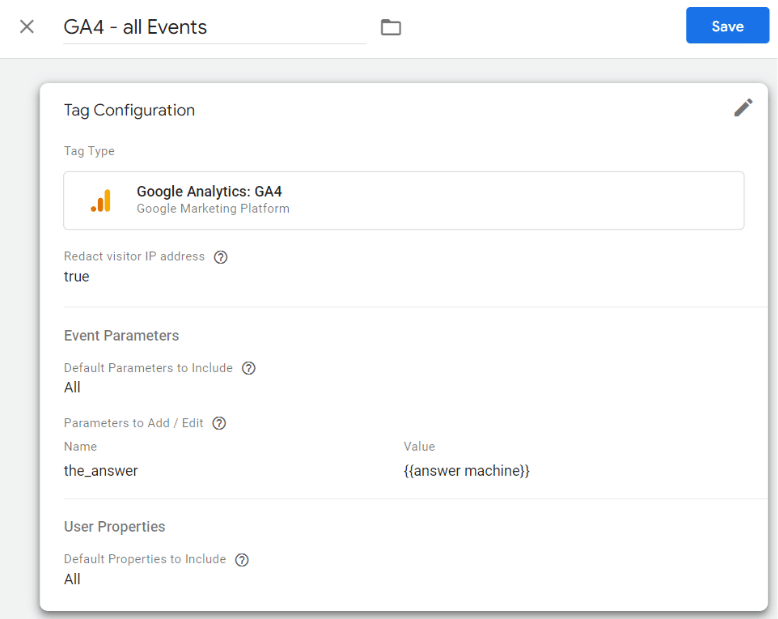
In the GTM this variable can then be used like any other variable, for example to send its value with a GA4 request.
Enrichment through Custom Clients
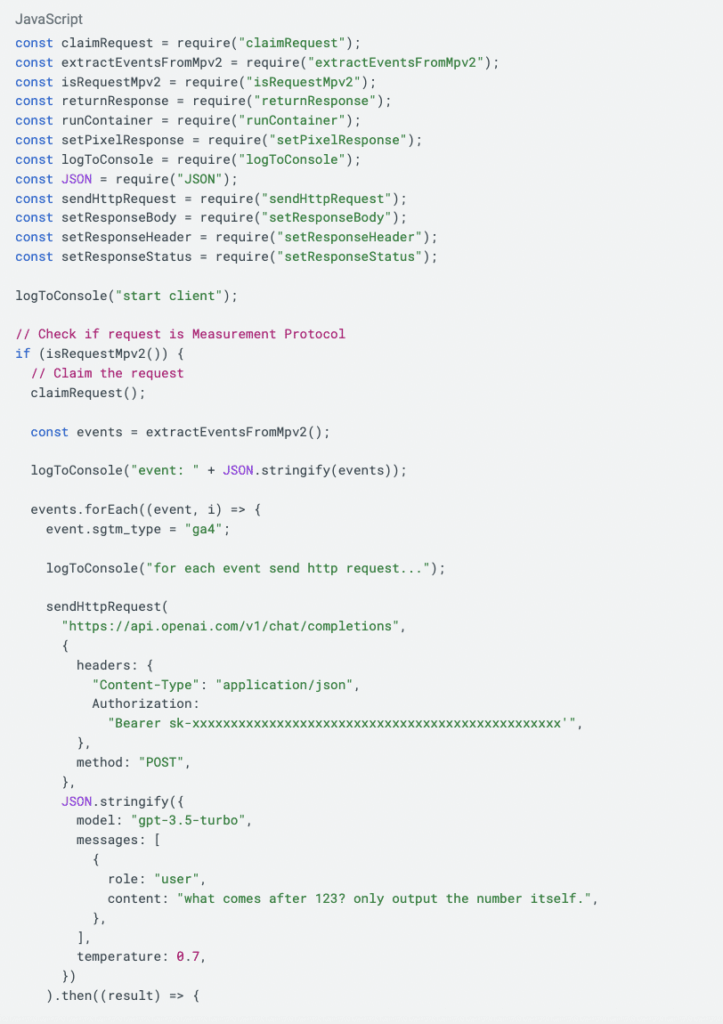
It might be necessary to restructure the whole request / event and not just change parameters, in this case, 3rd parties can be accessed directly in a custom client.
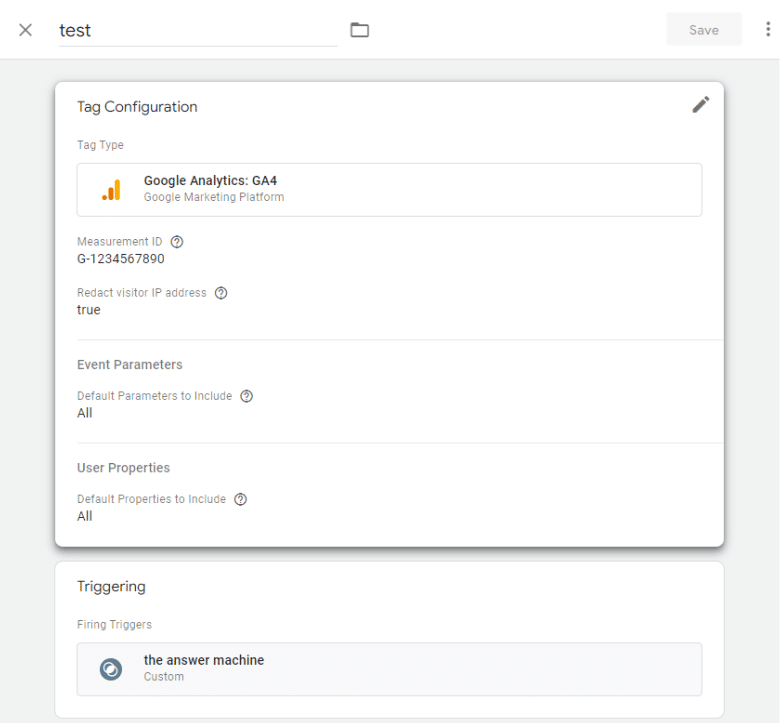
For this example I have created a custom client called “the answer machine”. It handles GA4 requests but before running the container it queries chatGPT and extends the event. While this is a simple example it gives the framework to restructure the event within the client.
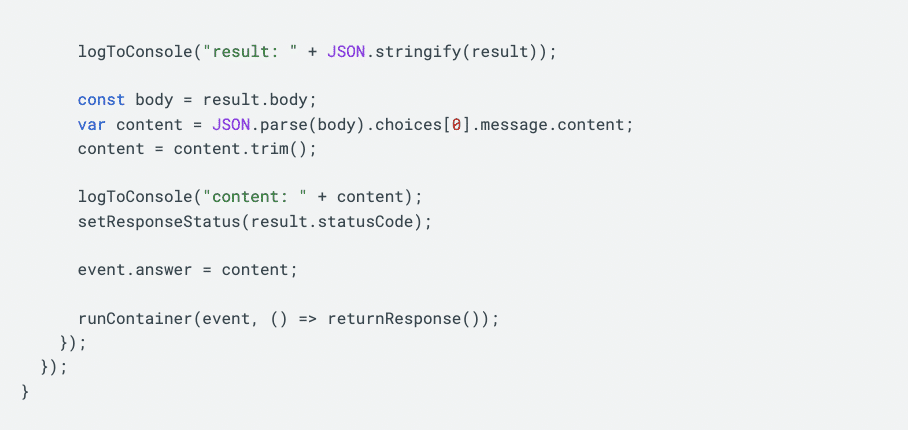
This client would be then used to trigger GA4 requests and contain the added “answer” parameter:
In conclusion, server-side tracking with Google Tag Manager presents a powerful tool for digital marketers to gain more precise control over their data collection processes. By enriching tracking requests with custom clients and custom variables, marketers can enhance the quality and accuracy of their data, ensuring better insights and optimization of their marketing strategies. As privacy regulations continue to evolve, server-side tracking and request enrichment with GTM offer a viable solution to maintain data integrity and compliance while delivering exceptional performance.
Are you ready to unlock the full potential of server-side tracking and take your digital marketing strategy to the next level? Don’t hesitate to reach out to me at sba@e-dialog.group. We are eager to help you navigate the complexities of server-side tracking with Google Tag Manager and ensure that you’re using the most effective methods for enriching your tracking data.