JENTIS Consent Management: Compliance meets data strategy

Management Summary
Manage consent centrally, ensure data quality: JENTIS combines SDK, Engine, Legal Hub and Consent Management Platform integration for maximum flexibility.
Consent management in transition
Regulations such as the GDPR, the ePrivacy Regulation (aka EU Cookie Law) or changing browser standards are making it increasingly complex for companies to use data both legally compliant and complete, and at a high level of quality. At the same time, users and supervisory authorities are raising their expectations regarding transparency and control.
JENTIS’ consent management solution includes integrated “Privacy Controls”—preconfigured legal and regulatory functions that ensure a baseline level of data protection. In addition, the interface allows flexible settings to meet further or specific requirements, comply with the specifications of data protection officers, and ensure the GDPR-compliant use of information as a reliable basis for high-quality analyses.
What core components does JENTIS Consent Management include?
JENTIS Consent Management consists of three core components that work seamlessly together:
-
01
JENTIS Software Development Kit (SDK)
The interface between website/app and the JENTIS platform
-
02
JENTIS Engine
Central control hub for data and consent logic
-
03
JENTIS Legal Hub
Administration layer for legal requirements and audits
In addition, there is integration with common Consent Management Platforms (CMPs), which are often already in use within the company.
The JENTIS Software Development Kit (SDK): The interface to the website or app
The JENTIS SDK is typically a JavaScript snippet that is integrated directly into the website or app—similar to Google Tag Manager (GTM) or Analytics (GA4). It forms the technical bridge between the website and JENTIS and acts like an “interpreter” between users’ decisions and the JENTIS Engine—without having to develop every piece of logic from scratch.
The JENTIS Consent JavaScript SDK is a sub-module of the JENTIS SDK that focuses exclusively on consent information and enables developers to read, set or specifically request consent settings via script.
Implementing the JENTIS Software Development Kit requires technical know-how and thinking beyond the obvious, because the kit’s functionality depends on correct consent data from the Consent Management Platform.
In practice, the SDK performs three key tasks:
- It loads the JENTIS logic and implements consent decisions.
- It communicates with the Consent Management Platform (CMP) and passes on its settings.
- It controls data collection and ensures that only permitted data flows are initiated.
The JENTIS Engine: Built-in control hub
The JENTIS Engine runs in the background and orchestrates all data flows. Based on the information provided by the SDK, it decides:
Which vendors are allowed to receive data?
Vendors are external providers that process data via a website or app (e.g., Google Analytics, Meta, TikTok, AdTech or CRM tools). Via the Consent Management Platform (CMP), they can be categorized in a granular way (e.g., statistics, marketing, functional…).
Instead of vendors controlling their cookies and scripts themselves, the JENTIS Engine takes over this task centrally. This enables more flexible and GDPR-compliant control—but requires technical know-how during configuration.
Which tags or pixels are triggered?
Instead of running original tags/pixels directly in the browser, the Engine intercepts the data internally, processes it server-side, and sends the information as a request to the providers. This ensures better data quality—even in the case of opt-outs.
Where must data be anonymized or blocked?
Based on the CMP settings, the Engine can block or anonymize data before passing it on to vendors. This ensures GDPR-compliant anonymization or pseudonymization. Note: System outages can impair tracking if the Engine is not working correctly.
Good to know:
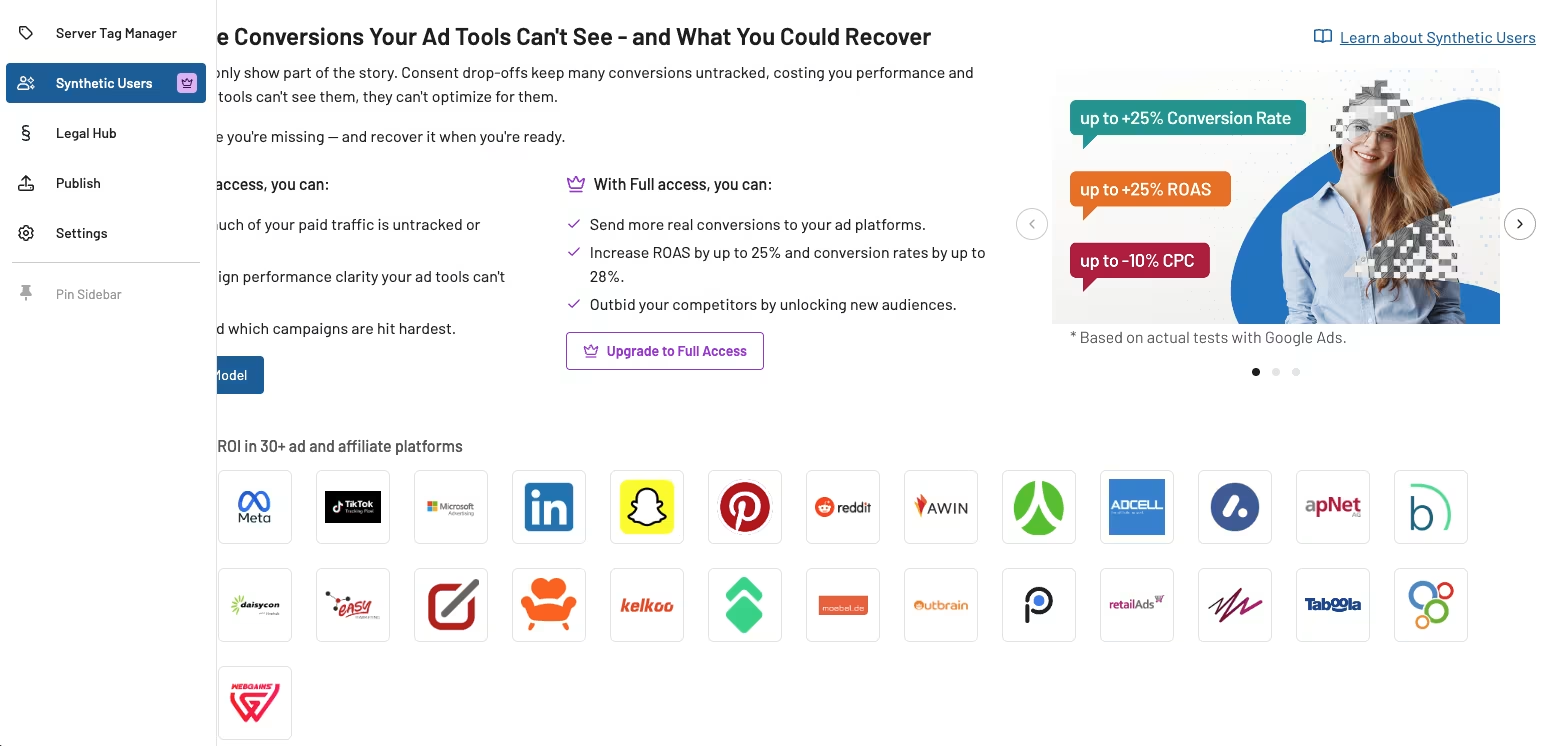
The Engine also enables the use of JENTIS’ own Synthetic Users model—anonymized, modeled data points that enable meaningful analyses even without individual consent. This feature is helpful, but should not be understood as a replacement for real consents and real data.
The JENTIS Legal Hub: Central compliance management
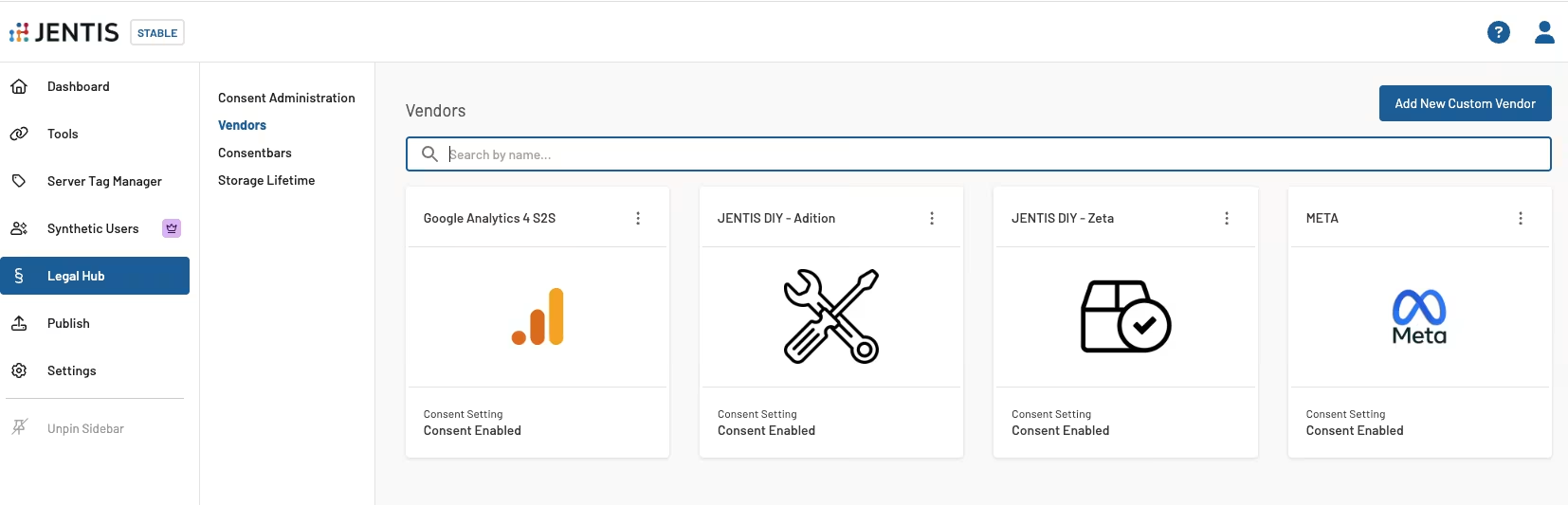
The JENTIS Legal Hub is the centerpiece for legal and regulatory settings within the JENTIS platform. It enables central management of consent and data protection rules, so companies always maintain an overview.
Key functions at a glance:
Central overview of all vendors
Which tools are integrated, which data do they process, and on what legal basis?
Granular control
Settings can be customized per vendor or category—flexibly and at any time.
Automatic synchronization
Changes are rolled out system-wide and implemented in conjunction with the JENTIS SDK.
Transparency for audit & documentation
The Legal Hub supports the provision of evidence for compliance requirements.
Especially in complex tool landscapes with many stakeholders, the Legal Hub creates a consistent basis for consent decisions. It takes both technical and legal requirements into account and ensures that adjustments are made centrally, consistently and transparently.
Interaction with the Consent Management Platform (CMP)
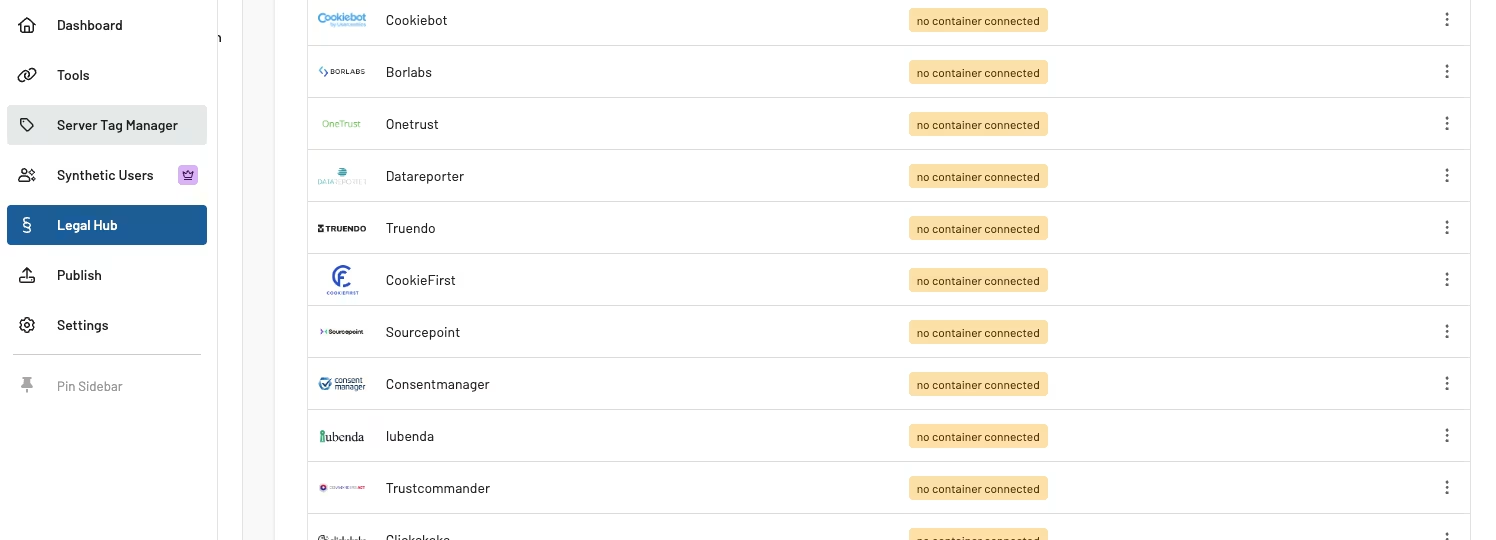
Many companies already use a CMP (e.g., Usercentrics, OneTrust, Cookiebot, etc.). JENTIS does not replace these tools; it complements them, resulting in clearly defined roles and optimized collaboration between the CMP and JENTIS:
- The Consent Management Platform asks users for their consent.
- The JENTIS SDK reads the response and forwards it to the Engine.
- The JENTIS Engine implements consent technically and ensures
- that the settings defined in the Legal Hub are executed accordingly.
In the JENTIS Legal Hub, numerous common CMPs are already available as preconfigured connectors and can be used directly for linking.
What are the benefits of JENTIS Consent Management for companies?
Companies benefit on several levels:
- Vendor independence: JENTIS enables flexible and GDPR-compliant vendor management without being dependent on a single provider.
- Better data quality: GDPR-compliant Synthetic Users close data gaps in the event of opt-outs.
- Central control and documentation: GDPR-compliant tracking is embedded in the process, adjustments due to legal changes can be managed centrally, and consent decisions are documented in a traceable manner.
For which companies is JENTIS Consent Management particularly worthwhile?
- Companies with complex tool landscapes: Many vendors and AdTech, CRM or analytics solutions in use.
- Organizations with high data protection requirements: Industries such as finance, healthcare or e-commerce, where compliance is critical.
- Teams that need transparency: Marketing, data & legal departments benefit from a clear, consistent consent basis.
- Companies with international reach: Different legal requirements (GDPR, CCPA, etc.) can be mapped centrally.
How do you get started?
The introduction of JENTIS Consent Management takes place in clearly structured phases. This facilitates implementation and ensures that results become visible quickly.
Typical project phases
- Analysis of the existing infrastructure
- Integration of the JENTIS SDK
- Configuration in the Legal Hub
- Integration with existing CMPs and vendors
Project duration
The project duration depends heavily on the complexity of the tool landscape. With simple setups, initial results are visible within a few days; with extensive infrastructures, implementation can take several weeks.
Conclusion
The JENTIS Consent Management System combines SDK, Engine and Legal Hub into a strong unit. It is particularly worthwhile for companies with complex tool landscapes or high data protection requirements. While implementation requires technical know-how and involves a certain amount of effort, JENTIS offers a future-proof solution that reconciles data protection with the need for data-driven decisions.