Creatives are the new targeting: Why content controls the algorithm today

Management Summary
We’ve heard the phrase “Creative is the new targeting” a lot recently. But what’s really behind it? To understand this, we need to rewind for a moment.
Creatives instead of targeting – how did this come about?
Do you remember the days when you could set target groups with razor-sharp precision? “Women between 20 and 30 who love yoga and like to drink oat milk lattes”? Back then, users were sitting in digital glass houses. It was easy to align targeting precisely with the data collected.
However, the world changed dramatically between 2021 and 2025. New data protection guidelines and more difficult tracking (keyword iOS 14+ and the end of third-party cookies) forced platforms like Meta to rethink. In order to continue placing ads with the right people, they developed a system that goes far beyond simple interest filters: a highly complex image processing system based on computer vision and machine learning.
A closer look at the technology: creative fingerprinting
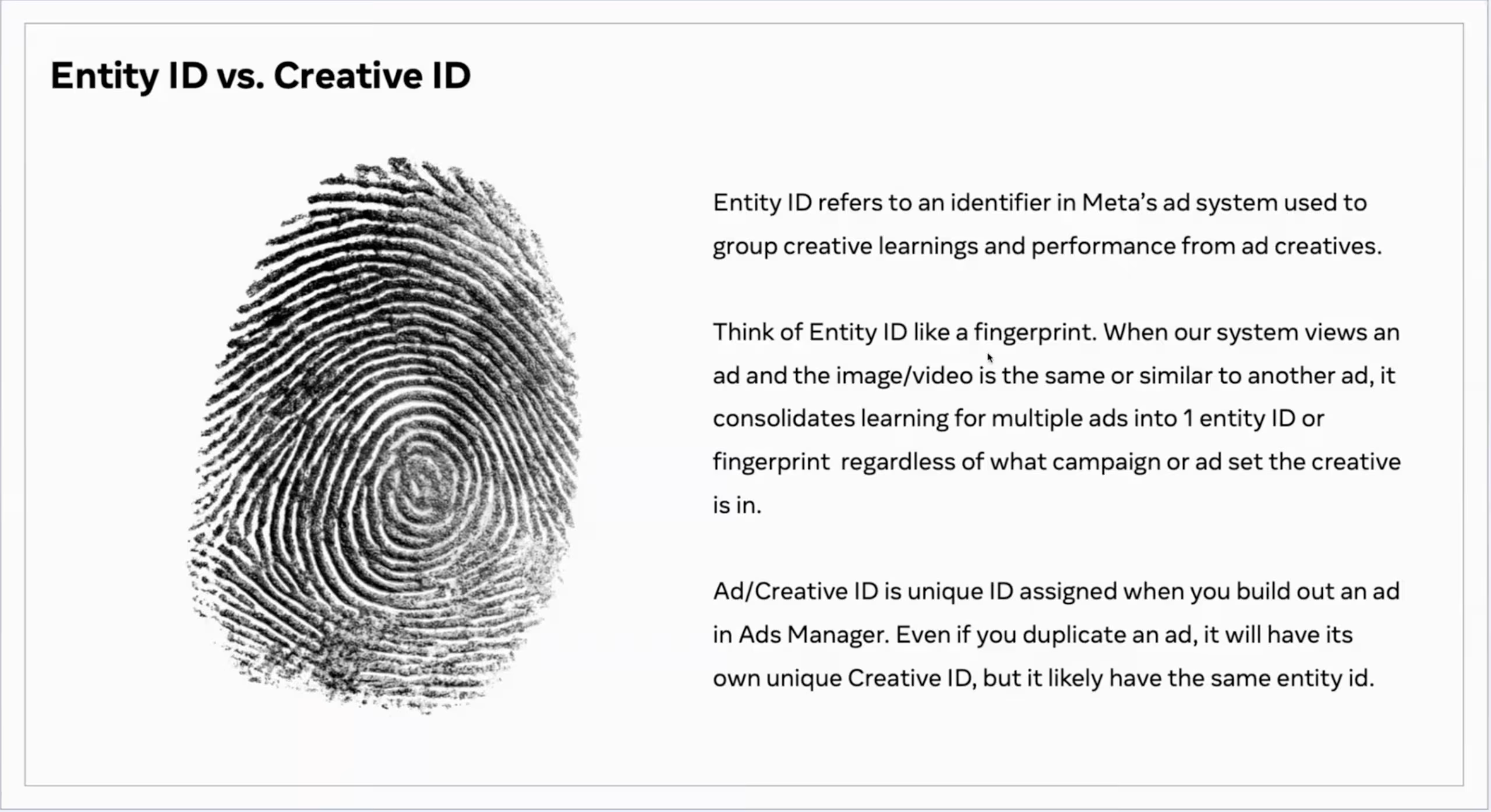
This system works with so-called creative fingerprinting. You can imagine it like this: Every time you upload a creative to Meta, the algorithm scans every single element. It recognizes objects, colors, text in the image, the dynamics of a video and even the mood of the people shown.
The algorithm extracts data from this visual information and compiles it into an individual digital fingerprint. This fingerprint contains everything that makes up the content of the creative and it is precisely this imprint that determines to whom the ad is shown.
Source: https://www.youtube.com/watch?v=WzldNeVfSEQ
👉 The video also explains very well how the whole thing works.
What is the problem with conventional campaigns?
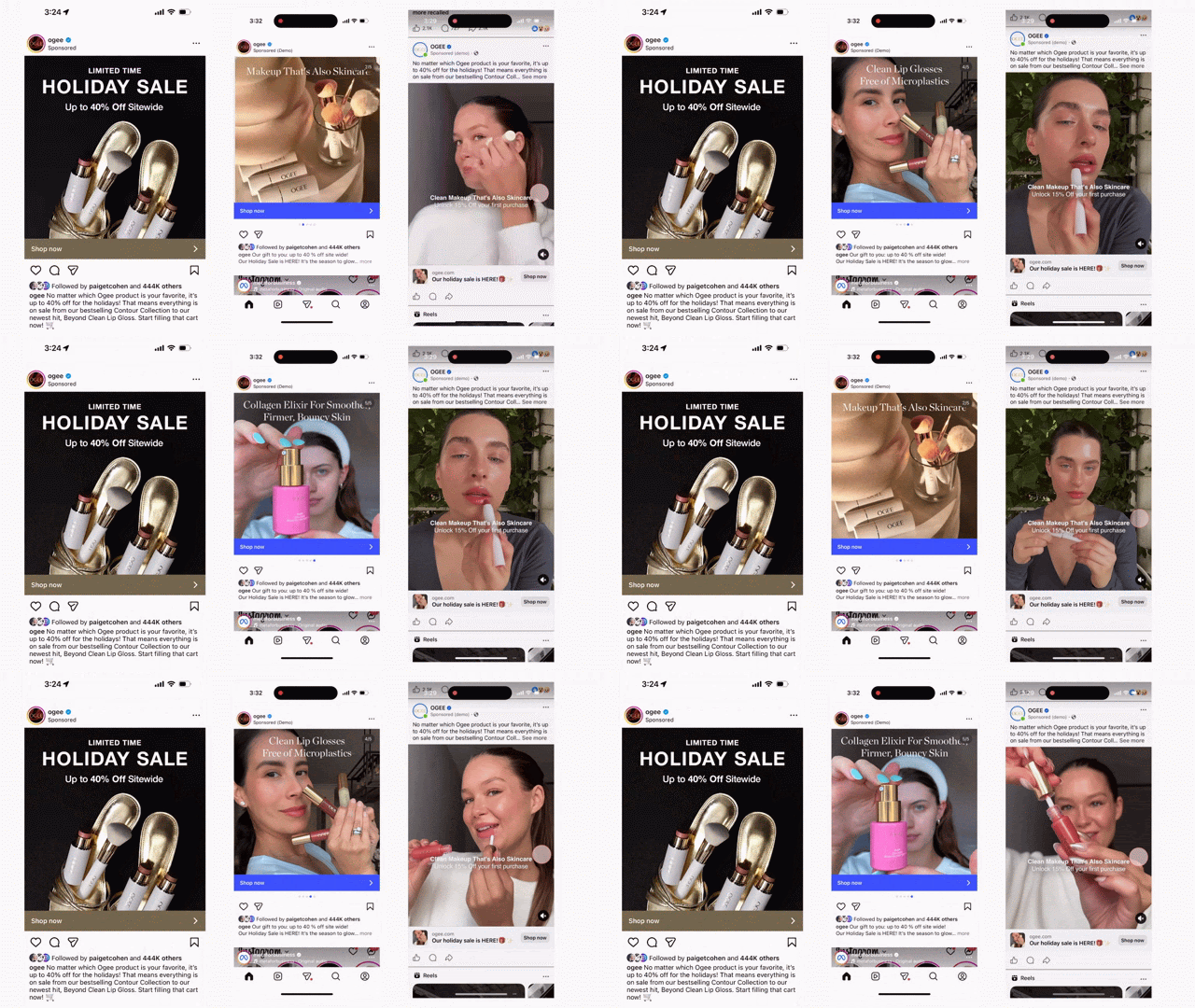
In practice, several variations of an ad are often placed. But this is exactly where many advertisers fall into a trap. Let’s take a look at a typical example:
-
Version A: A photo of a woman laughing and holding a product in her hand (blue background).
-
Version B: The exact same photo, but with a yellow background.
- Version C: The same photo with a “Buy now” button in the corner.
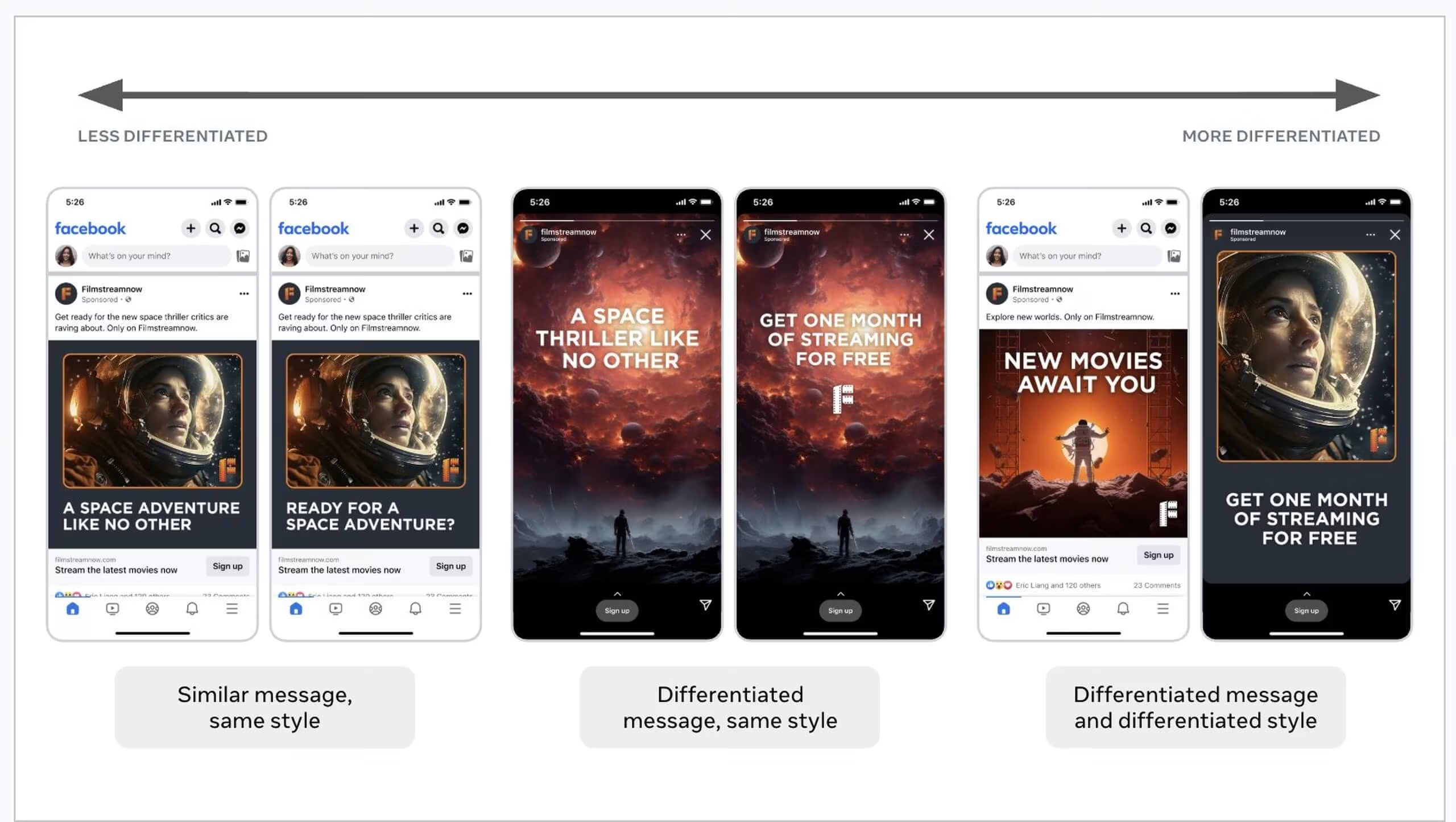
For us humans, this looks like three different displays. For the algorithm, however, these three versions produce almost identical fingerprints. As the key image information hardly differs, the system plays all three variants to the same group of people. The result: the target group constantly sees almost the same thing, becomes bored and performance drops due to ad fatigue.
Quelle: https://x.com/oliverwhudson/status/1975185255406452763
This is where Creative Diversification comes into play
True diversification means giving the algorithm completely different signals so that it can tap into different user types.
- Variant 1 (UGC style): A shaky cell phone video in which a customer unpacks the product and gives his honest opinion. (Signal: authenticity, social proof).
- Variant 2 (Aesthetic/Minimalist): A high-quality studio photo of the product in front of an empty background without people. (Signal: design, quality, status).
- Variant 3 (problem solver/graphic): An infographic that uses text overlays to explain which specific problem the product solves. (Signal: functionality, ratio).
This diversity results in completely different fingerprints. The algorithm recognizes that variant 1 works better with young, trend-conscious users, while variant 3 appeals to rational decision-makers. In other words, the creatives virtually choose their own target group.
Source: https://www.facebook.com/business/news/demystifying-creative-diversification
And what happens now?
It’s time to take a close look at your current campaigns. Try to put on the analytical glasses of the algorithm and ask yourself the following questions when looking at your ads:
- Do I show the same types of people or demographics over and over again?
- Are the environments and scenarios in my pictures almost identical?
- Do I only use a single content format (e.g. only static images)?
- Does my storytelling always follow the same approach?
If you realize that you’re going round in circles, it’s time to experiment. The rule here is: the proof of the pudding is in the eating. Be brave and try out directions that you have previously avoided:
- Funny content or memes.
- Illustrative styles or animations.
- Emotional storytelling that tells a deep story.
- Raw content that appears unfinished and approachable (“lo-fi”).
- Behind the Scenes.
Let your imagination run wild. The algorithm is now so precise that it understands where your ads will be received. You will often discover unexpected potential in target groups that you didn’t even have on your radar before.
The new mindset: your creative garden
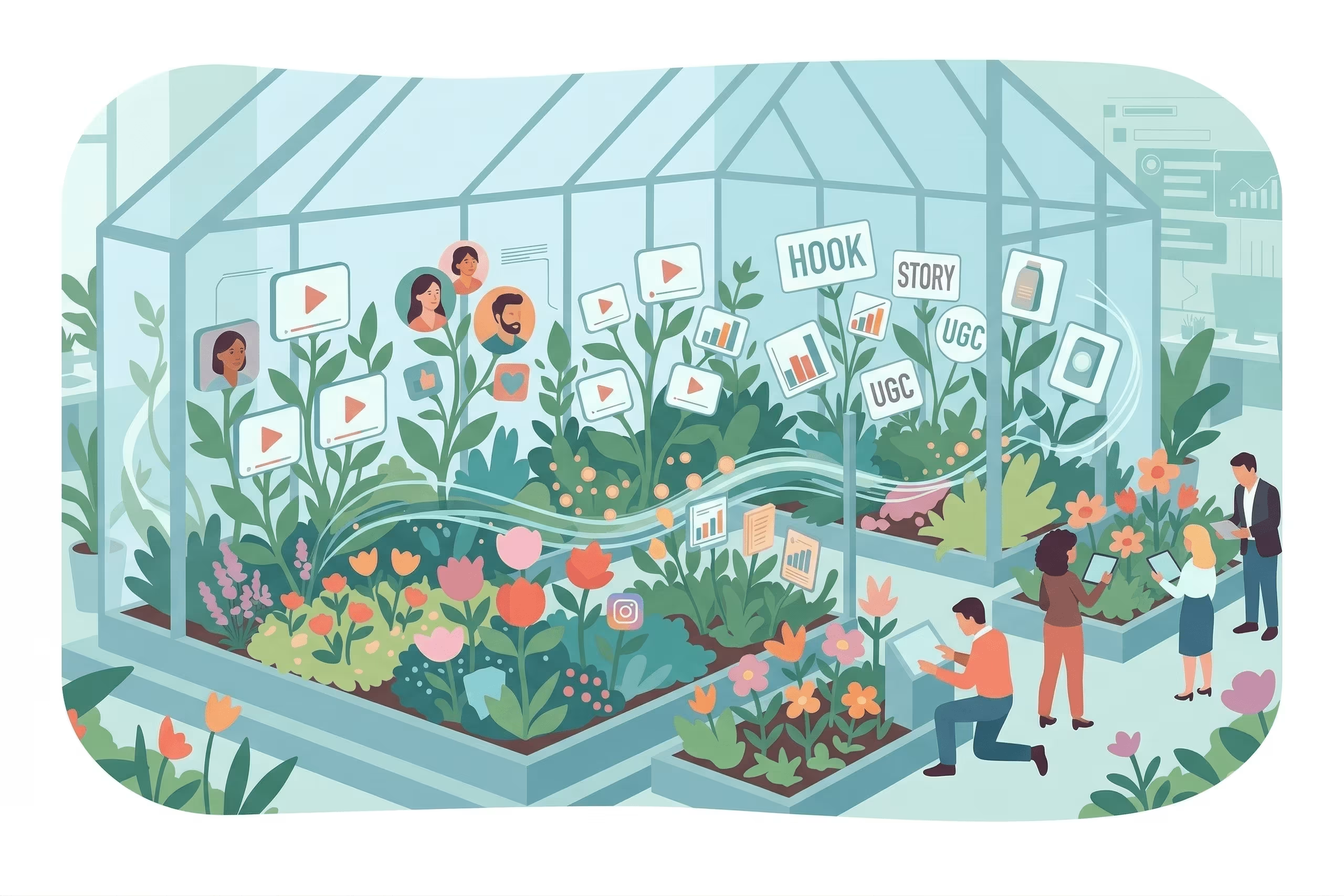
We need to move away from the idea that a single ad is like an arrow that we shoot right into the center of a target with targeting. This “best ad” mindset is outdated. Today we are moving towards a “best ecosystem” mindset.
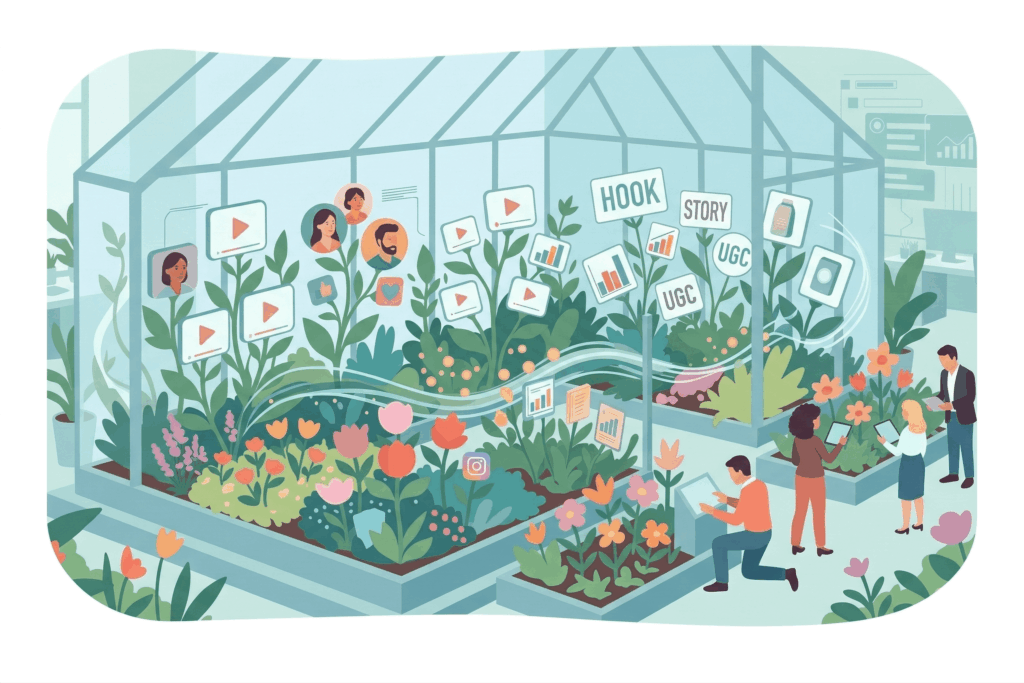
Think of your advertising strategy as a garden: Instead of frantically trying to plant the one perfect tree, you create an entire ecosystem. Your various creatives are the seeds that you scatter.
- Some seeds emerge on dry soil (rational buyers).
- Others need a lot of sun and attention (emotional stories).
- Others only flourish in the shade (niche interests).
By “planting” a variety of creatives, you let the algorithm decide which seed grows best in which place. You don’t force growth through technical settings, but create the conditions under which connections to your target group can develop organically. A healthy creative garden is diverse, resistant to ad fatigue and always finds a way to reach new customers.
Source: AI-generated with Nano Banana
The most important facts at a glance
This means for the future of your advertising campaigns:
-
01
Content is the new targeting
The image content and the message control who sees your ad.
-
02
Understanding algorithms
Design your creative so clearly that the AI immediately recognizes what it is about and who is being addressed.
-
03
Creative Strategy = Targeting Strategy
If you want to reach your target group today, you have to invest in content variance, not in settings hacks in the ad manager.
-
04
Genuine diversity
Only profound differences in design will open up new groups of buyers.
In the end, the only thing that counts in the digital advertising world is what sticks in the user’s feed. The era of complex nesting in the ad manager is over, making way for an era in which the craft of creation takes center stage again. Critically analyze your current ads and dare to take radical new paths in storytelling. The algorithm is ready for your best ideas. Now it’s up to you to feed it with the right signals and exploit your full potential.