Five reasons marketing campaigns stall—and how to get them back on track!

Management Summary
We all know the situation: you put a lot of energy into a marketing campaign, KPIs are supposed to go through the roof, but reality often looks very different. Instead, many campaigns perform rather modestly—if not downright “sh***y”. Iris Handlsberger and Maria Holzinger from e-dialog set out to find the five most important reasons why this happens and show how advertisers can do better.
1. You are still relying on outdated tracking methods
Privacy laws, browser updates, and changing user behavior have completely reshaped marketing tracking. Instead of relying on long-incomplete third-party cookies, successful campaigns today use privacy-first strategies, first-party data, and alternative identifiers.
Chart: 60% of traffic has not been coming via Chrome for quite some time… So what now?
Source: Interactive Powers’ elaboration
The reality: a large part of the target audience hardly leaves any usable traces online anymore—whether due to iOS restrictions, ad blockers, or privacy-friendly browsers. Anyone who continues to rely solely on classic cookies is excluding valuable segments and forgoing precise insights.

Our tip:
Build a solid first-partyData Strategy data foundation, combine it with contextual targeting, login alliances, or API-based conversions, and think cookieless attribution from the outset. This way, you also reach audiences outside classic tracking paths—and you become independent of the next browser or legal changes.
2. The strategy is: “It has always worked.”
Media consumption has changed significantly and continues to evolve. If the basic campaign strategy is not sound, no cookie in the world will get you out of trouble. Let’s look at the distribution of advertising budgets: almost 50% of spend goes into TV, followed by newspapers, and only then online. This distribution does not seem to reflect today’s media usage at all.
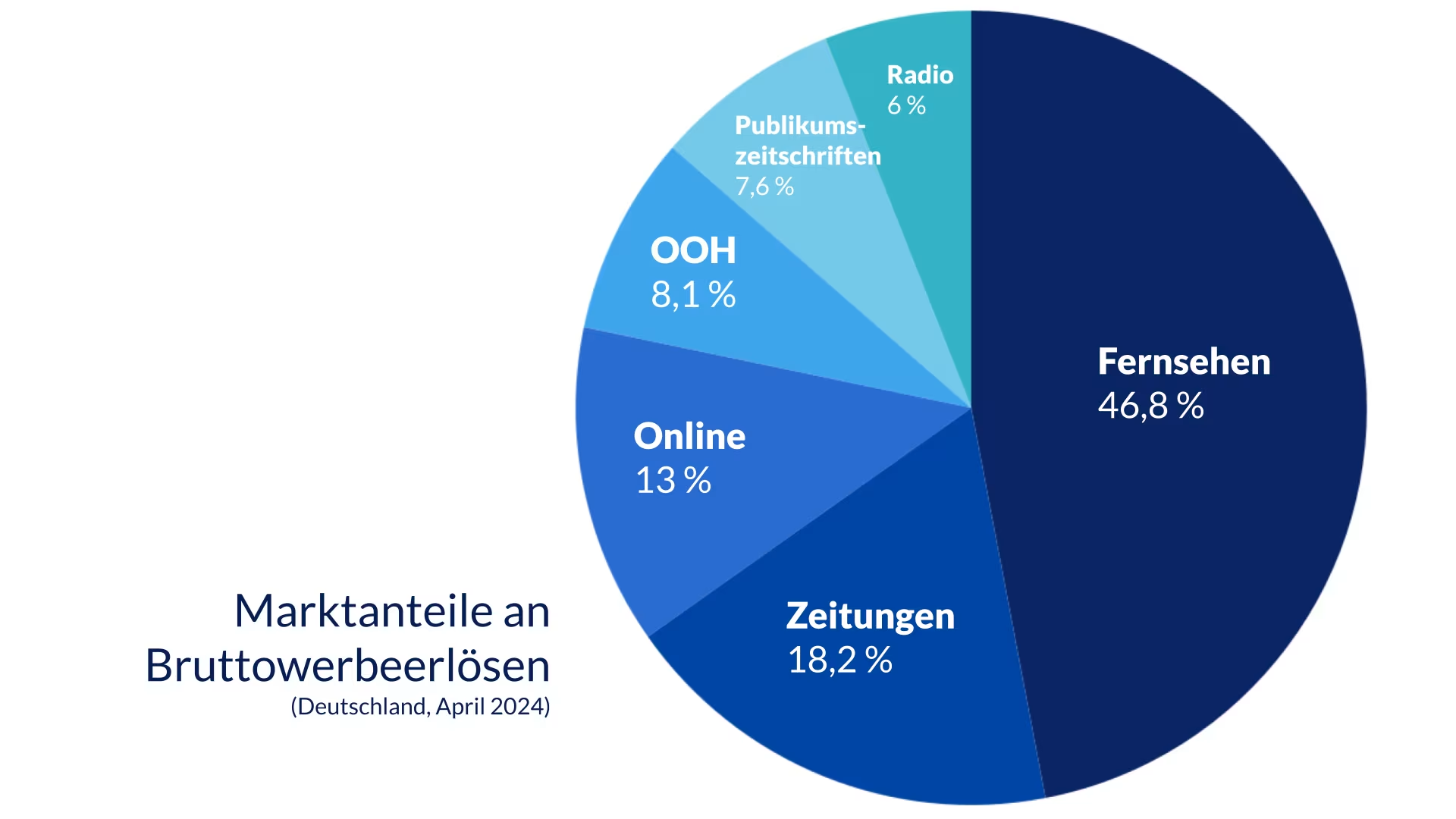
How are advertising budgets allocated?
TV is still the most-used medium, but usage is shifting toward streaming services, connected TVs, and YouTube. There are also major changes in print: although 18% of gross ad spend goes to newspapers, their usage is declining as news is consumed digitally. For example, Focus Online in Germany can reach nearly 37% of all internet users. Usage therefore does not necessarily align with the bookings we make. Existing structures are being held onto strongly, even though the possibilities are changing.
Source: Nielsen, Advertising Trend, April 2024
Our tip:
Allocate media budgets according to media usage and performance—not gut feeling. Use the full range of options: digital channels, booking options, data, and targeting. And invest in personalized content!
3. The same old creative is supposed to deliver
Creatives are the first touchpoint with the audience. Depending on the social network, we spend around 2 hours on these platforms and are constantly flooded with memes, reels, or images. Ads above all need to do one thing here: stand out and pull us out of the normal flow. A campaign can be set up perfectly, but in the end the ad asset plays a decisive role in campaign success—both in terms of the algorithm and the users. The creative is the sales driver par excellence, and the more personal, the better.
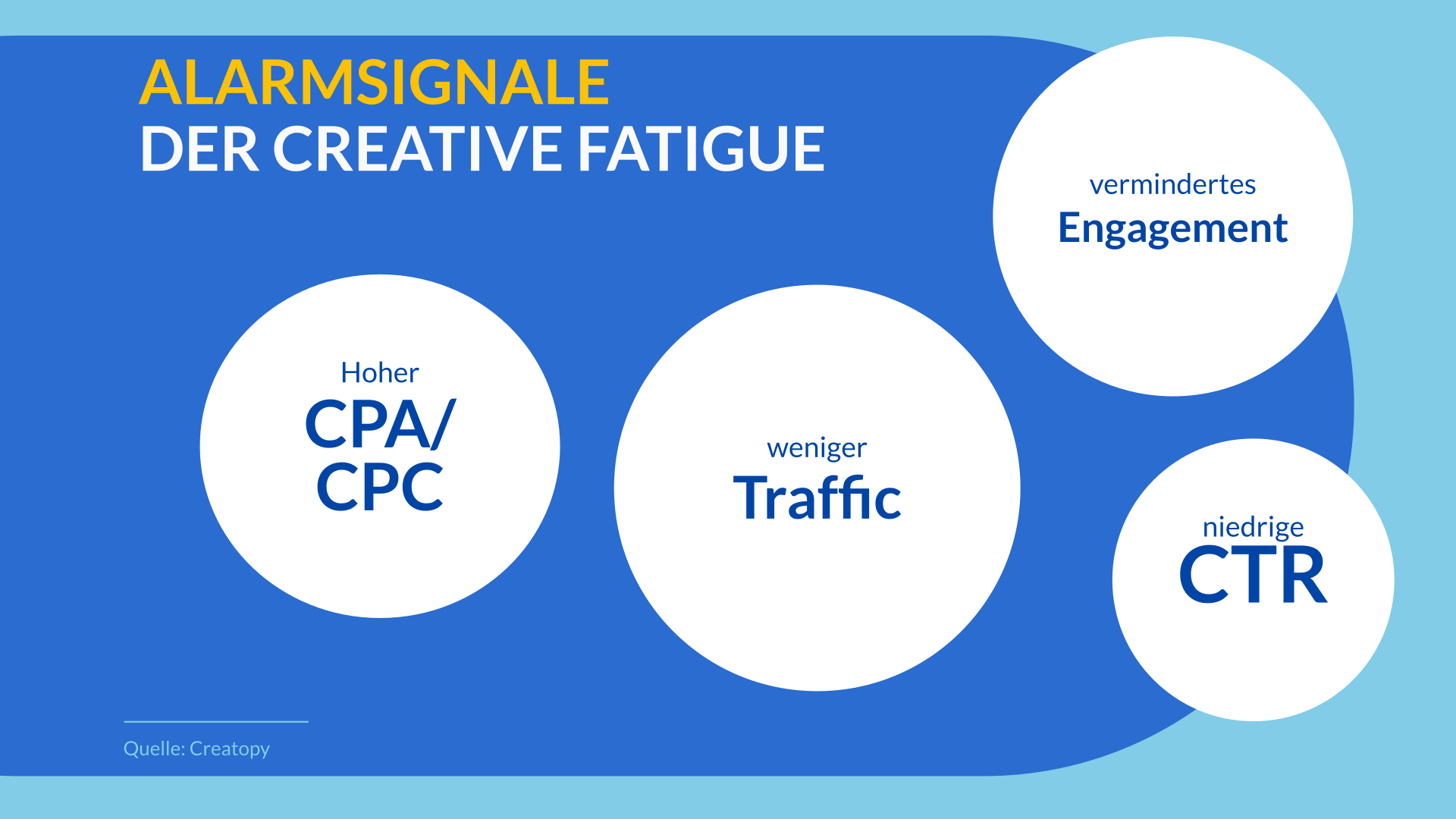
Anyone who uses the same strategy for all target groups is leaving enormous potential on the table. Pitfalls include, for example, when different campaigns with very different goals are supposed to use the same creative, or when high performance is expected from static ads. These are clear red flags and mean the audience is likely already experiencing—or will soon experience—creative fatigue. Creative fatigue means that ads lose effectiveness because the audience is repeatedly bombarded with the same messages and images and develops a sense of apathy or even aversion.
Source: e-dialog
Performance and creative are the secret sauce of every ad campaign—and the numbers prove it.

Our tip:
Personalize your messages to address a wide range of needs and interests and win new audiences. Involve creatives right at the start of the strategy process. More variety creates more engagement and larger audiences. Be bold and stand out from the crowd.
4. ROI is the only KPI that matters
Hard conversions such as ROI are often seen as the only true conversions. And of course, when it comes to closing, ROI, sales figures, or successful sign-ups matter. What is often forgotten or misjudged, however, is everything that happens beforehand—whether it is brand building, branding, the question of whether we are even reaching the right users, or whether they land on the website.
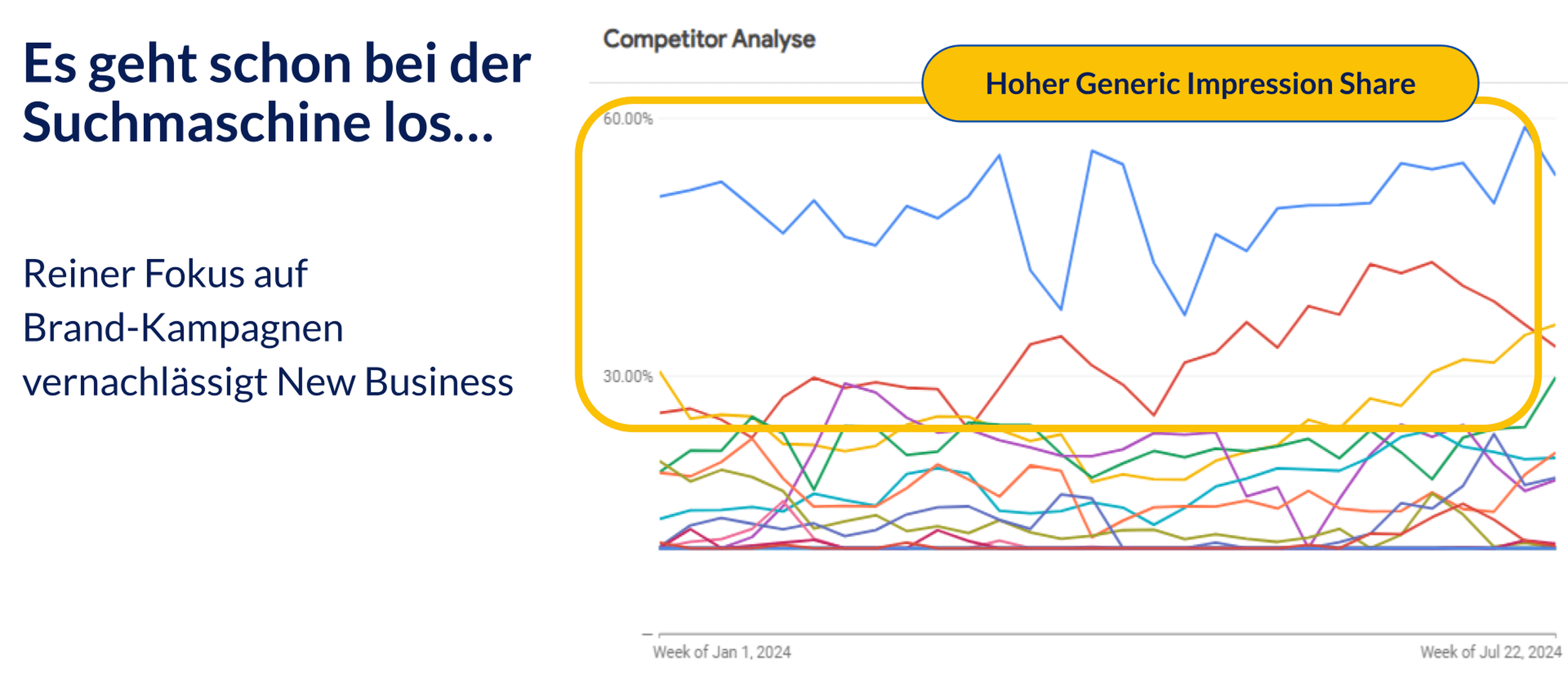
When we think of awareness, we usually think only of big TV campaigns, sponsorships, or emotional Christmas commercials. But it actually starts with the search engine—a channel that is not really associated with awareness and branding. If we place too strong a focus on brand campaigns in search campaigns—i.e., campaigns that include the brand name and assume users are actively searching for our brand—we neglect everyone who is not actively searching for it. Generic is usually more expensive, but it helps reach new users and ideally win customers from competing brands. To generate new business, you also need to invest in generic keywords.
Source: e-dialog
Brand building and branding are often neglected; the focus is only on leads or conversions. That is all well and good—but only if the conversion mindset is continued on the website, i.e., the website is tested for user experience and everything is tracked properly. Often people talk about conversions, and in the end the agency reports only impressions and clicks.
Our tip:
Make sure you have data ownership over your data and can report more than just clicks and impressions. Creatives are also often produced only for lead generation, as this phase brings in the most money.
Hard conversions alone are not enough. Lead campaigns without a strong brand are only half as effective.
Our tip:
Keep your users and their customer journey in mind—both in campaigns and on the website. If you want to report, you also need to track. In addition to hard conversions, look at upstream effects, keep your goals in mind, and track carefully.
5. Gut feeling is the magic formula
Gut feeling is important, but in campaign planning it can be validated very well with numbers. This turns gut feeling into data-driven gut feeling—through testing and A/B testing. In principle, anything can be tested. For example, if it is unclear whether the distribution of advertising budgets aligns with media usage, you should test how the channels perform.
Chart: Test, test, test—anything that changes must be checked!
Source: e-dialog
Our tip:
Pay attention to a good user experience. Far too often, users drop off on the website before the final step of the actual completion—this can be prevented. If you are unsure how, then test. Targeting can also be tested thoroughly. Anything that is changed should be validated with data.
Conclusion
These five reasons clearly show that success in marketing should not be left to chance. It is about breaking old patterns of thinking, daring to try new approaches, and above all: working in a data-driven way and testing continuously. Only then can we truly optimize our campaigns and achieve sustainable success.

Your e-dialog experts in this article:
As Director Media Consulting & Campaign Strategy, Iris Handlsberger is responsible for connecting the specialist areas of social media, search engine, and programmatic advertising to ensure a holistic presence and cross-functional client consulting. Her focus is particularly on the continuous development of these specialist areas and the associated channels, as well as testing new approaches and tools. As a lecturer at the University of Applied Sciences St. Pölten, she supports the development of new digital marketing talent and shares her expertise at numerous professional conferences & panels in the DACH region.
Maria Holzinger is a long-standing media, content, and creative expert. With her cross-industry experience, she specializes in strategic communication and creative development in dynamic environments.
At e-dialog, as Head of Creative, she is responsible for data-driven campaign and ad-asset concepts for international clients.
Featured image: YvonneFetz_StudioF