Google Ads Revolution Direct Creation Of Google Analytics 4 Target Groups In Google Ads

Management Summary
This article provides an overview of the new way to create Google Analytics 4 target groups quickly and easily in Google Ads and shows you what it looks like in detail.
Simplification of the workflow when creating target groups in Google Ads
Previously, the process of creating audiences in Google Ads based on Analytics data was cumbersome and time-consuming. You first had to create the target groups in GA4 and then migrate them to Google Ads. This process required not only constant switching between the two platforms, but also extensive coordination to ensure audiences were synced correctly.
This changes fundamentally with the new function. Now advertisers can create and edit custom audiences directly during campaign creation in Google Ads, based on the rich and diverse data GA4 provides. This integration greatly simplifies the process and allows for more seamless and efficient campaign management.
Automatic suggestions and custom segments
Another notable benefit of this innovation is Google Ads’ ability to automatically suggest appropriate custom segments based on user data and behavior in GA4. This feature allows advertisers to make their campaigns even more targeted and effective by targeting the exact segments that are most relevant to their products or services.
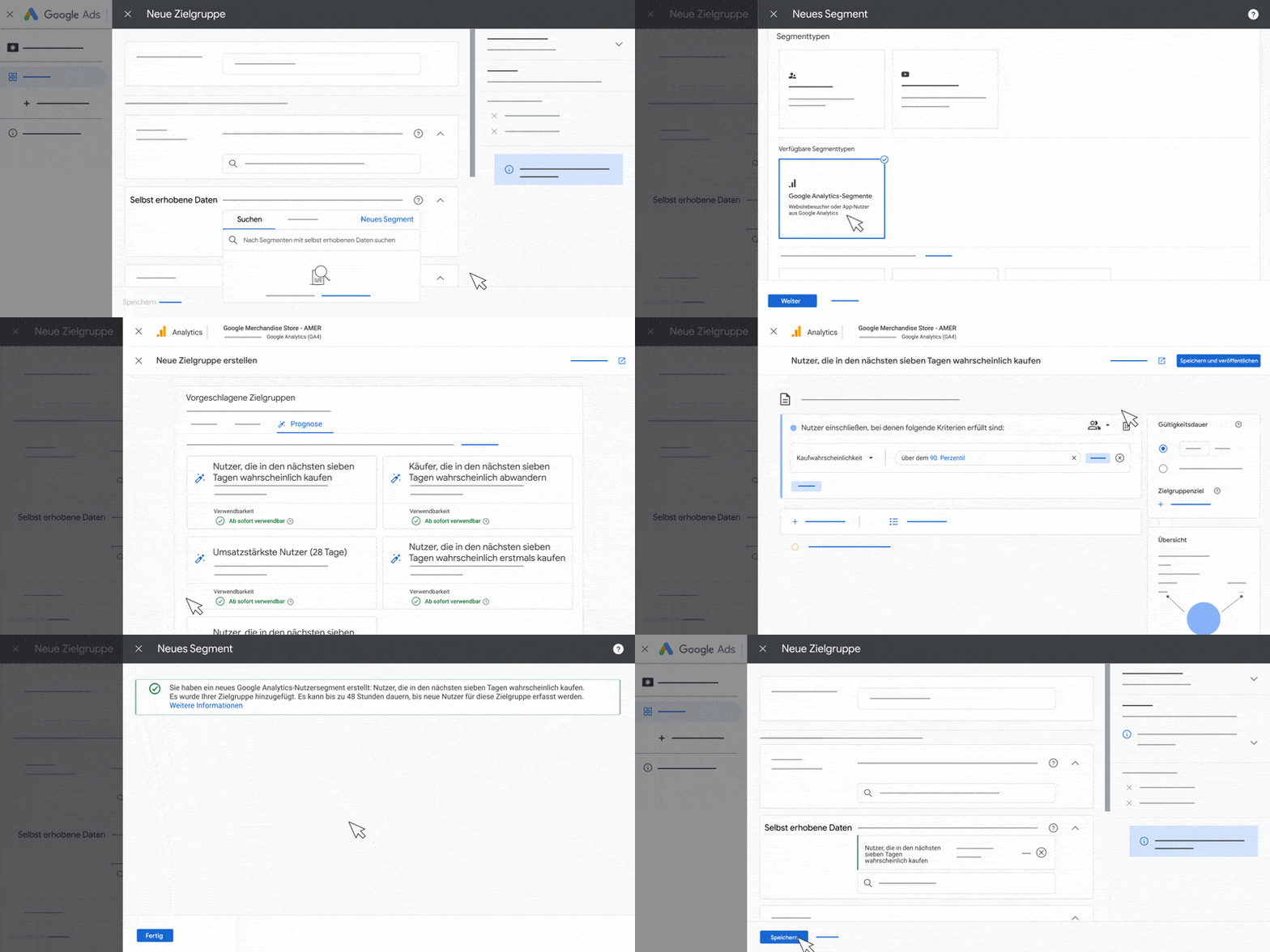
Source: Google Ads Help
Requirements for use
In order to use this new feature, some requirements must be met. First, the Google Analytics account and Google Ads Manager must be linked to each other. This ensures that data can be transferred seamlessly between the two platforms. In addition, data collection through Google signals must be activated to enable personalized advertising in GA4.
Automatic export via Publisher Provided Identifiers
Another technical improvement is the automatic export of data via Publisher Provided Identifiers (PPID). This means that the data used to create audiences can now be transmitted more efficiently and accurately, resulting in more precise and effective advertising campaigns.
What does this mean for advertisers?
Google’s announcement of this new feature is a significant development. Not only does it greatly simplify the audience creation process, but it also improves the quality and relevance of the audiences that can be used for advertising campaigns. For advertisers, this means more efficient use of their time and resources and ultimately an increase in campaign effectiveness. With this innovation, Google continues its tradition of developing innovative solutions that constantly change and improve the digital marketing landscape.