Prompt Engineering How To Use Ai To Your Advantage
Management Summary
Generative AI is on everyone’s lips right now – and for good reason. The possible uses seem almost endless and tasks that would have cost a person precious hours can now be done with just a few clicks. With this hype about AI, a whole new field of expertise emerged: prompt engineering.
But what exactly is prompt engineering?
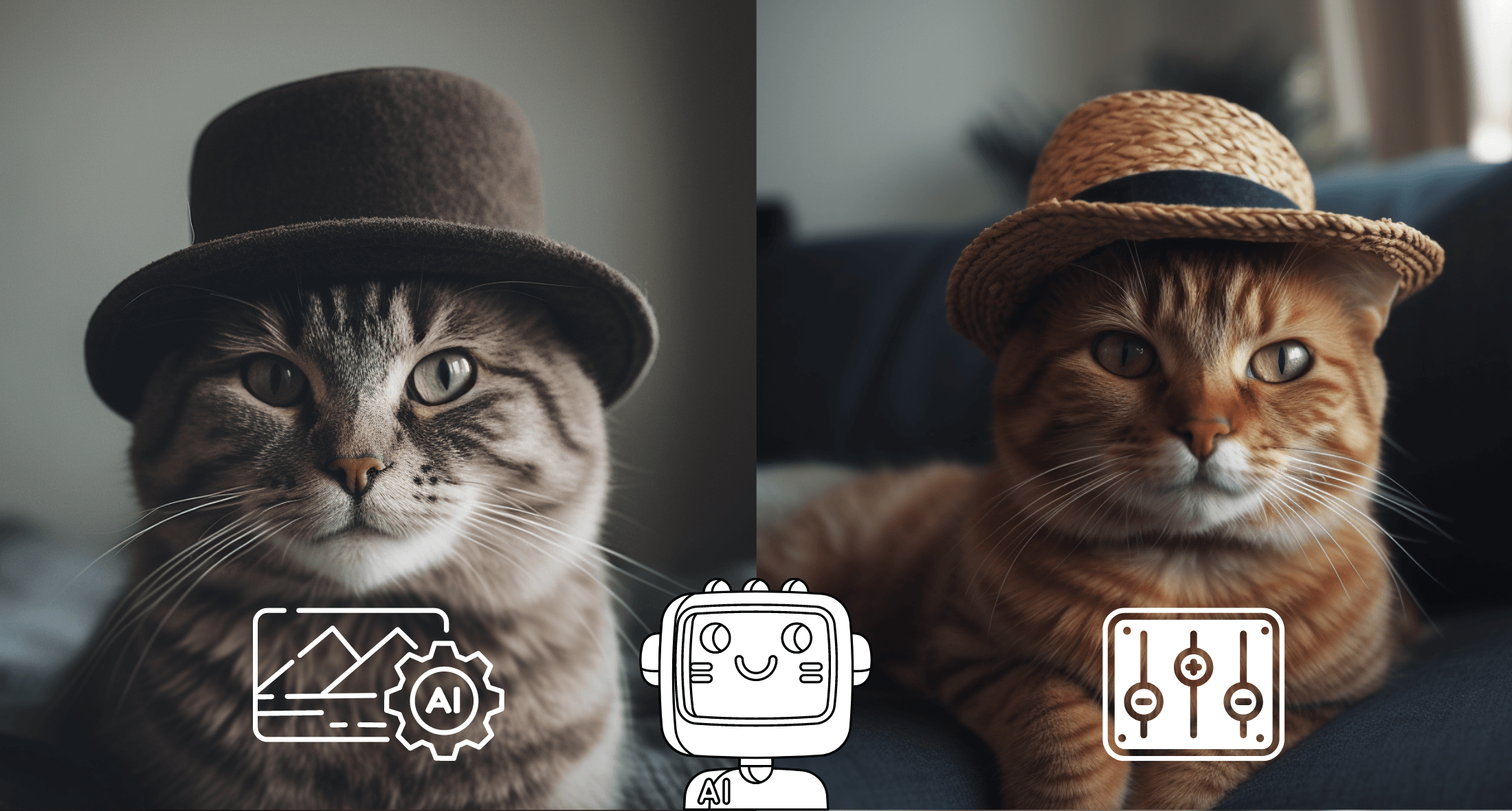
Prompt engineering is the process of designing text input – so-called “prompts” – to get AI models to generate desired results. This prompt tells the AI model exactly what it should do. An example of a mid-journey prompt could be: B. be: “cat with a hat”.
Midjourney results with prompt: “cat with a hat”
But what is so special about it? Quite simply: it is quite an art in itself to instruct AI models so that they deliver truly unique and targeted results. Because pretty much anyone can write the prompt mentioned above – and unfortunately that makes it interchangeable.
So if you want to generate exactly the outputs that you see in your mind’s eye, you have to practice prompt engineering. This is the only way to use the full potential of generative AI models and achieve truly relevant results – which can subsequently be used, for example, B. can also be used commercially.
What is the best way to learn prompt engineering?
Basically, every AI is about writing instructions that are as clear and concise as possible. This applies to ChatGPT as well as to Google Bard, to Midjourney as well as to Stable Diffusion and Runway Gen-2. You need a good understanding of language and how AI models interpret prompts to arrive at their results.
Here are some basic skills to help you:
Learn the basics:
Understanding how generative AI models work is an important starting point. Try to understand how AI models respond to prompts and how they process information. Use online resources or courses to gain solid basic knowledge. Basically, prompt engineering is similar in different AI models, but there are specific modifications and commands that are to be used program-specifically.
Improve your writing skills:
A key skill in prompt engineering is writing. You must be able to formulate clear, concise and targeted instructions. It’s also helpful to master different writing styles and know how to adapt them to consciously achieve different results.
Practice creative thinking:
One of the most challenging tasks in prompt engineering is creating innovative and unique prompts that lead to surprising and interesting results. This requires creativity, research and inspiration.
Hone your research skills:
Especially if you want to use your AI-generated content commercially, you need to be able to find and understand relevant information beforehand. This may include understanding the target audience, knowing the goals of the project, or researching specific topics. Only when you have recorded exactly what you need can you package these specifications into a prompt.
Practical tips for writing prompts
Aside from the basics mentioned above, there are also some general tips that can help you create effective prompts:
- Be precise:AI models require clear and specific instructions to achieve desired results. Avoid unclear or vague language and be as specific as possible in your instructions.
- Experiment:Try different approaches and see what works. Sometimes even a small change in the wording of a prompt can lead to a completely different result.
- Use keywords and commands:These vary depending on the AI model and can consciously control the output.
Here is a simple illustration of the tips, using the example from above: a cat in a hat. Instead of simply generating any cats with any hats, specific characteristics were set here and keywords and commands were used.
The result:The images generated are consistent in style, content and composition. So you get exactly what you had in mind.

Midjourney results with prompt: “white cat with a floppy hat, jungle, photorealistic, canon eos r8 –no collar”
This all sounds very simple and obvious. But to really master these skills – even with different generative AI programs – takes time and dedication. This is exactly why prompt engineering is increasingly establishing itself as a real field of expertise, a real career.
Conclusion – The future of prompt engineering
The future of prompt engineering looks promising. As generative AI models continue to develop and improve, the opportunities for prompt engineering will continue to evolve and expand. In the future, prompt engineering will be used to create even more amazing things. You can already see the first attempts: AI-generated films, music, art, books, articles, games and simulations.
The possibilities are endless. Prompt engineering is a powerful tool that has the potential to change the world. So it’s best to start now!
Each of us should seize the opportunity to at least master the basics in order to be able to use AI competitively. Or, of course, you can get experienced prompt engineers to take on this task.