Smart Shopping Campaigns 8211 Shopping Campaigns With Goals

Management Summary
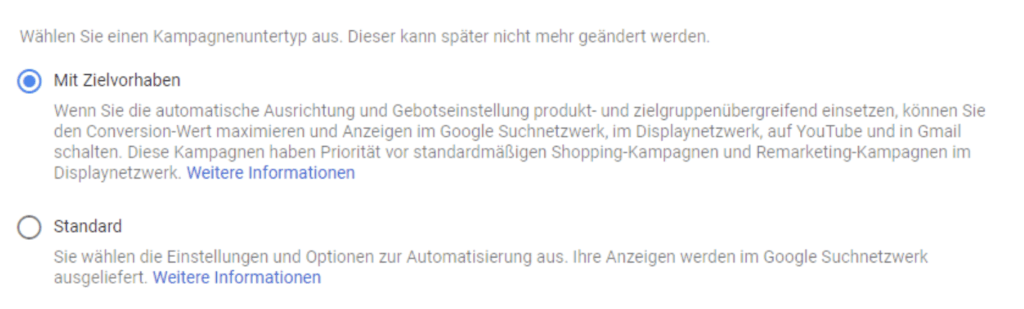
In this article we will show you how you can benefit from it and what you need for the right setup.
User purchasing behavior & campaign management
Buying behavior has changed significantly in recent years. More and more users are looking for products, information, reviews or local availability before making a purchase. The entire customer journey has become significantly more complex and the purchasing process is influenced by many online and offline channels. Reaching the right user and therefore the potential customer at the right time with the right message is the biggest challenge for the numerous online retailers.
Those tooThe complexity of campaign management is increasing. Different optimization options for manual bid adjustment for devices, locations, advertising schedule, target groups, demographic characteristics, ad formats or the use of remarketing segments are time-consuming.
These manual campaign adjustments are becoming increasingly comprehensive and also depend heavily on the individual user and their individual progress in their customer journey. In addition, many signals that are available to a machine learning algorithm, for example (that’s up to 70 million signals), cannot be addressed manually. Here, so-called smart bidding can help us optimize the campaigns!
Smart Bidding: Optimize campaigns with machine learning
Many advertisers are still skeptical about automated campaign adjustments. They only trust the algorithms to a limited extent or expect positive results immediately after application. However, it should be noted that Smart Bidding requires a certain amount of time until the algorithms work optimally. Only after approx. 7 to 15 days and the completion of the learning phase (the duration depends on the data basis) are the machines able to optimize the campaign to the set goals and generate the best possible results for advertisers.
The new generation of shopping campaigns is based onMachine learningand makes it easier to manage them, optimize results and reach the right customers across the entire Google advertising network. Google algorithms analyze user data and factors such as seasonality, search term, device, location, placement, etc. On the advertiser side, information such as: promotions, shopping cart value, product category is taken into account.
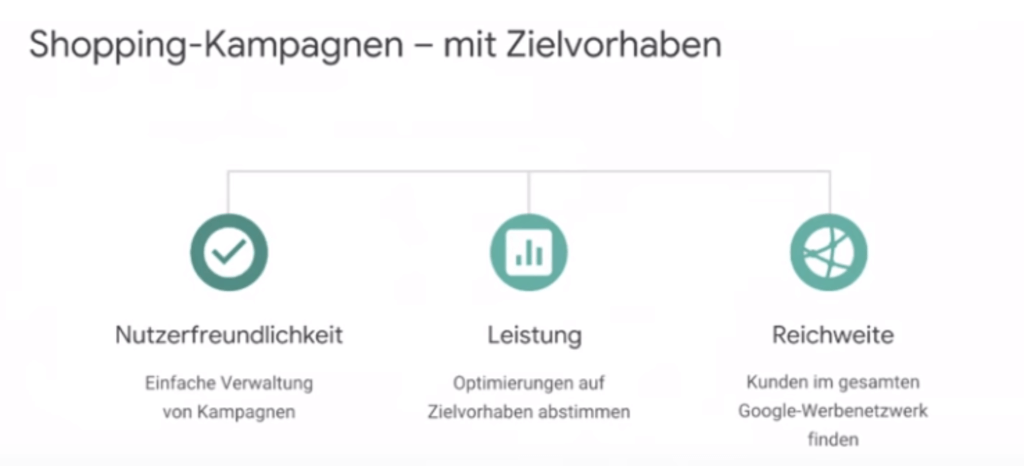
How do Smart Shopping Campaigns work?
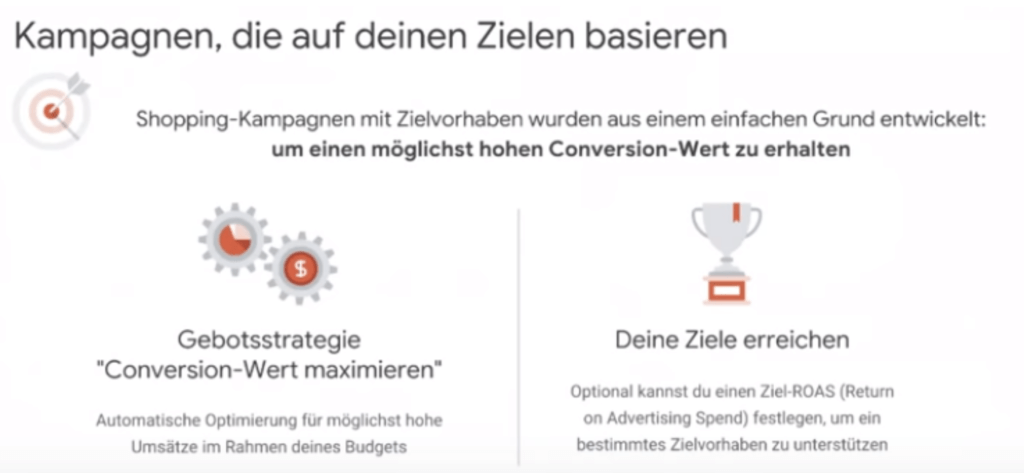
The main goal of the new shopping campaigns with goals is to maximize the conversion value (sales) and aim for the highest possible ROAS. The bids are automatically optimized for each search term, each user and in real time according to the predefined goal.

With itSmart biddingTo function optimally, it is importantset realistic targets and limit ad deliveryto prevent. As a best practice, Google recommends using the target ROAS around 2 to 3 weeks after the start of the campaign in order to enable the machines to have an optimal setup in the learning phase.
The benefits of Smart Shopping Campaigns with Goals are:
- Beginner-friendly campaign management
- A campaign covers multiple Google channels to reach the right customer
- Shopping and remarketing are therefore linked in one campaign
- Optimized budget allocation between channels
- Automated ad creation and ad display
- Automatic selection of placements to achieve better performance
What do you need to start Smart Shopping Campaigns?
In order to actively use the new campaign with goals, the following requirements are necessary:
- Google Shopping data feed and a link to Google Merchant Center
- at least 20 conversions in the last 45 days
- Remarketing tag on the website and remarketing lists with at least 100 active users
- Conversion pixel including transfer of conversion values
A similar setup applies to the creation of the ads as with the already known responsive ads. The following images and text are required:
- Logo in the Merchant Center
- Ad image
- Short ad title
- Long headline
- Description
- Final URL
Where are the ads shown?
Smart shopping campaigns combine traditional shopping and display remarketing campaigns and play them in the channelsSearch, Display, YouTube and Gmail.
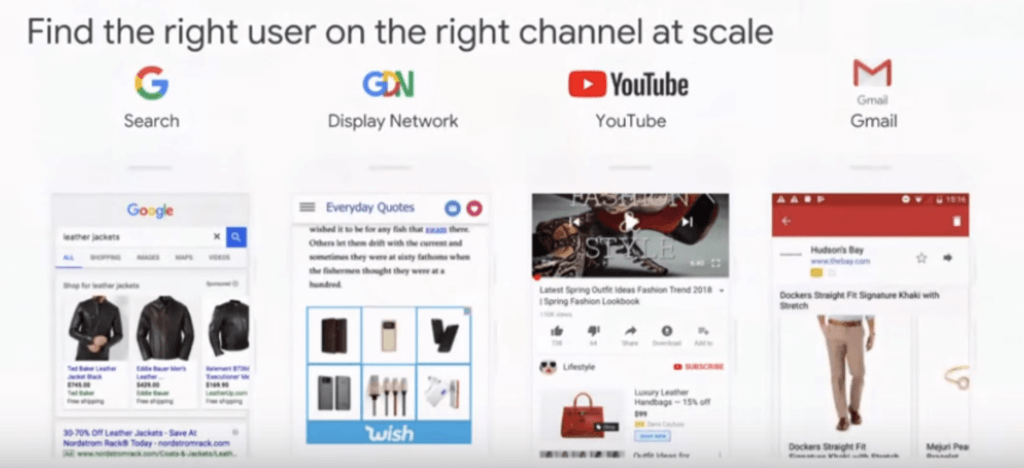
Dynamic remarketing in GDN
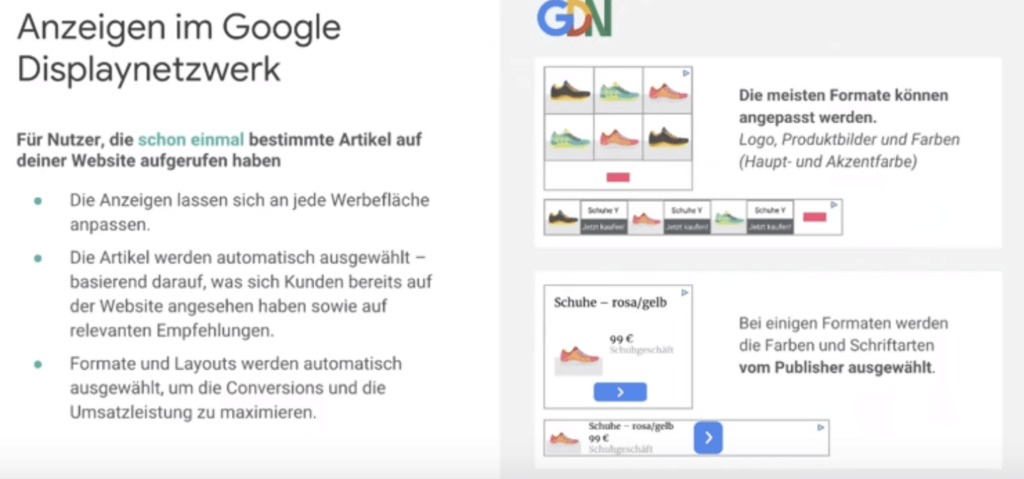
It’s on the Google Display NetworkDynamic remarketing with dynamic or static ad formats available. The design and format of the advertising material is adapted to the users and the content of the website.
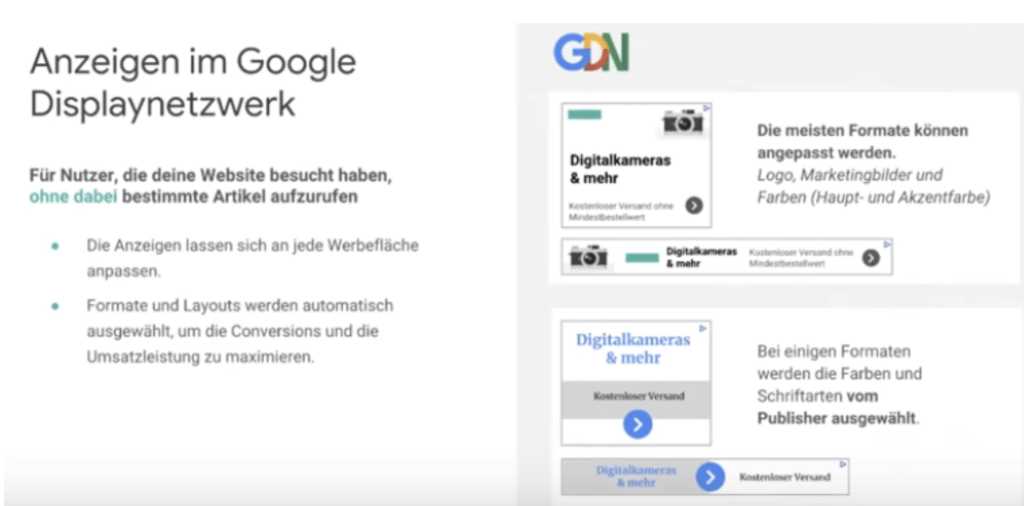
Which topic, category or product page the user had previously accessed is taken into account when selecting the ad content and specific products are dynamically selected or relevant recommendations are displayed. That usedMachine learningsimultaneously uses information such asPurchasing behavior, surfing behavior, seasonality, etc.
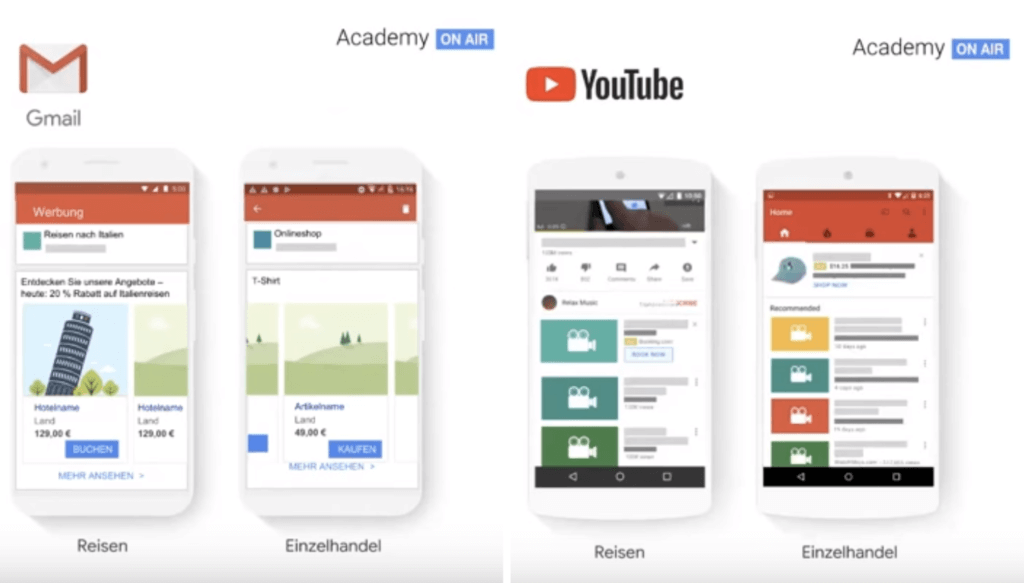
Native ads in Gmail and YouTube
Similar toRemarketing ads in the Google Display Network, the content is displayed as native ads forGmail and YouTube automatically selected.Based on previously viewed pages on the site, the products in the ads are recalled and relevant recommendations are made.
Recommendations for the Smart Shopping Campaigns Setup
- use the entire product portfolio
Google recommends testing the entire product portfolio for the new shopping campaign with goals to enable cross-selling. - Increase campaign budget
Increase the campaign budget for the new Smart Shopping campaign by 10-15% (compared to the existing shopping campaign) to give the system more room for adjustments and optimization. - take the machine learning learning phase into account
The first changes to the setup and an evaluation of the campaign should not take place until at least 1 week after the learning phase has been completed.
Our conclusion
The new Smart Shopping Campaigns use the advantages of machine learning very efficiently, but require a professional campaign set-up and know-how!