The Art Of Feedback Culture Successful Practice At E Dialogue

Management Summary
In an ever-changing business world, a company is only as strong as its ability to continually improve and adapt. Feedback plays a crucial role, both on an individual level and for the entire organization. Around a year and a half ago, we at e-dialog launched the “Feedback Hub” initiative to make feedback an integral part of our everyday company life. Join us in this feedback revolution as we share our experiences and best practices for building and optimizing a successful feedback culture.
Why is a good feedback culture so important?
Before we dive into the depths of our own feedback journey, let’s answer the fundamental question: Why does a robust feedback culture even matter? Feedback is not just a tool for individual growth; it also acts as a key to the development of the entire organization. It creates an environment of psychological safety, which in turn forms the basis for strong team performance. Studies confirm that teams in which members can freely contribute ideas and ask questions without fear of negative consequences are the most successful.
Our Feedback Hub: Where growth begins
Our “Feedback Hub” is the heart of our successful feedback culture. Here our employees not only receive in-depth insights into the topic of feedback, but it also serves as a safe space in which we can practice together how to give and receive feedback. We focus on providing relevant feedback clearly, precisely and promptly, preferably in the form of first-person messages to authentically convey one’s own perspective. Here, team members overcome insecurities to constructively address feedback in difficult situations. the e-dialog Feedback Hub, (c) e-dialog
Feedback Hub Open Session: A must for our onboarding
Our 90-minute Feedback Hub Open Session has now become a fixture in our onboarding process for new colleagues. This session not only provides insights into our culture, but also eliminates uncertainties in dealing with the topic of feedback right from the start. We expressly welcome feedback in all directions. Colleagues can share valuable feedback with each other, which also serves as quality control and makes our projects even more successful.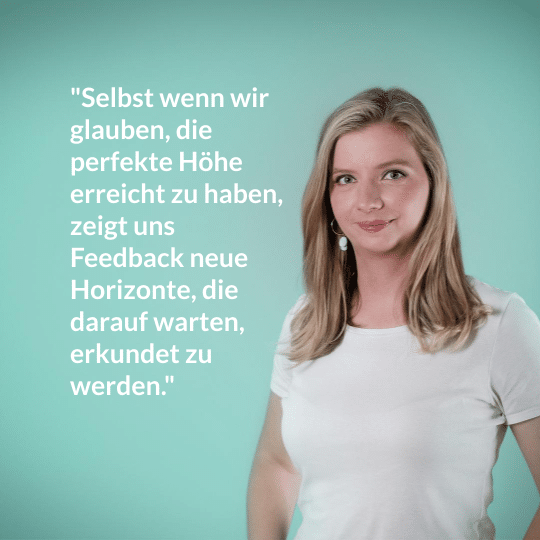 “Even when we think we’ve reached the perfect height, feedback shows us new horizons waiting to be explored.”Evgeniya Teneva, Head of People & Culture at e-dialog
The evolution of our feedback culture
Our feedback initiative is constantly evolving. 1.5 years ago the Feedback Hub crew consisted of me and Lukas Capek, Paid Social. Today, after over 10 sessions, over 70 participants, a lot of practice and great feedback, I am moderating the format together with my colleague Lisa Weichselbaum, Senior Advisor Digital Business Consulting, and we even offer refresher sessions with new content and exercises. We firmly believe that practice makes perfect, and that’s why we continue to train our feedback muscle tirelessly. We are convinced that this not only benefits us individually, but also our team as a whole.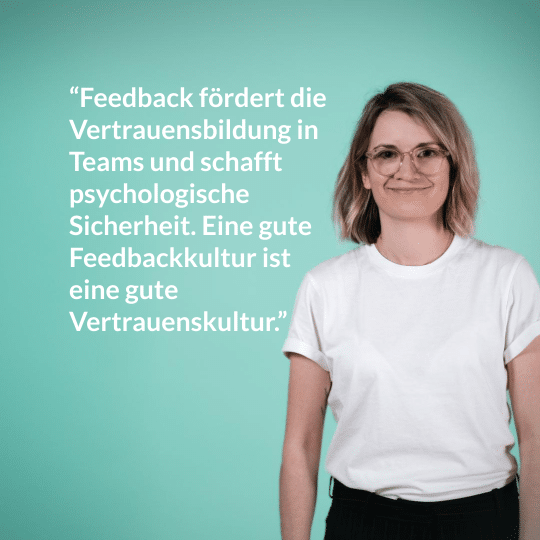 “Feedback encourages the development of trust in teams and creates psychological safety. A good feedback culture is a good culture of trust.”Lisa Weichselbaum, Senior Advisor Digital Business Consulting at e-dialog
Key takeaways for your own success
Our journey to create a successful feedback culture has produced clear beacons of inspiration. The following insights point the way to a culture of constructive exchange and personal growth:
- Continuous reminders and training: Feedback should be a constant companion in everyday company life. It is crucial to regularly highlight the transformative power of feedback and create training formats that enable employees to continually learn and grow.
- Management level as a shining example: Senior management and team leads should serve as shining role models. Feedback should not just be an idea, but should be embedded in your actions and decisions. Management must show that feedback is an integral part of the company’s success.
- Feedback as a continuous process: Feedback should be a continuous, informal and living process. It shouldn’t be limited to certain moments or meetings, but should be integrated into everyday life. The opportunity for improvement should be present always and everywhere.
- Clear structures and processes: Establish clear structures and processes in which feedback has a permanent place. Meetings and project meetings provide excellent opportunities to share feedback and promote the continuous improvement process.
- Active listening: In a hectic working world, active listening is a key to success. Be sure to be mindful and present when giving and receiving feedback. Only by listening carefully can you gain valuable insights and create real change.
- Hybrid work environments require increased communication: In today’s hybrid working world, spontaneous conversations in the workplace have become less common. It is therefore more important than ever to use digital channels to share feedback. Use these new opportunities to support and empower your team.
- Positive feedback with emotions: Feedback should not only be constructive and relevant, but also linked to positive emotions. Show appreciation and recognition for the achievements of your colleagues. Positive emotions reinforce the effect of feedback and create a motivating work environment.
Conclusion: Your feedback culture is the key to success
A successful feedback culture is more than just a concept. It is the driving force behind successful organizations and individual growth. At e-dialog, we have recognized this reality and designed a culture that enables constant learning and growth. Our experiences and best practices should inspire you to build and optimize a strong feedback culture in your own company. Continuous improvement through practice and learning will not only increase your success but also increase your career satisfaction. Start your journey to excellence now and harness the transformative power of feedback culture.