The End Of Expanded Text Ads On Google Ads 8211 Now What

Management Summary
As of June 30th, Google will discontinue expanded text ads, or ETAs for short, in Google Ads. This means that with the deadline defined by Google, new expanded text ads can no longer be created in Google Ads or existing ones can be edited.
But don’t worry – we got you covered!
What does that mean in detail?
Google is constantly developing and the ad formats are also regularly changing. Now expanded text ads are next and will be phased out. But don’t worry, this doesn’t mean that all your already created ETAs will disappear or be paused. They continue to be delivered and their performance is still visible.
What changes, however, is that new ETAs can no longer be created and existing ones can no longer be edited. Only activating and pausing existing ETAs is possible.
How do I deal with this?
There is still enough time to prepare for the change. In order not to be annoyed afterwards, it is advisable to check all active ETAs in the account to see if they are up to date and adjust them if necessary. Furthermore, a Responsive Search Ad (RSA) should also be implemented in each ad group.
Attention: Here Google only recommends a single RSA per ad group.
What is an RSA?
The RSA is the newest, flexible ad type on Google Ads Search. With Responsive Search Ads you can add up to 15 headlines and 4 ad texts. These are then flexibly put together by the Google algorithm in order to present the customer with the most relevant ad combination.
Creating it is just as easy as creating an ETA. The big difference: Google uses the ad effectiveness to show how relevant the RSA is for the user and how it can be improved if necessary. But don’t worry, the Google algorithm makes suggestions here too. Creating ads has never been easier!
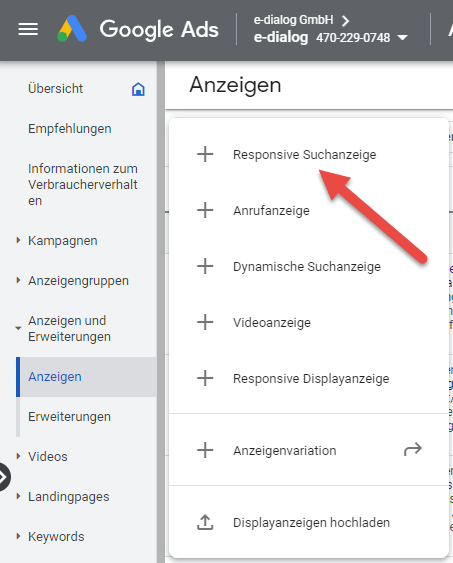
Responsive Search Ads in Google Ads
Important tips for a good RSA
1. Include the relevant keywords in your ad group in your RSA. This not only makes the ad more relevant to the user but also improves the ad effectiveness.

Responsive Search Ads & Ad effectiveness
2. When it comes to creating headlines and ad copy, continue to be as creative as you were when creating your ETAs. Important to note: Ad titles should also work independently of each other.
3. Inserted advertising titles can also be pinned to a desired advertising title position. But be careful: a pin can have a negative impact on ad effectiveness. Pins should therefore be used sparingly.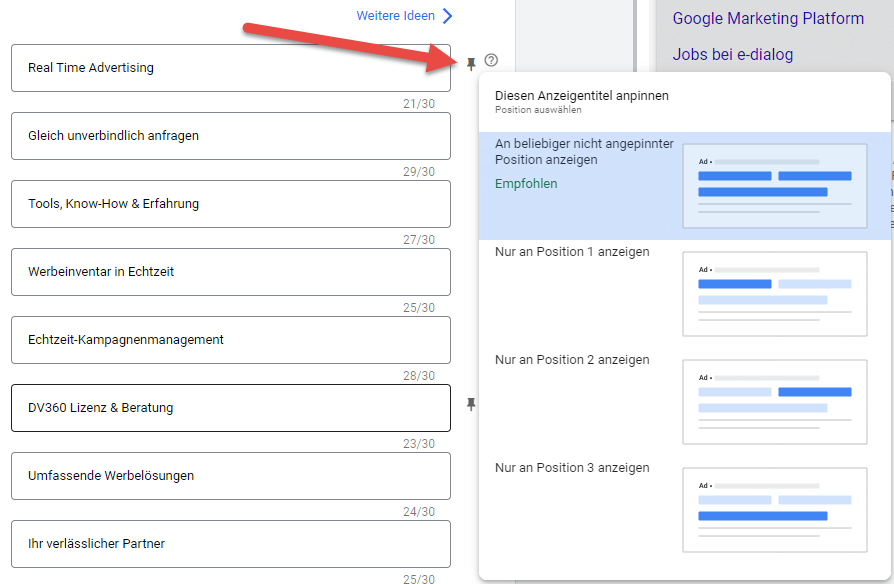
Responsive Search Ads & Ad effectiveness
4. Google strongly recommends using only one RSA per ad group. However, you should also fill in all 15 ad titles and 4 ad texts in order to create the greatest possible variation.5. As with the creation of ETAs, the same applies here: Don’t forget to include a CTA (call to action) every now and then.6. Check the above ad effectiveness regularly and optimize your RSA if necessary.
How do I keep track of the ad effectiveness of my RSAs?
As already mentioned, ad effectiveness is an indication defined by Google of how good the quality of your RSAs actually is. Since the effectiveness of your ads can change over time, you should always keep a close eye on them.
One way to do this would of course be to regularly check the Google Ads interface. Here you can easily filter by ad effectiveness and optimize the correspondingly poor RSAs. Admittedly, this approach is somewhat laborious, time-consuming and not always clear.
If you don’t want to go through such a hassle every time, we recommend creating a visualization of the ad effectiveness of your RSAs in Google Data Studio. This means you always have an overview of your RSAs and can optimize accordingly if necessary.
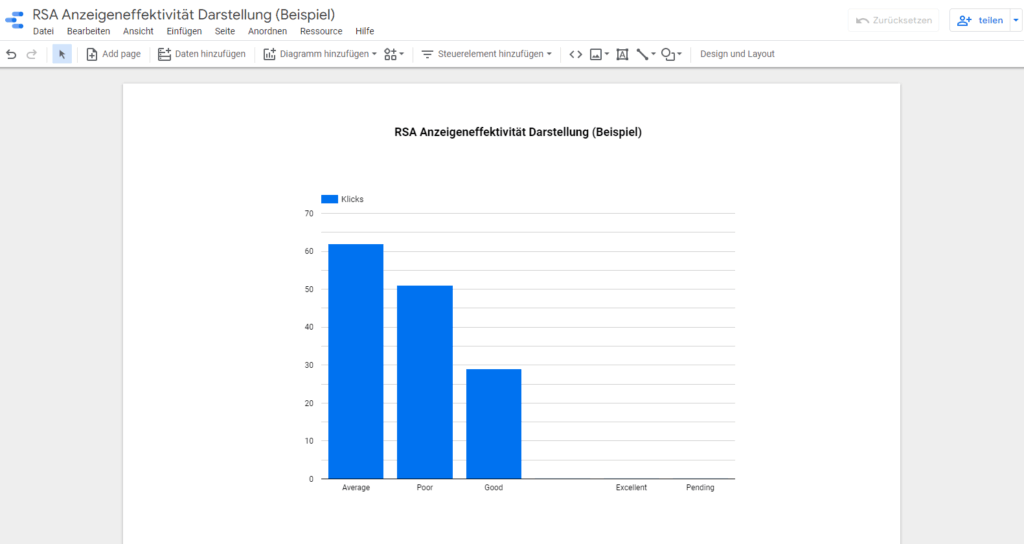 Here is an example of what such a visualization can look like. You can see that the clicks generated were mostly at average RSAs, which may indicate a vast majority of average RSAs in the account. So there is room for improvement here. Now you should be perfectly prepared for the discontinuation of ETAs on June 30th and the switch to RSAs.