The History Of The Digital Banner And The Different Formats

Management Summary
How did banner advertising on the web come about?
The short history and rapid evolution of the digital banner
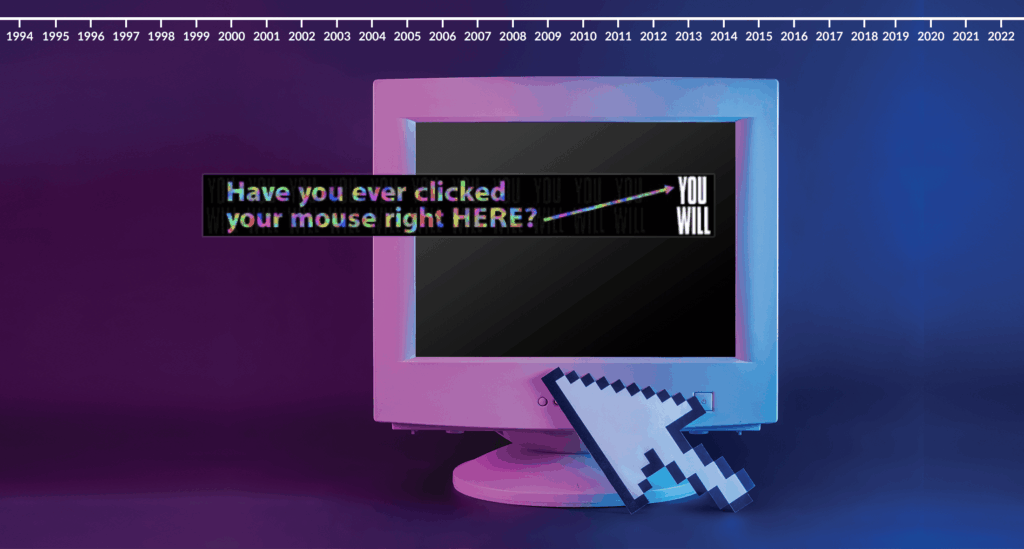
The first banner
Most of you have seen it – the first ever digital banner. On October 27, 1994, the first banner ad was placed in the application of an American telecommunications company, which used this banner to advertise its latestTV spotlinked.
The format at that time was the so-called full-size banner with a size of 468×60 pixels.
With today’s high resolution of displays, such a small banner would be completely lost, but with the standard resolution at the time from 640×480 (VGA monitor) to later 1024×768 pixels, the full-size banner took up enough space to attract attention.
This first banner achieved a click rate of 44%, something we can only dream of today.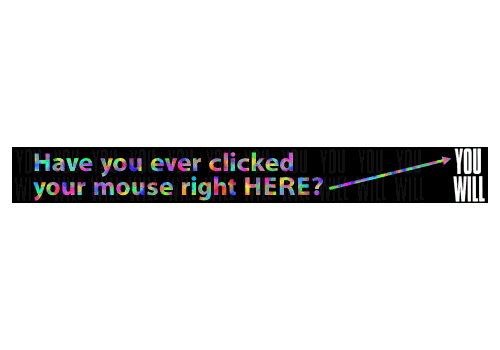 Source: Web Design Museum
But 1994 was also the year in which the founders of the young print magazineWiredThe idea came that, as with the printed magazine, the online edition could also be financed with advertising space so that subscribers would not have to incur even higher costs.
They were lucky that they were able to get large corporations interested in the idea and the new industry quickly took off.
The full-size banner (468×60 px) was joined by the skyscraper (120×600 px) and the content ad or medium rectangle (300x250px).
Due to the constant increase in screen resolutions, the full-size banner was quickly replaced by the super banner (728x90px) as the standard and the skyscraper standard also became wider and wider (160x600px wide skyscraper).
Animation with Flash as standard
While animated gifs were initially favored because movement was very noticeable in the still very static Internet, Macromedia Flash quickly became the standard.
The Macromedia company bought various software companies in the early 1990s, including FutureWave Software in 1996, which produced the animation tool FutureSplash and published it in 1997.
Macromedia renamed Splash Flash and offered the Flash Player browser plugin for free in order to quickly gain market share. That succeeded. The Flash player became a standard plugin in all common browsers and Flash became the standard for the animation of digital advertising banners.
At the end of 2005, Macromedia was bought by its major competitor Adobe and combined many of the competing programs, such as Freehand and Illustrator. Flash remained profitable for many years, even if it slowly became a problem.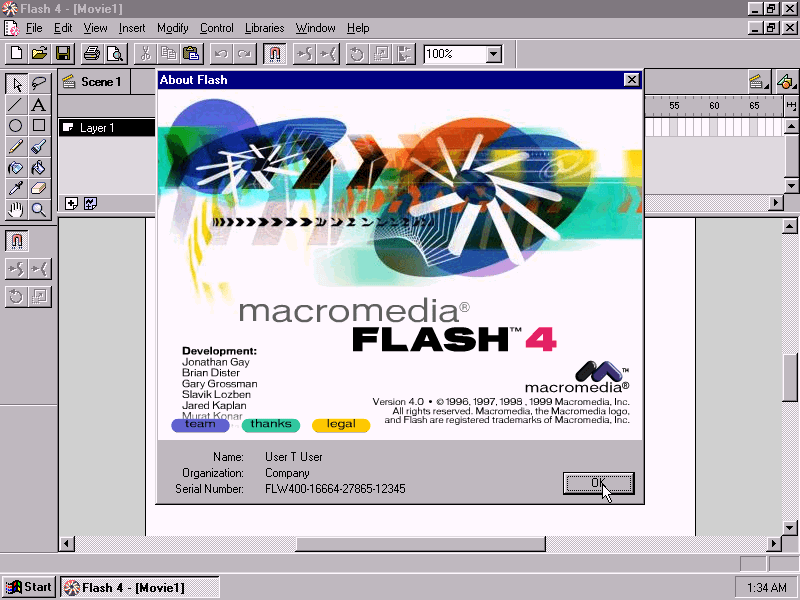 source
The slow death of Flash
But why was the standard of the banner industry increasingly problematic?
Flash was ideal for desktop computers and was widely used not only for animated banners, but also for websites and browser games. But with the introduction of smartphones and tablets with different resolutions, a website had to become more flexible (responsive). Flash couldn’t keep up with his “closed system”. And search engines’ inability to index Flash content was a problem that could never be fixed.
Steve Jobs, the then Apple boss, was not a fan of Flash for the reasons mentioned and ensured that it was not possible to use Flash files on the iPhone or iPad.
He criticized Flash in an open letter in 2010, citing arguments such as high energy consumption, poor security and a lack of touch functionality.
With this letter he sparked a verbal argument with Adobe’s management, who did not want to let the allegations slide. But since the child had already fallen into the well – Flash’s death was prophesied for years to come and the digital advertising industry began to turn to alternatives.
What alternatives were there?
The industry was eagerly awaiting the 5th version of the Hyper Text Language (html5) for the animation of advertising material and websites, which was finally announced for October 2014.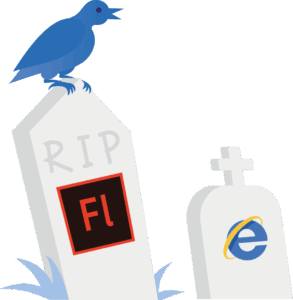
The standard formats
Back to banner formats. So that there are fixed banner sizes and not every advertiser has their own
Offers banner containers, there areIAB standards, so the ones fromInteractive Advertising Bureau(an international trade association for the online advertising industry set standard sizes that
have established themselves (More about it here).
As already mentioned, these are currently:
- Leaderboard (728x90px),
Medium Rectangle (300x250px) and - Skyscraper (160x600px).
 These are other common formats
- Billboard (800 or 970×250 px) and
- HalfpageAd (300x600px).
The HalfpageAd is often implemented as a dynamic sitebar, i.e. responsive (adjusts its size to the browser window and “docks” to the right of the website).
 Outside of these standards, other formats have been established, such as: Expandables (banners that expand upon user initiation), banners with integrated videos or interactions, site brandings (multiple formats and a background image color the entire website), footer ads, interstitials and standard and special formats for mobile (300×50, 320×100 etc.).
Conclusion
The banner has had a turbulent development and is an integral part of the history of the Internet. In recent years, banners have become “quieter”. Serious advertisers focus more on quality than on eye-catching flashing. The appropriate environments and target groups are selected more specifically. This is what data-driven advertising makes possible.