What Are Native Ads
Management Summary
Native ads are…
- Component-based ads whose design is determined by the publisher, not the advertiser
- The layout is specified by the publisher, depending on the type of device, available space, etc.
Content marketing is a central component of modern marketing strategies because it offers the opportunity to convey brand values in a natural environment and to build a relationship with customers. If possible, the ad format must also match the strategynaturallyappear.
In traditional banner spaces, advertising messages are built in statically. Native ads, on the other hand, can be used in any environment and on any devicevisually appealing, content-based and flexible– they therefore appear more relevant to the user!
In practice, instead of predefined, static ad creatives, onlyComponents provided for a display– Images, headings, texts, etc.
Depending on where users consume content, the elements/components are compiled and delivered based on content. These created in this waynative creativescan then be displayed both in conventional banner spaces and in responsive ad spaces.
Native Ads enable better and more effective advertisements – practical example
Native ads are very important in our own campaigns. When promoting our Google Analytics Conference 2018, the use of this advertising format was essential.
Here is an example of what our native ads looked like:Variant A)

 Variant B)
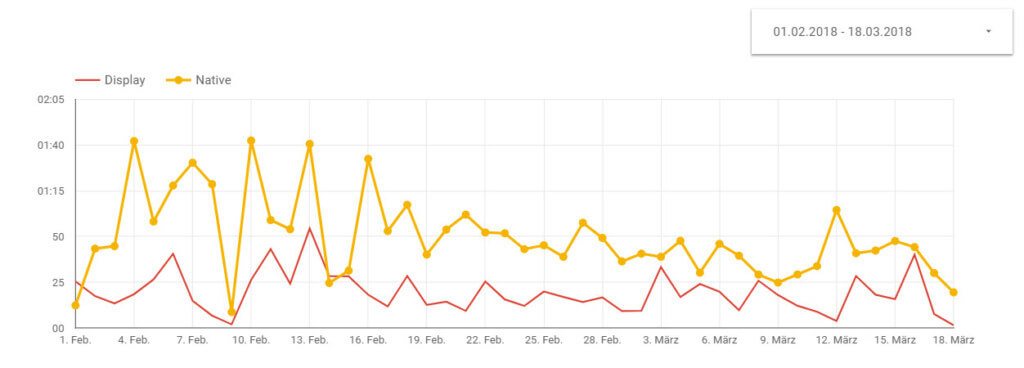
 The individual display of advertising media tailored to the user and the advertising environment results in a number of advantages with native ads. In addition to the flexibility and the high-impact, seamless integration, the optimal control and measurement should also be emphasized. Especially in terms of session duration, you can see a significant improvement compared to static display ads.
The results of our campaign are impressive.
Session duration
Click rate
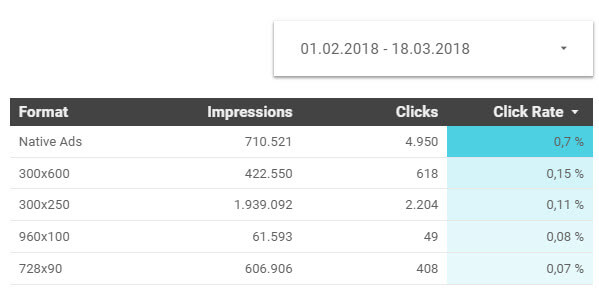
Conclusion practical example:
Native ads deliver excellent performance, especially when you compare on-site metrics. Above all, the significantly higher click rate in comparison is particularly positive!
Dos and Don’ts – our best practices for native ads
Umefficient native adsIn practice, some aspects should be taken into account:
THURS
- Use all possible resources to guarantee the greatest reach (logo, rectangular and square formats, different text variations, etc.)
- Use sharp, high-resolution images (1200×627 and 627×627)
- Make sure that the text descriptions are written in a style that arouses the reader’s interest and encourages them to click.
- The landing pages should closely match the native advertisements and have a comparable style.
DON’T
- Do not use animations – only still images and graphics are supported.
- Don’t forget to add your logo
- Don’t use images with too much text
- Don’t use banner ads
- Make sure your text doesn’t sound like an offer or that your product names are in the foreground
Available Native Display inventory in Austria
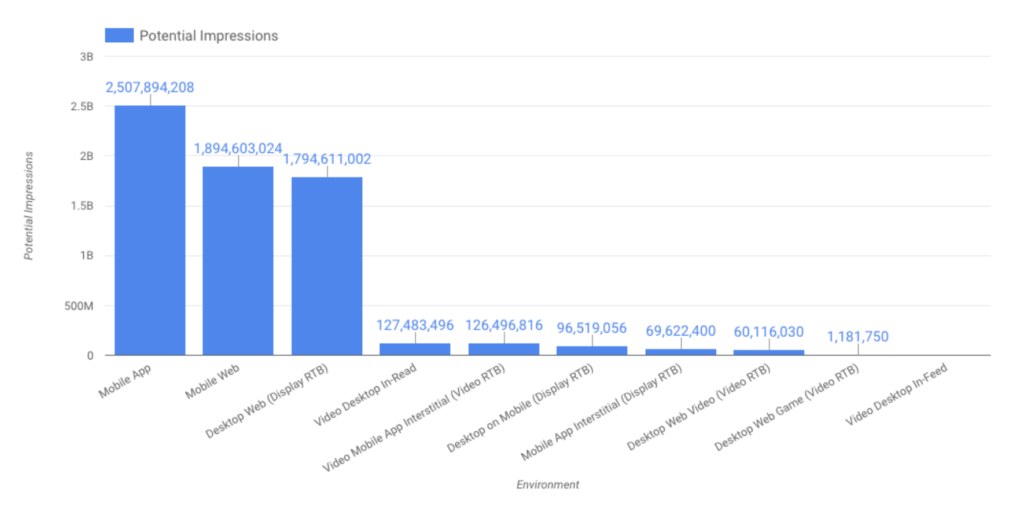
Most impressions are available via mobile app/web and desktop web and show the highest potential.
Available display + native inventory in comparison
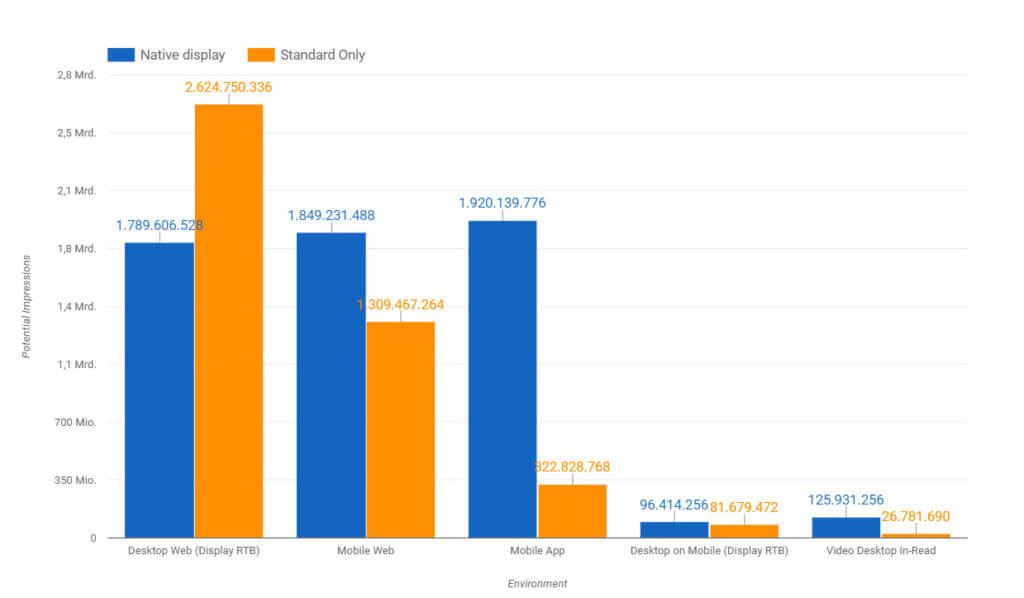
–>Mobile app:For native ads there are approx.494%More available inventory on mobile app than for other display formats
–>Mobile Web:For native ads there are approx.41%More inventory available on mobile web than other display formats
Advantages at a glance:
- high flexibility
- Can be used in any situation and on any device
- seamless integration into the content (“native”)
- elegant, impactful presentation
- optimal control and measurement
- Cost-effective because only text suggestions are necessary
- same targeting options as display
- granular targeting possible & simply
Overall, we can say: Native ads bring many advantages, good performance values and, as a result, a higher brand lift than traditional advertising banners!