Why social responsibility matters to us more than ever
Our world is moving ever closer together and yet seems to be drifting further apart. Putting oneself first and viewing one’s own truth as the only truth has shaped public discourse in recent months—and in doing so, it also creates reality.
In the pursuit of growth and ever more profit, many companies also actively contribute to this development. Those particularly affected: vulnerable groups and people who are already on the margins of society.
As a company, we want to address this very issue and take a stand against this development: we stand up for one another and advocate for greater social justice. Why this is so important to us, and how we put it into practice, you can find out in this article.
Why is social responsibility important to us?
The answer is simple: we want to help people in need and in times of crisis. Life is unpredictable and unfair—where someone is born, how other people treat us, what opportunities are available to us. The list could go on endlessly. And yet, for most of us it is hard to imagine ending up in a situation where we lose control, where helplessness and despair take over. A situation in which you need help from others. In reality, however, no one is protected from this. That is why we want to help wherever and however we can, to give people hope again.
How we help
-
01
Team initiatives
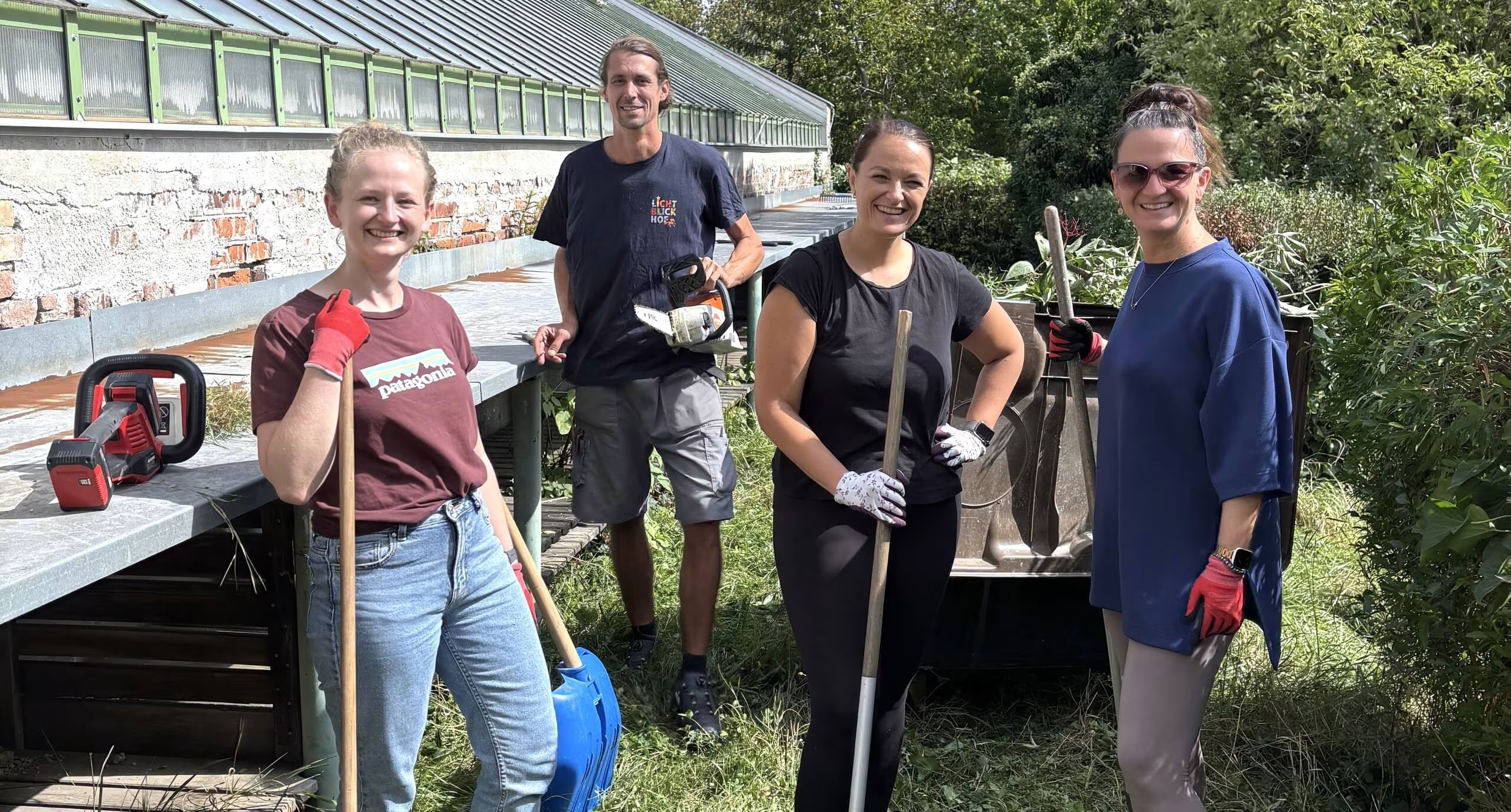
We create space for social engagement and encourage our employees to get actively involved. By introducing a Corporate Volunteering Day, we give our employees the opportunity to support a good cause during working hours and help out at a local non-profit organisation. Taking part in the Pride Run, in-house fundraising projects such as donation drives, and spending an afternoon together with seniors in the run-up to Christmas have become an indispensable part of our culture.
-
02
Pro bono consulting
We are experts in data-driven marketing. With our expertise, we support NGOs and non-profit organisations in promoting their valuable work and the help they provide.
-
03
Donations
Through monetary and in-kind donations—such as used, fully functional laptops or smartphones—we provide targeted support to organisations with what is needed.
Social justice at e-dialog
However, we do not only take social responsibility outward. As a company, we are aware of our duty of care towards our employees. It is our responsibility to create a space in which our values are not only written on paper, but are lived every day through our actions. Inclusion, equality and equal opportunities are key pillars of our corporate culture, in which individuality and diversity are not only promoted, but also lived.
Social responsibility begins with shaping our working environment for our employees. Our top priority is to create an environment that is compatible with different lifestyles—parents with childcare responsibilities, people caring for relatives, students, and much more. Life situations are diverse and come with different challenges. Supporting our employees and creating suitable conditions is a matter of course for us. The basis for this is our flexible working hours without core hours, with the option to work 100% from home and remotely.
With our Code of Conduct, we have created a foundation for how we interact and communicate with one another. Transparency, honesty and reliability are top priorities, both in external and internal communication. These values also guided us when introducing our career model, including salary bands: transparency and the ambition to create the same opportunities and possibilities for everyone. To promote diversity and inclusion, we have established a diversity team that, through a wide range of initiatives, brings the importance of cultural exchange and understanding to the forefront.
Social responsibility is part of e-dialog
As a company, we are part of social developments and help shape our society with our values. Social responsibility is therefore not an add-on for us, but an integral part of our corporate culture.
Supporting people in emergency situations and creating an inclusive environment in which everyone feels welcome, valued and seen, and can come as they are—that is our aspiration. Especially as part of the People & Culture team, it is a daily priority for me to foster this culture, to shape it consciously with new measures and initiatives, and to continuously improve it.
This is how we counter the narrative of an increasingly alienated society, step by step: with respect, empathy and understanding for one another.