Regression Based Attribution 8211 Attributing Advertising Success In The Post Cookie Era

Management Summary
This article provides an introduction to ways to attribute advertising success without cookies. Based on theRegression Based Attributionwe show advantages and possible uses.
Why do I need attribution?
Correct attribution can show which channel, which campaign and which forms of advertising ensure which success, how efficient advertising measures are and whether the distribution of budgets along the marketing funnel is justified. Inefficiencies can be eliminated and performance increased.
Attribution of conversions in the post-cookie era
While many post-cookie approaches attempt to recreate the lost image of a saturated 3P cookie world, one thing is left out – conversion attribution. Advertising channels that are located in the upper marketing funnel and are intended to inspire users are particularly supportive when it comes to conversions. Display banners, videos or audio ads are played out and often inspire and encourage users to take a closer look at the services or products or to make a purchase.
Currently, 3P cookies ensure that at least a portion of this conversion can be assigned to preparatory channels. If users click on advertising material and convert, there are numerous solutions on how to attribute this conversion – even without 3P cookies and consent.A future gap that no one talks about arises when users don’t click. And since this is often the case for more than 99% of a campaign’s impressions, the view-through conversion gap is not too small.WithGoogle Analytics 4Data-driven attribution becomes the standard so that the success of advertising measures can be attributed across channels. However, this requires data about the influence of preparatory channels. And this data is missing without 3P cookies, soView-through conversions and the influence of impressions on conversions are not recorded.
Example of a multi-touch customer journey in Figure 1a conversion with four touchpoints. While with consent and cookies the conversion can be attributed proportionally along the entire customer journey (Figure 1a), without 3P cookies the conversion would only be assigned to the single click of the customer journey (Figure 1b). Conclusions from such incomplete attribution are fallacious because conclusive channels would be overestimated. Figure 1)Multi-touch customer journey of a conversion with four touchpoints
Assign advertising success with regression based attribution
GooglesAttribution reportingand ID Solutions can also be a way to close this gap. Attribution reporting is still in the testing phase, but promises to assign advertising measures to view-through conversions using privacy-compliant reports without third-party cookies. The lack of penetration of ID solutions has been the reason for advertisers and publishers to paint a fragmented picture at best.
While it is uncertain how the solutions mentioned will become established, there is one possibility that remains meaningful despite constant changes – thatstatistical modeling. This modeling of economic data – also known as econometrics – meets the requirement to take all digital marketing measures into account across the marketing mix and to attribute advertising success accordingly. In addition to the attribution of digital advertising measures, the advertising success and the subsequent attribution of advertising success from offline channels is also possible. Then we talk about itMarketing Mix Modeling.
A breakdown of how multi-touch attribution, regression-based attribution and marketing mix modeling differ can be seen in Figure 2: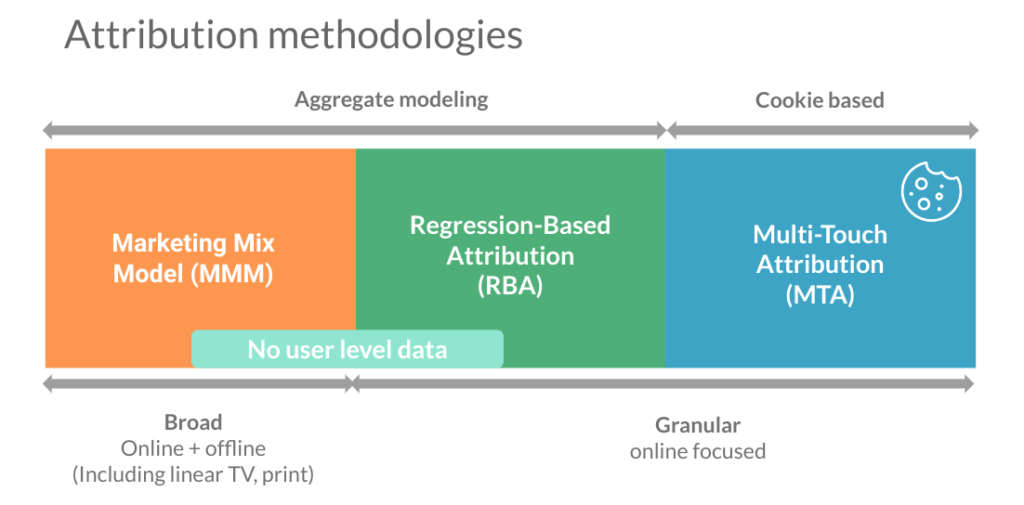 Figure 2)Attribution Methodologies: From MTA to RBA & MMM
If you want to understand the relationship between two variables, for example input and output, regressions are used in econometrics. This method has always been established in the financial industry or classic media planning.
We focus on regression-based attribution in this article because the digital channels provide us with precise data on domestic & Deliver output and be the focus here. A linear regression model is created based on existing (first party) data, e.g. budget, impressions, clicks or the device. Put simply, this is a model that can predict statistically valid which input (e.g. advertising budget) leads to which output (e.g. conversions) (see Figure 2).Figure 3) Simplified modeling: Relationship (regression) between the variables advertising expenditure (input) and conversions (output). The date serves as a key to relate the two variables.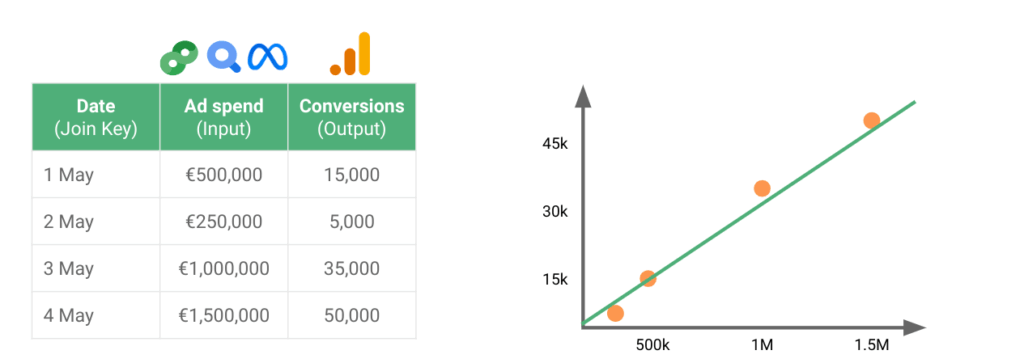 Figure 3)Simplified modeling:
In addition, the model’s prediction can be broken down into individual channels and even strategies (such as awareness or remarketing) or creatives. Unlike attribution, which is based on 3P cookies, here the input data of the advertisers and the output data, i.e. the performance on a website or offline, are brought together. This can be used to predict what influence channels and strategies have and how success can be correctly attributed, today and in the future.
This shows what a simplified attribution result can look likeFigure 3. The graphic shows how the contribution to an output (e.g. sales) is evaluated. This sales contribution can then be compared with the advertising budget used in order to identify “under performers” and “over performers” and draw conclusions for budgeting.
In this example, search ads and social ads would be “under performers” and display ads and especially YouTube would be “over performers”. The next step would be to optimize and redistribute the advertising budget accordingly. Regular remodeling, as is easily possible in the cloud, can then provide ongoing insights into which channel is how efficient.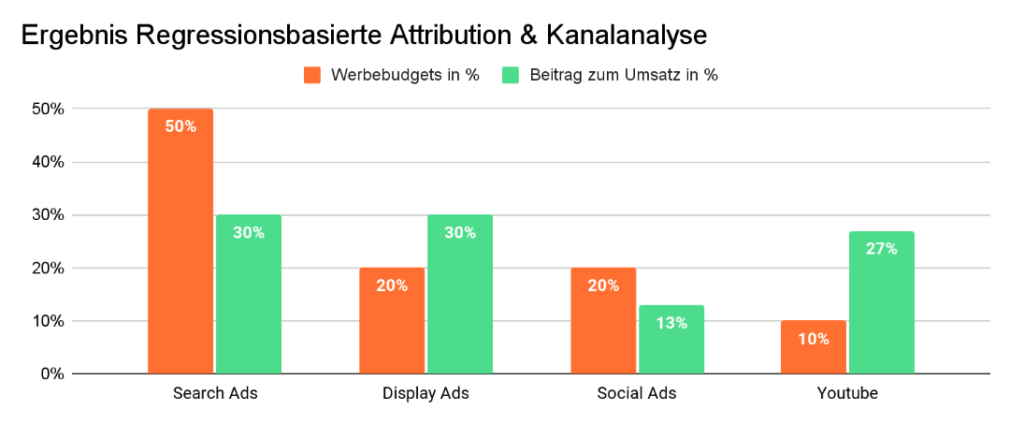 Figure 4)Example result of an attribution of advertising success and channel analysis
What are the advantages of Regression Based Attribution?
The advantages are numerous. The solution is comingwithout 3P cookiesout, isdata-basedandeven offline conversions and CRM datacan be included. In addition, the alternative isvery robustand retains its significance regardless of the constant changes in the digital advertising industry. Continuous remodeling of the regression ensures onecorrect and accurate attribution.
A big advantage over attribution in common web analysis tools such as Google Analytics is that toosupposedly direct and organic traffic on a website can be taken into account and marketing measures can be assigned. Unfortunately, if a large part of direct traffic is displayed in the web analysis tool, this does not necessarily indicate a strong brand, but rather the problem that the origin of traffic cannot be assigned, which can happen, for example, through the use of browsers or operating systems that block 3P cookies. For a complete picture to analyze channel efficiency, regression-based attribution provides ano alternative optionto attribute this traffic.
But that’s not enough. Play oftenSeasonalitiesan important role in marketing, so events such as Black Friday, Easter or the Christmas season can lead to outliers in performance. For e-commerce customers, sales may also be higher on weekends. ThisFluctuations would be taken into account in a regressionand the attributionadjusted for these external factors.
Finally, the advantage of such correct attribution is thatInefficiencies uncoveredbecome and throughdata-based budget distribution, on different channels, funnel levels or advertising measures,Success is maximized.
The disadvantages?
One disadvantage of regression-based attribution is thisinitial modeling effort. The data from all channels must be brought together correctly. This requires a central location in theCloud, where the data can be modeled. The data must be cleaned and assigned correctly so that the model and therefore the attribution is valid. To start this process, marketers from all channels must coordinate closely with data analysts and data scientists. Operating in the cloud is just as important as having in-depth knowledge of BigQuery, SQL, Python and/or R in order to do the modeling and choose the right regression model.
In summary, the disadvantage of this type of attribution is limited to the initial effort. However, since created models constantly re-model themselves and thus ensure attribution validity, durability in a fragmented post-cookie era is the reason why the initial effort should not deter advertisers. A complete, cross-channel overview of advertising channels allows inefficiencies to be uncovered and eliminated in the long term.
The good? We can support you with this!
ThePost-cookie eracomes – even if the date is postponed. Now is the time to prepare your strategy and tools. We support you with the setup of the systems, e.g. implementation ofGoogle Analytics 4, Server side tracking, but also when building oneMulti-channel consent management strategy. With these steps you will strengthen and secure your database, the basis for all marketing decisions, analyses, attribution modeling (such as regression based attribution) and optimizations.
We would be happy to support you with our expertiseCloud & Data scienceteams as well as our experience with the Google Marketing Platform in selecting and implementing attribution modeling. We would also be happy to show you how you can get the most out of your campaigns with your treasure trove of data – contact us!kontakt@e-dialog.group