The 5 Best Levers For Your Linkedin B2b Targeting

Management Summary
Why B2B targeting?
As mentioned above, LinkedIn is a huge network consisting of millions of professional users. The ways to reach the desired users on this platform seem endless. A breakdown of the main targeting options can be found in the image below.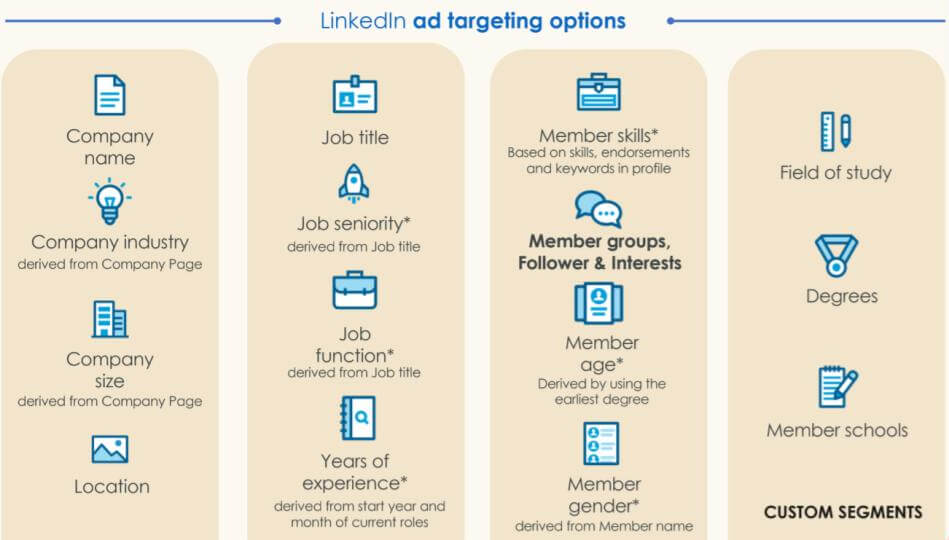
What targeting options are there?
1. Categories
As the figure shows, users can be filtered by their area of activity, the name of the company, the desired work location, and much more. to reach. If you have a more precise idea of your target group, these options can of course also be used in combination, although you should keep in mind that the target group will become smaller with each additional targeting combination. So be careful not to shrink your target group too much in order to achieve optimal results and provide the algorithm with enough data.
This can be used, for example, to specifically address higher management in order to be able to get in direct contact with a decision maker. The most popular targetings are years of work experience, job function, company size and industry. A combination of two or three of these four points should create a good foundation for your B2B targeting.
2. Member groups
LinkedIn bietet zusätzlich noch die Möglichkeit an, einzelne Mitgliedsgruppen zu targeten. This is especially helpful if you want to reach a group of people who are sure to be interested in a specific topic or industry
3. Remarketing & Customer lists
In addition, similar to Facebook, it is possible to target exactly those users who follow your company page. This way you can be sure that the target group already has a certain basic interest in your products.
Another useful function of B2B targeting on LinkedIn is working with customer lists. This list can be imported from your CRM system and contains information such as email address, previous & Last name, company name etc. which can also be used for targeting purposes. If you offer several products, customer lists can be used to display advertising to your customers for exactly those products that you have not yet sold. Attention: Take GDPR into account, e-dialog is happy to help ;-)
4. Exclusions
In addition, certain criteria can be excluded in advance when targeting. This is advisable, for example, if you no longer want to reach individual companies because they are already part of your customer base.
5. Work with available information
In addition, LinkedIn can be used to collect data from potential interested parties. Using an overview page, this information can then be analyzed in parallel with the ongoing campaign. This gives you more precise insights into the company, industry, areas of activity, regional information, etc. to which your advertising is displayed in order to be able to identify potential customers at an early stage. If a click comes from a desired company, preferably from higher management, this could be very relevant for your sales department.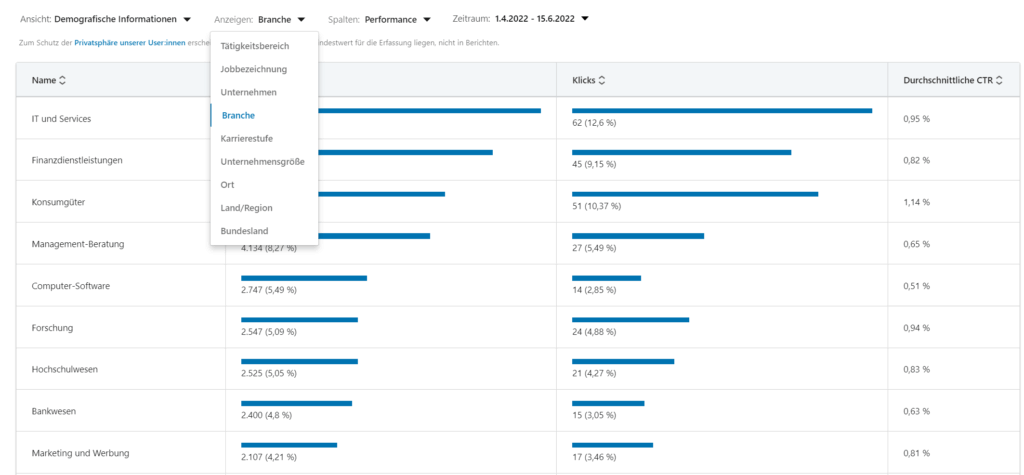 All of this should be rounded off with strategically planned conversion tracking. With the help of an insight tag that is installed on the website, the desired goals can be measured and remarketing target groups can be created.