What the launch of Google AI Mode means for your marketing strategy
Management Summary
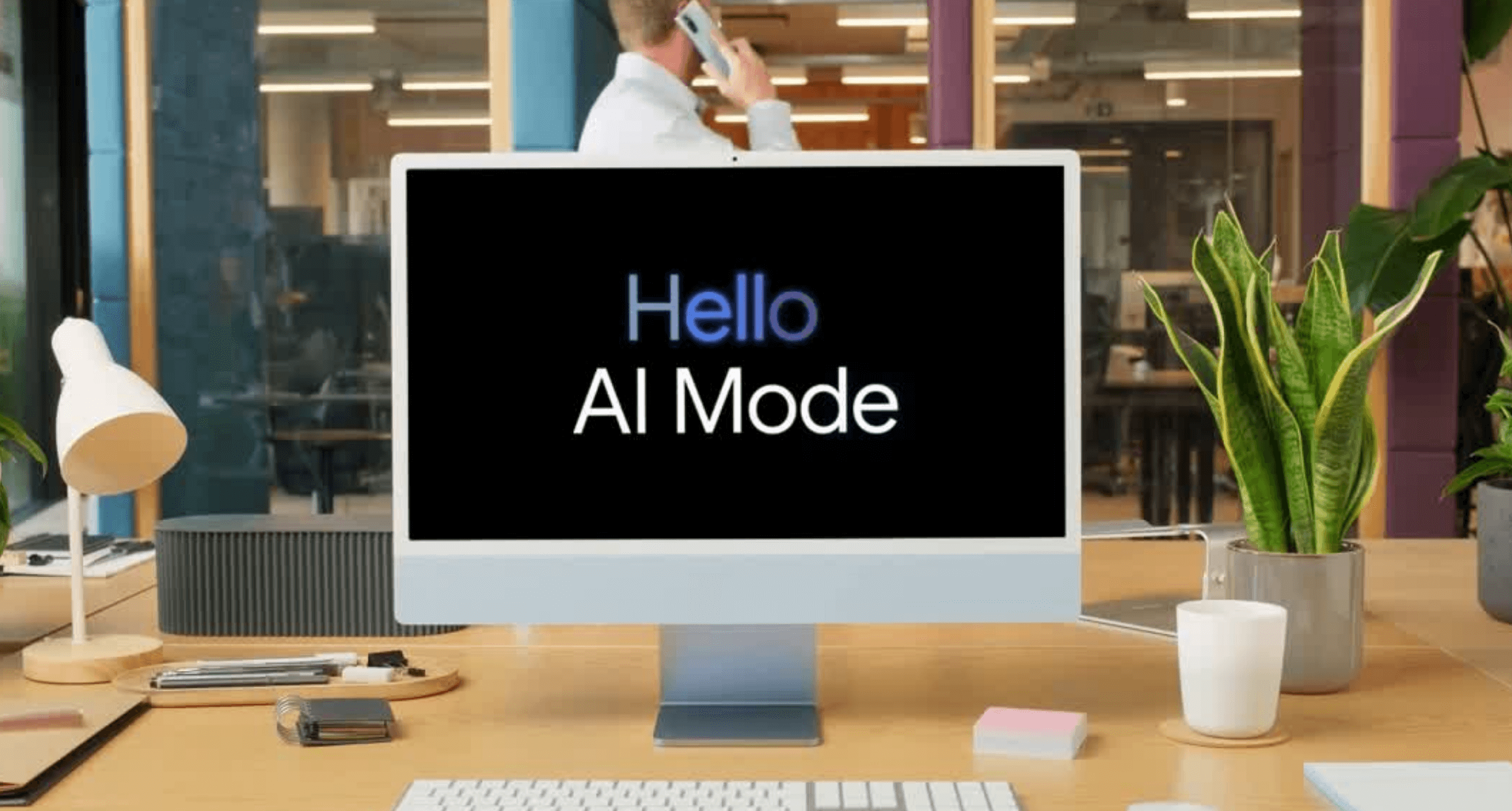
The world’s largest search engine and one of its most profitable advertising platforms are currently undergoing fundamental changes. The reason: Google has rolled out AI Mode in over 40 European countries, including Germany, Austria, and Switzerland. While the full consequences are not yet predictable, it is clear that digital marketing will change as a result.
Source: Google
What is Google AI Mode and how does it differ from AI Overviews?
Since March 2025, AI Overviews have been available in German-language Google Search. The idea: the Gemini AI model formulates an answer to the question asked in the search—though not for every search. The system decides for each query whether an AI overview leads to an answer more quickly. Below this, links continue to be listed according to ranking. Thus, it remains a classic Google search, albeit with less necessity for clicks.
Source: Google
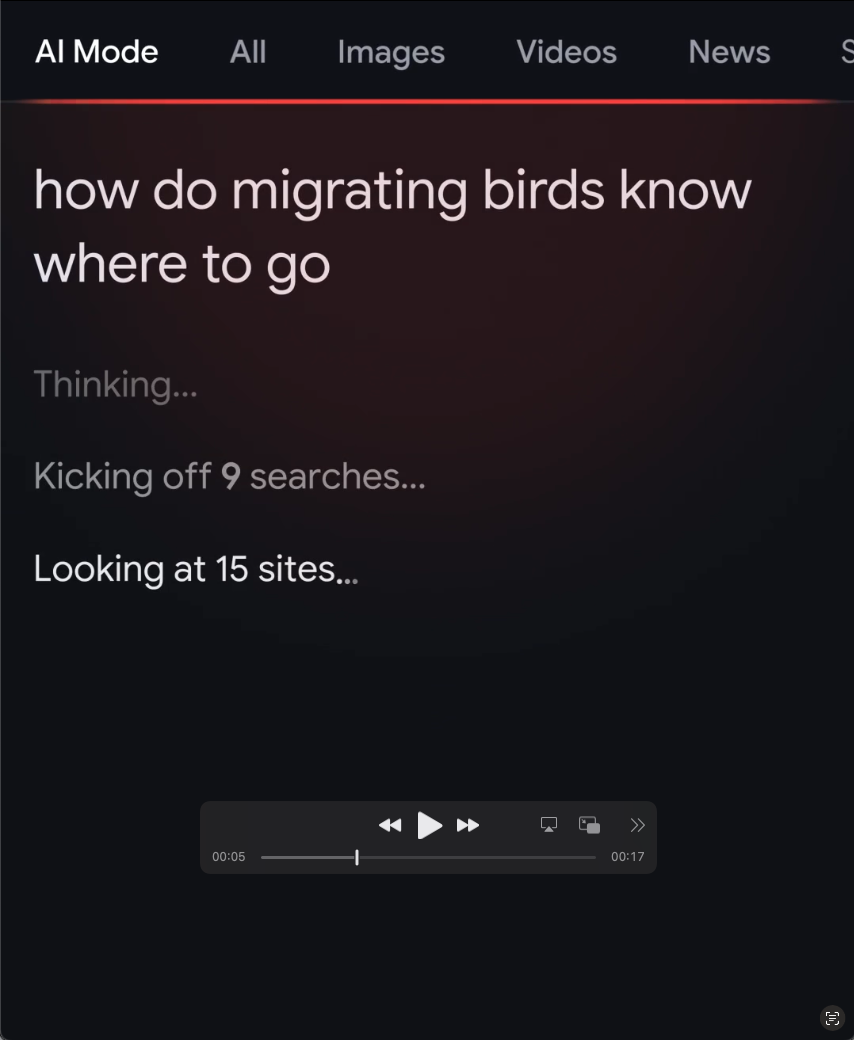
AI Mode, by contrast, is a new version of Google Search. You can switch to it by clicking the “AI Mode” button in the search window. There, you can ask detailed questions and receive a comprehensive answer that merges information from various sources. The AI, Gemini 2.5 Pro, independently performs dozens of searches, evaluates them, and processes them—Google calls this “Query Fan-Out.” As with ChatGPT or Perplexity, a conversation begins with the first question—allowing you to ask follow-up questions and further refine the result. There are still supporting links in a column on the right side, but no page-long list of links as in classic Google Search.
What are the strengths of Google AI Mode?
-
01
Detailed answers
AI Mode provides detailed answers to complex questions that previously would have required multiple searches. It researches a topic quite comprehensively after the very first prompt.
-
02
Multimodal search
You can not only enter text but also upload photos or use your camera to ask questions and interact with the AI. Functions like “Circle to Search” are already being used extensively.
-
03
Search as a dialogue
You don’t have to think about which search terms lead to the best sources to solve your problem. You simply formulate your problem and can ask follow-up questions directly to further narrow down the results.
-
04
The Google Index
No AI search is likely as deeply linked to the world’s largest knowledge database, the Google Index, as Google AI Mode. Other tools also access it but do not know how the search algorithm works at its core.
-
05
User base
With a search market share of over 90% worldwide, Google benefits from AI Mode appearing on billions of browser homepages. Even people with little interest in AI will try out the feature.
Why did Google introduce AI Mode?
The search engine and Google Ads are what made Google great. Touching this area is a bold but ultimately logical decision. Two risks face each other: the loss of revenue in the core business, cost-per-click ads, versus a possible loss of search relevance for users. The decision for AI Mode shows that user experience comes first. Google will not let its position as the most important entry point for the web be challenged and is prepared to adjust its current business model to ensure this.
What does this mean for brands and marketing?
1. Clicks and traffic
Some studies already saw traffic to the open web declining due to AI Overviews. Google argues that search volume is increasing and the quality of clicks is higher. What is clear is that AI research saves users from having to scour websites themselves. This is practical for the user but less favorable for websites dependent on traffic, for example, those funded by advertising. However the value of traffic shifts, it will not remain the same.
2. Visibility instead of ranking
Appearing at the top of Google search for important search terms has been the goal of most SEO strategies until now. In AI Mode, there are complex prompts instead of keywords, and brand or product mentions and a short sidebar with references instead of a long list of links. Consequently, the visibility of one’s own brand in answers becomes more important than any ranking. Measuring this visibility is a challenge, even though Google already displays link impressions and clicks in the Search Console.
3. Products become more important
During the presentation of AI Mode, Google also introduced comprehensive shopping features, from product comparisons and virtual try-ons to (future) direct purchases on the platform via an AI agent. The conclusion is that product advertising on Google will have an even higher priority in the future—perhaps even higher than paid search. This is a challenge for everyone selling services or B2B products.
4. Ads in AI Mode
In the US, Google is already showing text and product ads in AI Mode. We can assume that Google will gradually roll out its entire Google Ads inventory to AI Mode. Knowing Google, the company will test extensively to find out which ad types and formats are best received. On the other hand, campaign formats like Performance Max and AI Max already exist, optimizing placement and bidding with AI. These will likely include placements in AI Mode anyway and test them against conventional formats.
Marketing strategies for Google AI Mode
1. Brand is back
After many companies focused heavily on performance marketing in recent years, brand maintenance is now a top priority again. AI answer engines rely more on brand authority than page authority. If the web is talking about your brand, AI Mode sees it as relevant. The more clearly it stands for specific values, the more likely it is to be mentioned in the right context.
2. Products matter
Performance is still part of the mix, and product comparisons via AI and the shortest possible journey from discovery to purchase will play a major role. This can only work with a product feed that is kept up to date and is rich in relevant data. Fewer and fewer interested parties will look at details in the brand’s shop—making the connection to the Google Merchant Center all the more important.
3. Streamline websites
Now is the right time to rethink the function of your own websites. Stuffing landing pages with search-engine-optimized text will no longer be worth it. Users get information from the AI answer engine—on the website, they want to get things done quickly. Structured data, technical SEO, and perfect crawlability are basic requirements for relevance in Google’s AI Mode and beyond.
4. Cross-channel content
AI crawlers can now understand not only text but also podcasts and videos. Therefore, it is more important than ever to place your brand in all possible formats and on all possible channels. User-generated content, creators, and traditional media play an important role here because they are often rated as more relevant than brand-owned channels.
5. Re-evaluate metrics
Today is also a good time to revise your KPIs and dashboards. Metrics such as traffic will likely have less impact on your business goals in the future than, for example, conversion rate or brand visibility. Sit down with internal and external experts and evaluate which metrics are truly relevant.
Conclusion
The introduction of Google AI Mode in Europe is a turning point that will have consequences for the entire digital marketing landscape. The change will be gradual rather than sudden and will be so comprehensively supported by Google that it will be impossible to avoid anyway. Nevertheless, we should not just sit back. It is foreseeable that learned practices such as search engine optimization or paid search will at least no longer work as well as they do today. At the same time, it is important to position yourself well for the new world of AI answer engines so that your brand does not disappear there. Above all, this is a good time to question your own marketing goals and, advised by experts, set new strategic guidelines.