Between brainrot and brand value: the biggest myths about generative AI in marketing
Management Summary
“It’s just the push of a button anyway”
Yes, generative AI is currently changing the workflow in the creative industry enormously. Things that were previously created laboriously by hand and required considerable costs and time can now be implemented faster and more efficiently at the desk. Our work is constantly changing. Work processes are being accelerated and optimized. Does this mean that the creative mind can be completely replaced in this process? Absolutely not!
You can imagine it like this: A house can be built by laying brick on brick. But it can also be assembled from machine-made prefabricated walls. Both methods produce a house, but in both cases someone came up with the idea first. And this part is irreplaceable. Even if there are huge 3D printers in the future that also integrate electrical and water pipes, the idea for the house always originates in a person’s head first – otherwise it wouldn’t be built at all.
Having the idea, working it out and then critically reviewing the result – that’s work. Irreplaceable work that requires the appropriate expertise and skillsets.
“Nothing good can come of it”
Whether it’s dogs doing high dives or Will Smith bizarrely eating a plate of spaghetti, AI-generated content generally has no added value, right? Yes, generative AI has flooded social media with so-called AI slop in recent years and this has generated a lot of attention and criticism. This so-called brain red may dominate on some platforms and cause amusement or outrage, but that is only one side of the coin.
It is true that bad or arbitrary content can be created, but that is not the core of what generative AI can do. Generative AI is simply a tool that implements ideas that people give it. The more thoughtful, clear and creative the input, the higher the quality of the output. Without a clear goal and strategy, every tool produces arbitrary results; this is not specific to AI, but a general design principle.
With the appropriate strategic preparation, which our team does together with our clients, AI can be used to create effective campaigns that meet the highest quality standards. It is a delicate interplay between our clients’ input, our skillful storytelling and the support of generative AI that really makes campaigns shine.
“Are we even allowed to do that?”
What was that again about copyright and AI? Somehow you have a queasy feeling about it, because AI only “copies” things that already exist, and copyright infringement is inevitable. Completely understandable concerns. New technical possibilities require us to deal with the legal consequences.
The legal situation is still changing in many respects, but there are some clear principles:
- As a rule, AI-generated content is not automatically protected by copyright, but this does not mean that its use is prohibited.
- Legal risks arise above all when content is too close to existing, protected works or is used without being checked.
- This is precisely why clear processes, human control and legal awareness are needed when dealing with AI assets.
As generative AI and copyright remain a dynamic field, it is important to stay informed and check the respective license conditions of the tools used. Our experts keep themselves constantly up to date and are always available to answer your legal questions. Further information on the current legal situation can be found at official sources such as the Federal Ministry of Justice and Consumer Protection or specialized legal portals.
“We are not (yet) ready for this”
Never change a running system, say those who don’t have the courage to try something new. It can take a lot of effort to venture into unknown territory and take the risk of making mistakes. But it is precisely this courage to try things out that offers opportunities that would otherwise be missed. It is important to recognize this: If you don’t learn how to use AI sensibly today, you will have to learn differently tomorrow – under time and competitive pressure.
Working with generative AI requires a rethink. In many cases, existing work processes no longer work in their previous form – and that’s okay. New tools offer new opportunities to achieve better results and make things more efficient. At the same time, they also open up the opportunity to learn something new.
Experience from real campaigns already shows that teams that work strategically with AI achieve significant time savings, better scalability and often better performance results.
“This is just hype”
The AI bubble will burst soon anyway and then those who jump on now will look stupid? Yes, it’s hype. And yes, not every use of AI is sensible or sustainable. That’s why it’s important not to be blindly enthusiastic, but to evaluate it critically and confidently. Generative AI alone is not an end in itself. But the potential of the technology goes far beyond short-term trends.
Generative AI is changing work processes, decision-making paths and the performance of teams and campaigns in the long term. When creativity, data and technology interact, the result is something that is neither purely human nor purely machine, but precisely where the two are brought into balance. Generative AI is not a short-term fad, but part of a structural change in creative and data-driven work. It is not “more AI” that is crucial, but better decisions with AI: less blind performance, more impact.
Conclusion:
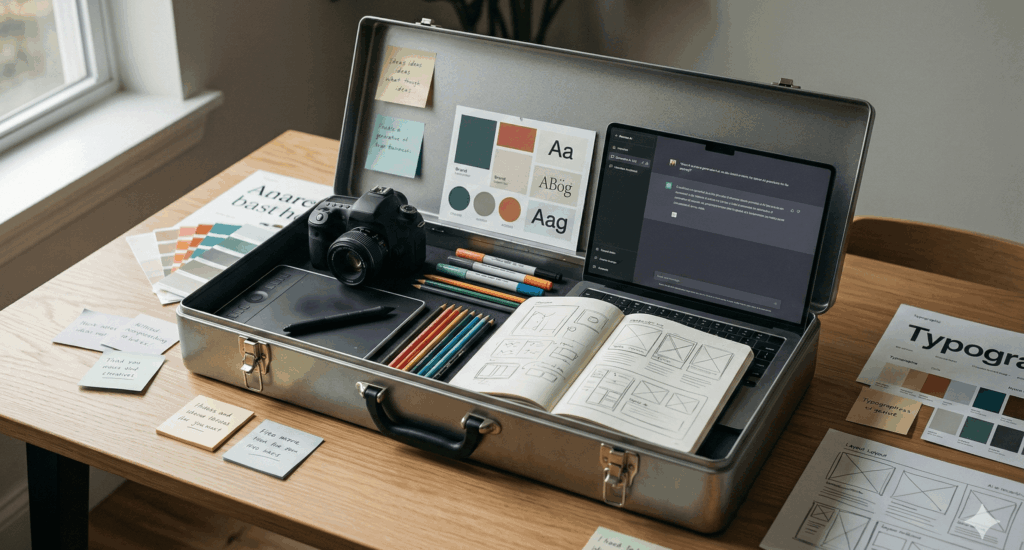
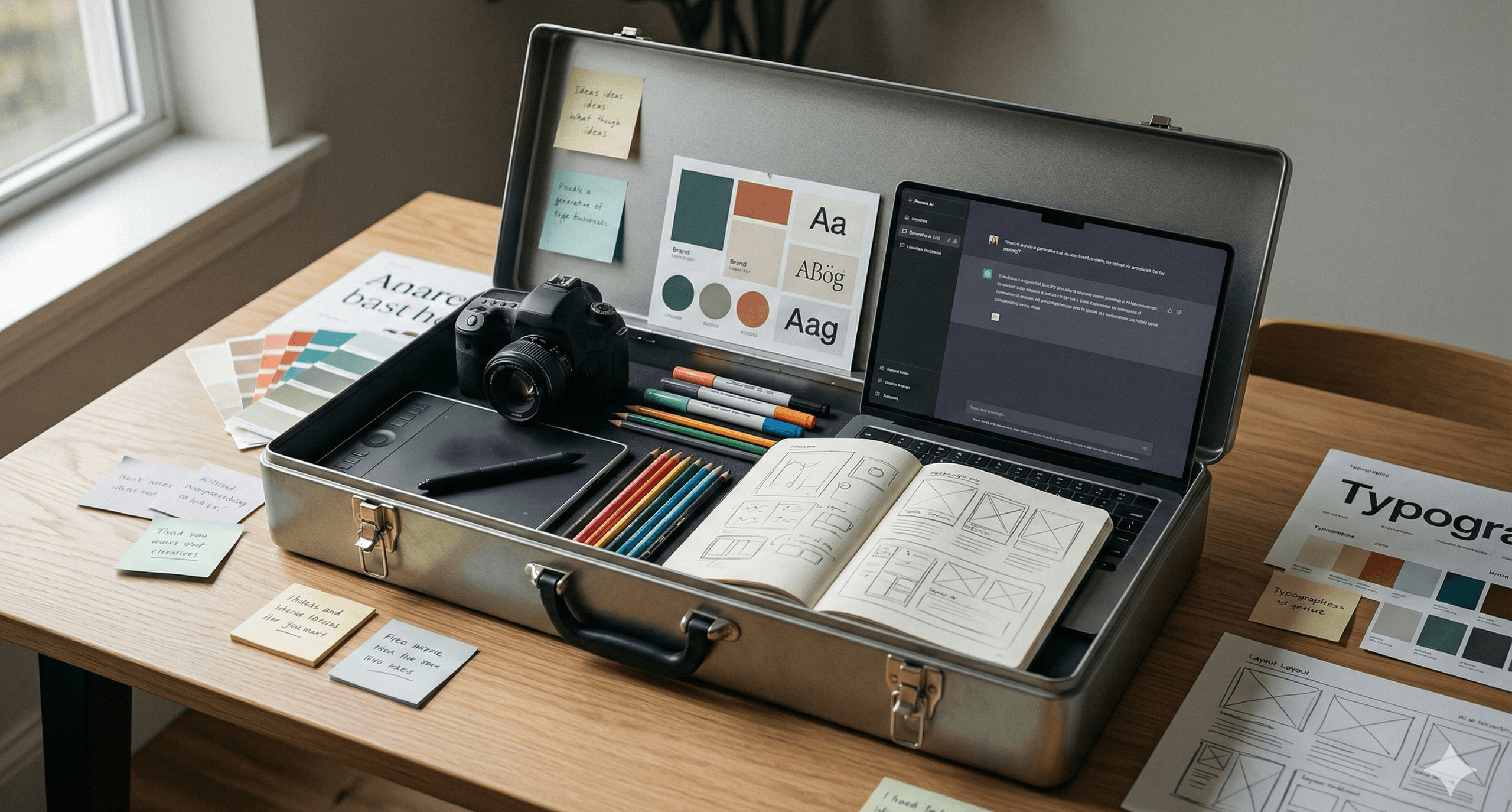
Generative AI is not a magic trick, any more than a camera or a graphics tablet ever was. It is a new tool in an evolving toolbox. And as with any tool, the value is created where people use it in a meaningful way.