Telefónica Deutschland Achieves a 275% Increase in Conversion Rate Through Recommendations Powered by Vertex AI
In brief
Telefónica Deutschland partnered with e-dialog to implement sustainable conversion optimization. By deploying Vertex AI Search for Commerce* on the Google Cloud Platform, the company created a fully automated, event-driven architecture (OREO = On-site Recommendation Experience Optimization). This architecture provides website visitors with personalized product recommendations in real time and maximizes click-through and conversion rates.
*Note: Vertex AI was rebranded as the Gemini Enterprise Agent Platform in 2026 as part of the platform’s evolution.

The Challenge: The Anonymity Dilemma in E-Commerce
Today’s online customers expect a personalized, relevant, and up-to-date shopping experience when they visit the o2 website. For Telefónica Deutschland, the main challenge lay in personalizing the experience for visitors who were not logged in. Since neither login credentials nor stable historical user profiles are available in this scenario, traditional CRM approaches largely fail. At the same time, these anonymous visitors account for the majority of the commercially valuable traffic on the platform.
However, during an active session, users implicitly reveal their interests through clicks and their specific browsing behavior. The central question was: How can these weak session signals be used to determine the most suitable product in real time?
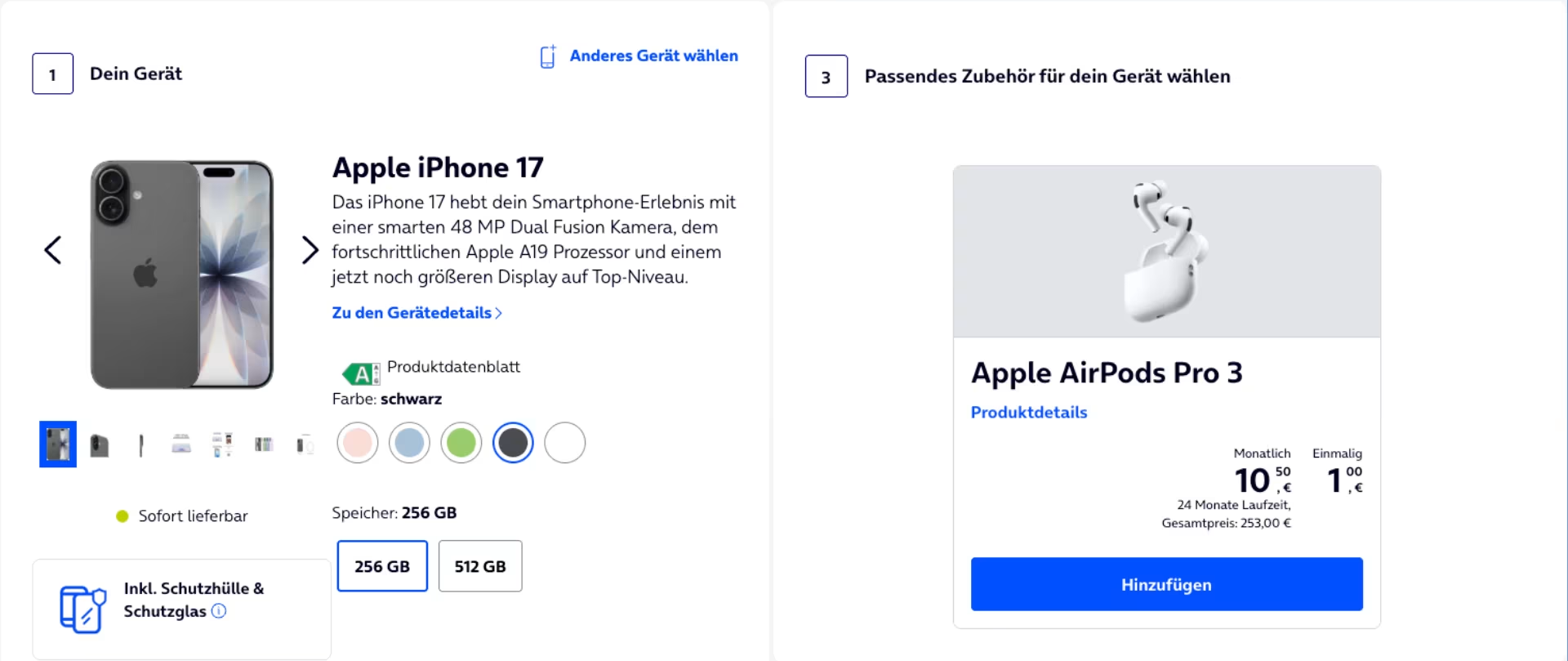
Image: Example of an automated recommendation in the o2 online store, Source: e-dialog
The old system boundaries:
Before the OREO project was launched, on-site product recommendations were based on two rigid pillars:
- Standard quotes (default quotes for everyone).
- Manually maintained, rule-based logic.
This process was not scalable in any way. It could neither respond to users’ intentions within a session nor account for dynamic shifts in interest—for example, when a user’s interest shifts from Apple to Samsung devices in the middle of a session. To address these rapid shifts in preference, the recommendations had to respond quickly enough that the new product would appear as soon as the next subpage loaded.
Consequently, the technological solution had to meet four criteria:
- Work completely without users having to log in.
- Interpret real-world browsing behavior without any delay (zero latency).
- Automatically identify the highest probability of purchase.
- Measurably increase revenue—without any manual effort.
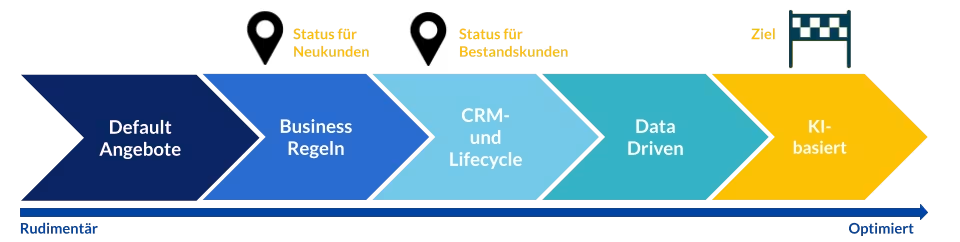
Image: Maturity Model – How Far Has My Company Come in Product Recommendations?, Source: e-dialog

With Vertex AI Recommendations, we deliver personalized product recommendations in real time that instantly adapt to user behavior—and reliably drive conversions.

Photo credit: Telefónica Deutschland
The Approach: Data-Driven Evolution in Two Phases
e-dialog, in collaboration with Telefónica Deutschland, designed and implemented a fully event-driven, scalable, and automated cloud architecture on the Google Cloud Platform. The system completely eliminates manual intervention and static rules.

Replacing static, rule-based systems with AI-powered data processing not only maximizes the relevance of customer communications but also provides the data-driven rationale for a fully future-proof e-commerce infrastructure.
Phase 1: The Pilot Use Case (Accessory Recommendations as an MVP)
To avoid a complex infrastructure from the start, the team began with a lean Minimum Viable Product (MVP). Accessory recommendations (“Frequently bought together”) displayed directly on the product detail pages (PDP) served as a testing ground.
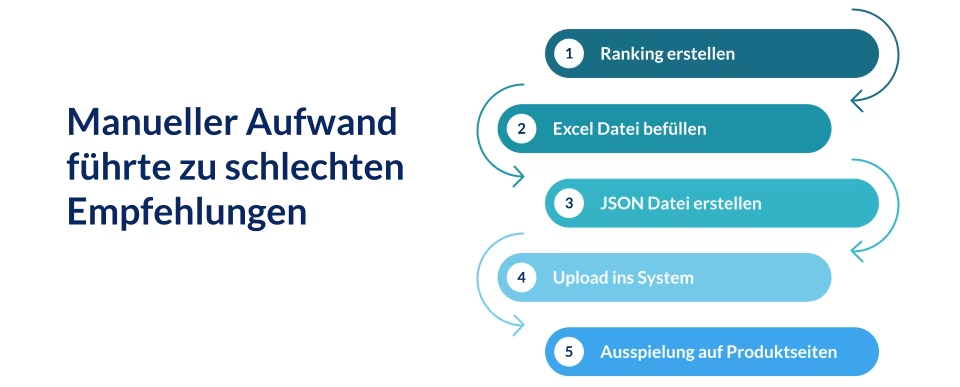
Why the Current Process hasn’t Scaled
The old, ineffective process: Previously, specialists had to manually enter rankings into Excel spreadsheets, convert them to JSON files, and manually upload them to the system. This resulted in outdated recommendations that lacked real-time relevance.
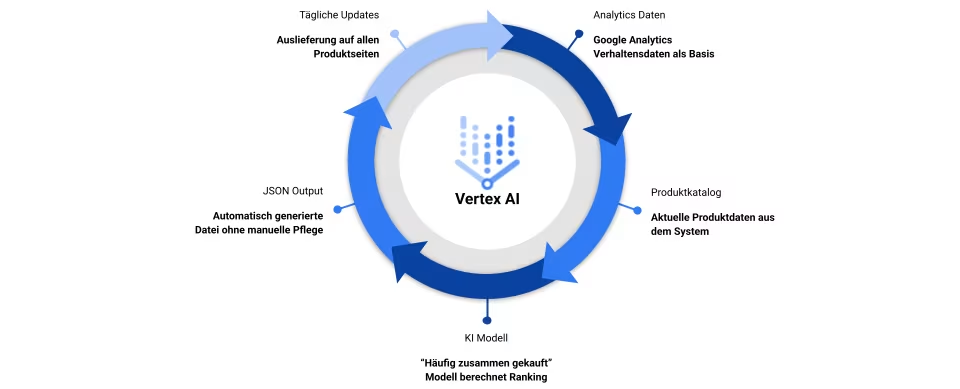
The Automated Approach Using Analytics Data and Vertex AI
MVP Automation: e-dialog fully automated this setup. Google Analytics behavioral data and up-to-date product data from the product feed are combined into continuous data streams. The AI model of the Vertex AI Retail API calculates the optimal ranking fully automatically and delivers a dynamic JSON output directly to the product pages.
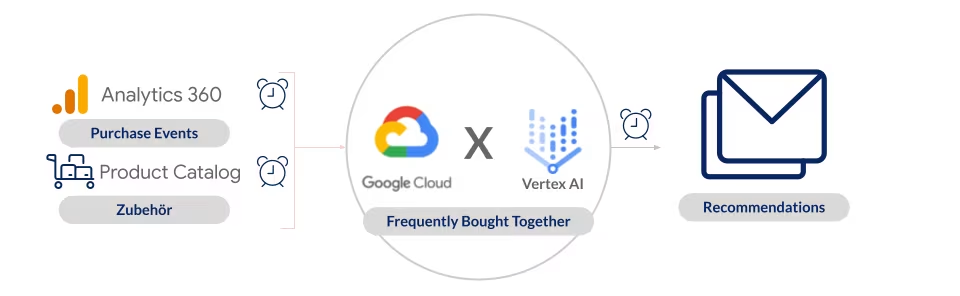
The Technical Cloud Architecture
The pilot results: Even this first step reduced manual effort to zero and increased conversions in the online store by 66%, with an ROI of over 550%.
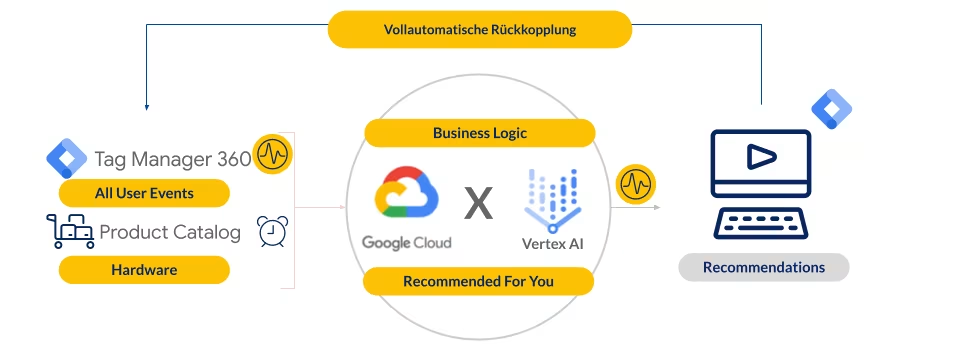
Further Optimization of the Cloud Infrastructure
Data Flow: The model is based on two continuously updated data sources: the product catalog from the product feed and real-time user behavior, which is fed in via Google Tag Manager.
All graphics – Source: e-dialog
Phase 2: The Hero Use Case (Surfing Preferences on Top Ad Spaces)
Following the success of the pilot, the team scaled the infrastructure to support the data-driven hero use case. The goal was to personalize the banner spaces with the highest reach on the homepage using real-time session data.
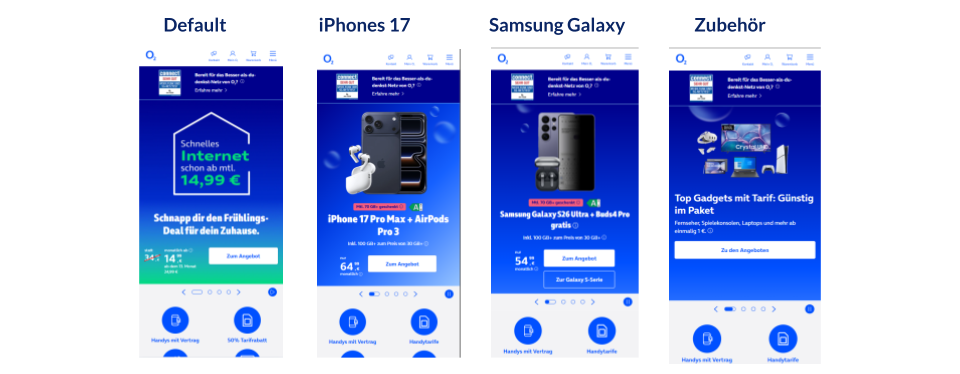
Graphic: AI-driven banners on the online store’s most prominent ad space—based on browsing preferences; Source: e-dialog

By defining the entire infrastructure as Infrastructure as Code (IaC) and integrating it into an automated CI/CD pipeline, the architecture is fully auditable, reproducible without errors, and seamlessly transferable to other brands or use cases.
Synergy Between Media and the Cloud: The Closed-Loop AI Ecosystem
The true power of personalization becomes evident when traffic generation and the onsite experience work together seamlessly. To achieve this, e-dialog combined advanced Google Ads strategies with the new cloud architecture. AI-driven campaigns such as Performance Max and Demand Gen drive highly relevant visitors to the website. There, the responsive onsite AI (Gemini Enterprise for CX) picks up on these signals without interruption and translates them directly into personalized recommendations. This creates a cohesive AI ecosystem that optimizes the entire customer journey—from the very first click on an ad to the final purchase.
The Results: Outstanding Business Value in the A/B Test
This dynamic adaptability allows recommendations to be updated instantly. This is evident, for example, when users switch their focus between different smartphone models within the same session (e.g., from an iPhone to a Samsung Galaxy). The AI model recalibrates the banner content without any noticeable delay.
Enormous leverage from AI-driven platform revenue: An A/B test validated this new approach and demonstrated significantly higher engagement. With millions of recommendations served, the personalized banners achieved an outstanding click-through rate of 17%. The highly relevant content led to a 275% increase in the conversion rate. Thanks to low Google Cloud costs and the significant increase in revenue, Telefónica Deutschland achieved a return on investment of 939%.
- % Return on Investment (ROI)
- % Click-Through Rate (CTR) Personalized Banners / Interaction Uplift
- % Conversion Rate Uplift In the Hero Use Case / Conversion Booster
- million calculated recommendations in 30 days
- % Increase in Conversions as early as the MVP phase
Outlook: The Omnichannel Future
Following the successful onsite rollout, the next step is to scale the OREO infrastructure. In the future, real-time browsing preferences will be made available across all channels to provide customers with the most relevant product recommendations at every digital and physical touchpoint—including the Mein O₂ app, in-store retail locations, and the service hotline.
The long-term goal is comprehensive page-level optimization, in which AI models individually arrange the entire page layout.
With this move, Telefónica Deutschland is establishing a comprehensive full-funnel strategy. Going forward, personalization will no longer begin only when a user visits the website, but will start as early as the data-driven media delivery phase. The systematic breaking down of silos between AdTech and cloud technology thus enables a consistently relevant experience for customers—one that is seamless, intelligent, and measurably successful across all touchpoints.