The New Google Dmp In Display 038 Video 360 Audience Management
Management Summary
Hello Google Marketing Platform – bye bye DoubleClick
In July 2018, Google launched its new product “Google Marketing Platform” and said goodbye to the DoubleClick world as we previously knew it. With this rebranding measure, Google is not only able to optimize the individual products of the DoubleClick Suite and thereby simplify processes and make them more efficient, but also to position a first-class new data management platform.
Google DMP – Data Management Platform
OneData Management Platform (DMP)is the heart of data-driven marketing. With a DMP, 1st, 2nd and 3rd party data from various sources is collected, organized and activated. The raw data is converted here into usable information.
The advantages of the new Google Marketing Platform
The new Google DMP brings one thing above all: efficient work. Teams can collaborate across functions, individual modules such as Google Analytics 360 and Display & Video 360 can be connected directly and with just a few clicks to generate insights quickly and effectively! 3rd party data can also be accessed via the Integration Center more easily than ever before. Reporting has also been simplified and updated – with Instant Reporting you always have the most current data without additional updating effort.
The advantages at a glance:
- Cross-team collaboration
- Data ownership
- Connection of the individual modules
- Better transparency and control
- Advanced technologies, improved automation processes
You can read exactly how the new Google Marketing Platform is structured here:Google Marketing Platform: All innovations and advantages for marketers
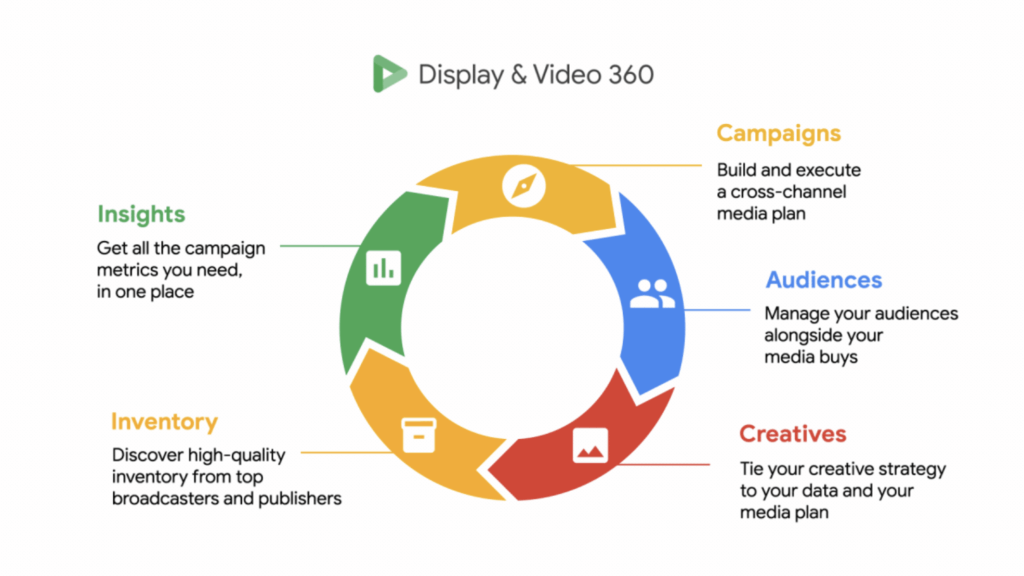
Especially inDisplay & Video 360There are numerous new features that enable better insights and analyzes of existing data and form the basis for efficient campaign planning and execution.
Let’s take a look at the latest functionalities in the display & Video 360!
Advanced audience management
With the release of the new features, more and more data management platform elements are flowing into Display & Video 360.
1. Tag-based audiences
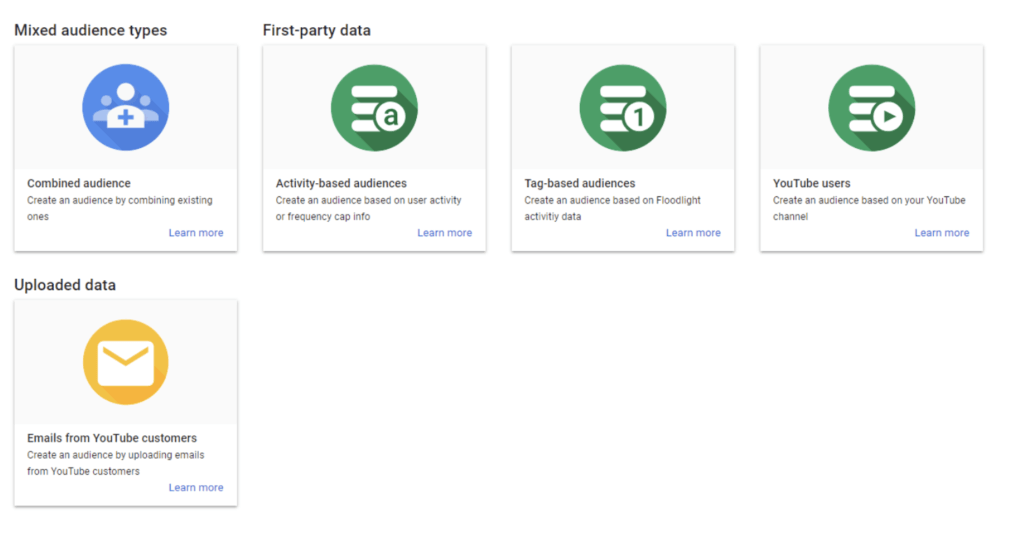
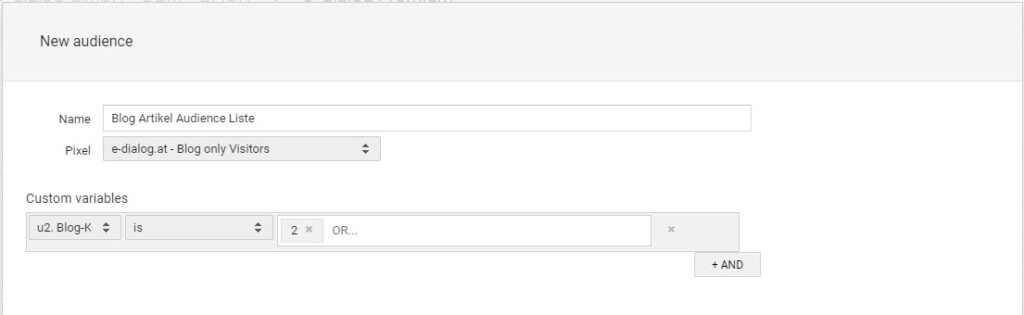
This corresponds to the data collected via Floodlight tags. The events and transferred variables (u parameters) can be accessed here.
2. Activity-based audiences
With the new audience management functions, it is easily possible to segment and reach users who have interacted with past campaigns – whether impressions, clicks or conversions.
Campaign Activity
With this function it is possible to create an audience list based on past campaign activities. For example, you can create your own audience lists based on selected metrics – impressions, clicks or conversions.

Audience Frequency Cap
Using the frequency cap, an audience list can be created in which, for example, users who have already achieved a certain number of impressions are excluded. This feature makes it easy to control a user’s frequency capping across campaigns or inventory types.

This is a special highlight and cannot be offered by many DMPs!
For example, the advertising pressure can be limited to the individual user across campaigns (!) and across bookings.
This prevents a user who falls into three campaign targets from receiving an incredible number of advertising contacts.
Even if a user has already been shown a number of impressions in a classic I/O booking (fixed placement), this prevents over-playing via RTB.
This prevents classic banner blindness and enables real frequency caps at user level!
3a. YouTube Audiences – interaction-based
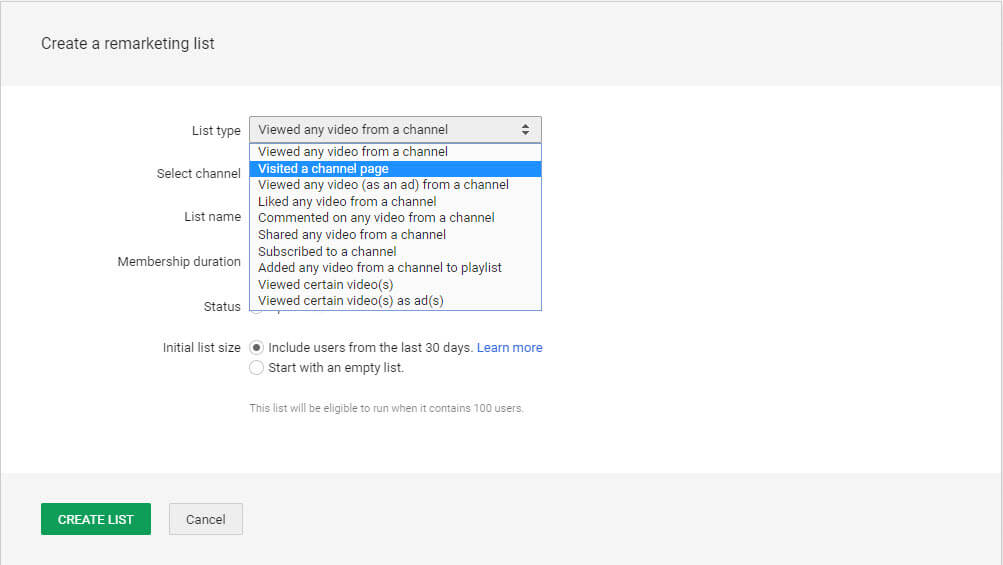
There are two ways to create YouTube Audiences. On the one hand, users who have interacted with a video or TrueView Ads can be recorded in a list.
3b. YouTube Audiences – Email based
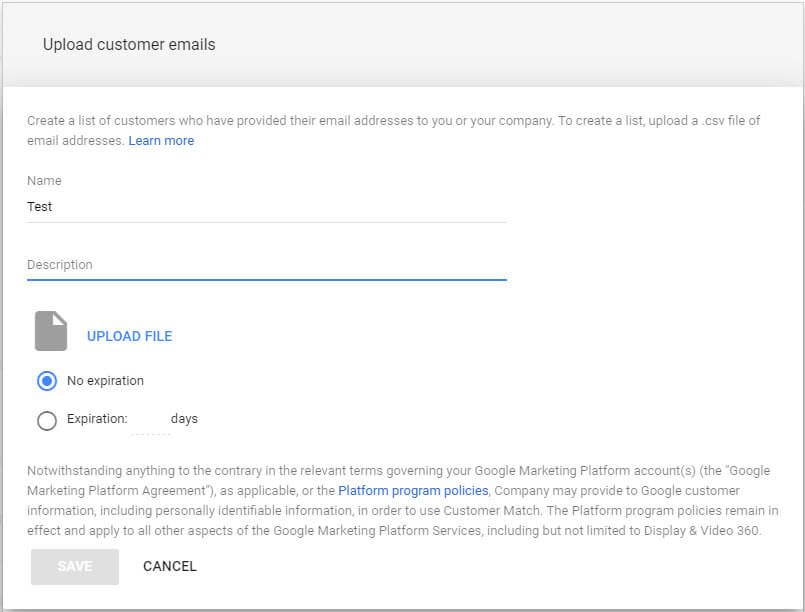
On the other hand, it is possible to upload existing email addresses via “Emails from YouTube customers” and turn them into an audience list with Customer Match.
4. Google Analytics 360 Audiences
Audiences can be created from Google Analytics 360 and easily integrated from there with Display & Video 360 (and other products) can be linked. These are then available for both combined audiences and direct targeting.
The strengths of GA360 Audiences are:
- Availability of all Google Analytics metrics and dimensions: session duration, bounce rates, paths and all individual dimensions and metrics, whether tracked or synced via data upload!
- Cross-session segments (e.g. >3 visits without shopping cart)
- Intelligent audiences formed via machine learning
5. Google Proprietary Data: Demographics, Affinity, In-Market Audiences
Affinity audience lists are the predefined target group segments provided free of charge by Google, which include users who have a certain affinity for a product or category.
The In-Market Audience lists are also predefined targeting lists from Google. However, these lists are based on the user’s willingness to purchase a product or service. Demographic audience lists are data sets that are broken down into dimensions such as age, gender and/or geography. The advantage of demographic categorization is the different segments that can be formed and provides a basis for the various targeting options.
6. Custom Affinity & Custom Intent Audiences
Custom Affinities and Custom Intent are the DV 360 counterpart to Google Audiences. In contrast to the predefined target group segments (Affinity and In-Market Audiences), DV 360 allows you to create tailor-made segments. In Custom Affinity, the interests of the user are in the foreground; in Custom Intent, data sets are collected from users who are willing to buy a specific product and/or service. This targeting option allows you to reach the right target group even more granularly.
You can find out more about this in ourFind out blog articles.
7. Combined Audiences – the premier class
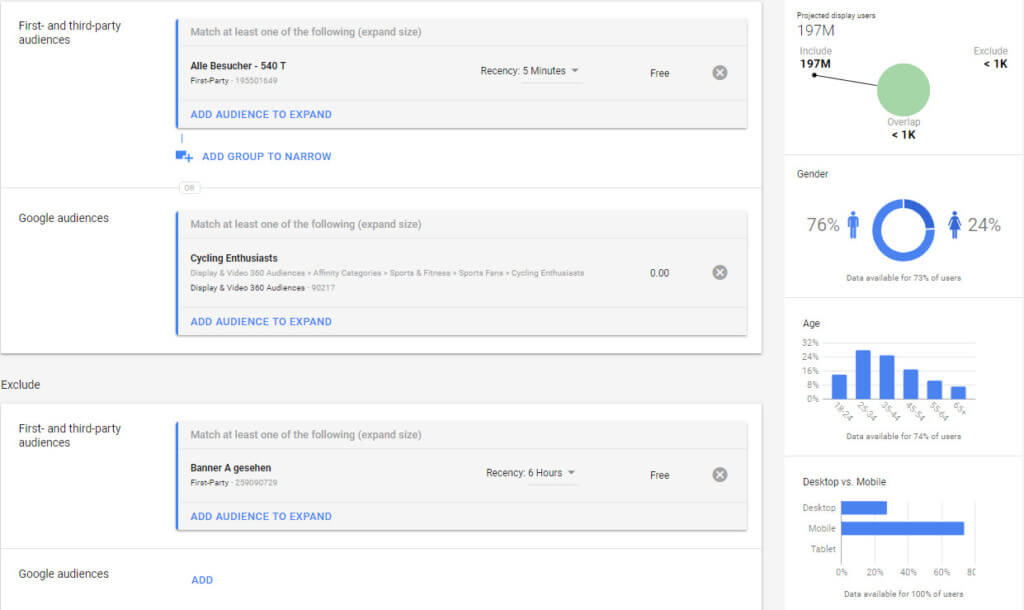
Combined audiences can now easily be created between your own 1st party data, Google Audiences or 3rd party data and used for campaigns. Certain 1st party data, such as buyers with in-market audience lists (users who are willing to buy), are stored in a list and specifically targeted. It is also possible to easily exclude individual audience lists – be they 1st or 3rd party data.
Recency – another highlight
A somewhat hidden special feature is the adjustable recency of the data sets: With a signal (e.g. visit, purchase, …) you can set how long after the signal a user should be integrated into the audience list.
Adjustable from 1 minute (!!!) up to 1 year.
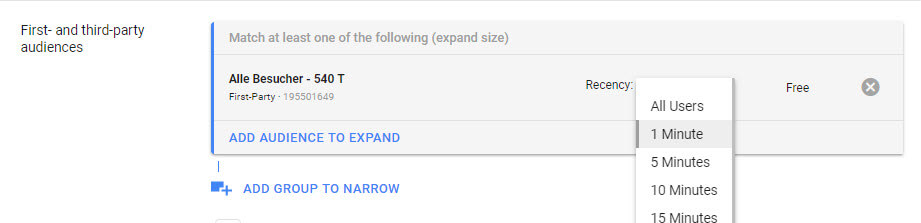
Many other systems only synchronize their cookies once a day – so one thing is certain: you can only send messages so accurately with a display & Control Video 360! Practical example: You don’t want to see any more remarketing immediately after your purchase!
Audience Profile Analysis
Another highlight is the analysis of existing users and audiences. This allows insights into the behavior, interest and overlaps of your target group to be generated and the targeting used to be optimized.
We will examine this new feature in detail in a later article.
Why is audience management important?
Knowing and targeting customers is the basis of every successful, data-driven campaign. In order to achieve this in real time, with relevant content and tailored to individual needs, a well-structured data pool is required – or audience management.
This means linking all existing information and data to a target group profile.
Audience management as part of the marketing strategy enables better insights into customer behavior and thus their targeted approach.
Highlights of Google Audience DMP in DV360
In summary, we can say that these new features will definitely make campaign planning and execution easier and more efficient:
- Many data sources(GA 360, Campaign Manager, Display & Video 360, YouTube or YouTube customer emails)
- Powerful, combined audience lists– exploit the potential of your data by combining 1st and 3rd party data with Google data
- Recency– enables tailor-made up-to-dateness of your data
- Frequency cap– Limit frequency caps across campaigns!
- included Google data– free but not for free,)