Breaking Down CTV Silos with Google DV360: How to Uncover Hidden Waste and Optimize Reach More Efficiently

Management Summary
Connected TV has long since become an integral part of modern media plans. Streaming services, ad-supported video libraries, and smart TV platforms reach 79% of all Germans* on the largest screen in the home. But with the growing number of CTV providers, a problem is emerging that many advertisers underestimate: fragmentation. If you book YouTube through one platform, Netflix through an agency, Amazon through another, and regional broadcasters separately, you lose track of who you’re actually reaching—and how often.
*Source: Comscore Exact Commercial Ratings commissioned by Google, January 2025, UK, Germany, France, Italy, Spain
In this article, we’ll explain why separate CTV bookings lead to costly waste, how the Google Marketing Platform AdStack (DV360 & Campaign Manager) can help you identify this waste, and what role Campaign Manager 360 plays as the central measurement hub in this process.
The Problem: Three Symptoms of Fragmentation
When CTV campaigns are spread across multiple platforms and service providers, three typical challenges arise.
-
01
Fragmentation
YouTube and direct CTV bookings are managed separately. Each channel pursues its own goals without knowing about the other. It is not possible to manage them jointly across both platforms.
-
02
Saturation
Because the individual ad campaigns are not linked, the same users are repeatedly targeted across different channels. The actual frequency of contact rises unchecked—and the advertising budget is spent on unnecessary repeat contacts instead of reaching new target audiences.
-
03
Flying Blind
There is no cross-market measurement of net reach. No one can reliably say how many real, unique individuals have been reached across all CTV channels. The overlaps between channels remain invisible.
The result is a paradoxical situation: You invest in reach, but in reality, you often end up reaching the same people over and over again.
The Solution: Centralization via the Google Marketing Platform AdStack (DV360 & Campaign Manager)
The key to the solution lies in consolidation. Instead of spreading CTV activities across many silos, they are consolidated through the GMP AdStack—specifically through the two central tools, Display & Video 360 (DV360) and Campaign Manager 360 (CM360).
DV360 serves as a central buying platform for programmatic inventory: It allows advertisers to manage YouTube CTV placements as well as premium inventory from broadcasters and streaming providers through deals. The key advantage: Within a DV360 campaign, contact frequency can be managed across all channels. The platform knows who has already been reached via YouTube and can either specifically exclude that person from a CTV placement or deliberately target them again.
CM360 serves as the central measurement authority—the “single source of truth.” And this is precisely where an often-overlooked but crucial lever lies.
The Underestimated Tool: Campaign Manager 360 Also Measures What You Can’t Buy Through DV360
Not all CTV inventory can be booked programmatically via DV360. A few premium providers—such as certain Amazon environments or exclusive broadcaster packages—continue to be handled as direct or fixed bookings, outside of the Google DSP. In a fragmented setup, these bookings would be a black box: You pay for reach, but you don’t know whether it overlaps with your programmatic campaigns.
This is where Campaign Manager 360 really shines. As an overarching ad-serving and measurement system, CM360 can not only track programmatic DV360 campaigns but also measure fixed bookings with CTV providers, provided they are delivered with CM360 tags. This allows even channels that cannot be purchased via the Google DSP to be integrated into a unified, consolidated reach measurement system.
The result: a comprehensive view of all CTV activities—regardless of whether the inventory was purchased programmatically or directly, and regardless of the provider.
Two key metrics that highlight the difference
Once all activities are consolidated through CM360, it becomes possible to measure two key metrics that remain hidden in a fragmented setup.
-
01
Overlap
The overlap shows how many users were reached across multiple channels at the same time. A high overlap between two CTV providers means that a significant portion of the budget is being spent on duplicate contacts. A low overlap, on the other hand, indicates that the channels actually reach different audiences and complement each other effectively. Only by understanding these overlaps can you optimize media allocation in a targeted manner.
-
02
Incremental Reach
Even more telling is incremental reach. It answers the question: How many new, unique individuals does an additional channel reach who could not have been reached through existing channels? A CTV publisher with high incremental reach is valuable because it expands the total audience—whereas a publisher with high overlap and low incrementality primarily re-engages people who have already been reached. This distinction is the basis for efficient budget allocation.
Before and After: The Effects of Consolidation
The difference between a fragmented and a consolidated setup can be clearly illustrated.
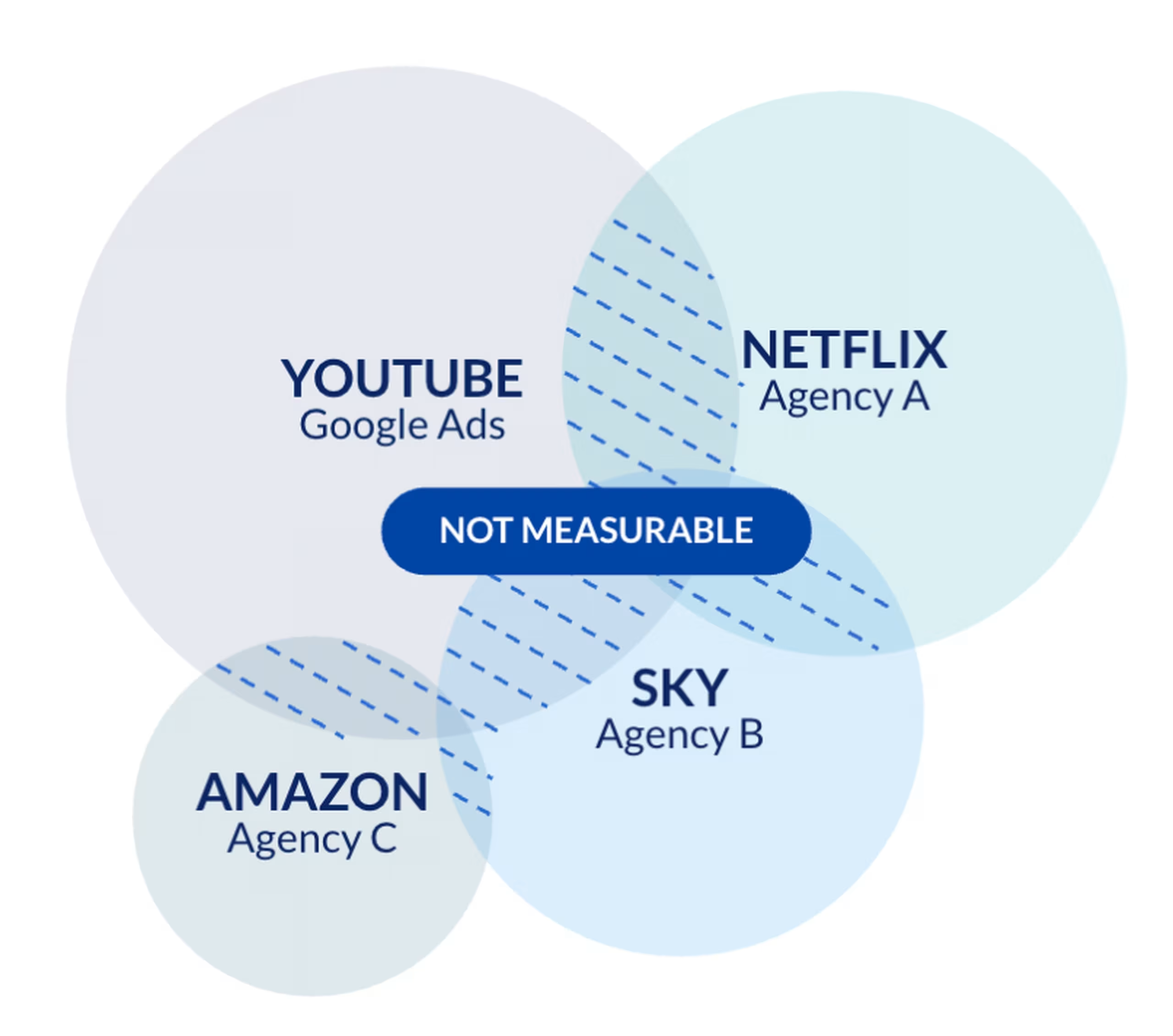
In the fragmented pre-transformation state, YouTube, Netflix, Amazon, and other providers are booked separately through various platforms and agencies. The overlap between these channels is simply impossible to measure. The same people are reached multiple times without anyone realizing the extent of the duplication—a waste of budget that goes unnoticed.
Image: The overlap among CTV providers when using different platforms cannot be measured. Source: e-dialog
In the consolidated post-integration state, all channels converge into a single DV360 campaign, measured via CM360. Overlaps are transparently and actively monitored. It appears that, in addition to YouTube, CTV publishers largely provide new, unique reach. Instead of investing the budget in reaching the same users twice, it is used to expand the audience.
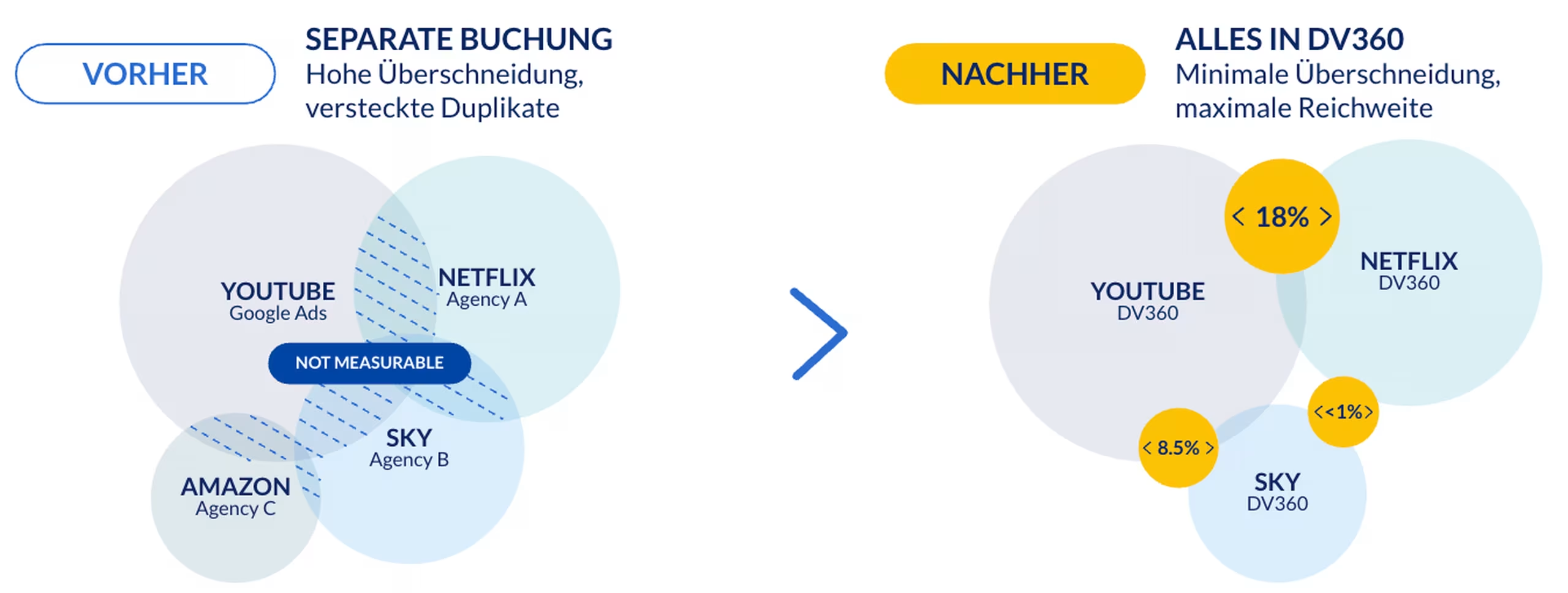
Image: Before-and-after comparison: Separate bookings across different platforms vs. bundling in DV360. Source: e-dialog
AI-powered frequency optimization as the next step
Consolidation not only creates transparency but also lays the foundation for smarter campaign management. With AI-powered optimization, all campaigns can be managed in a way that reaches the largest possible unique audience while minimizing repeat impressions to the same users.
The principle is simple: Instead of each individual ad building its own frequency independently—and contacts accumulating uncontrollably—a common frequency target is defined across all ads. The AI intelligently distributes the contacts across the available inventory. This prevents oversaturation of individual users and redirects the saved budget specifically toward new target audiences.
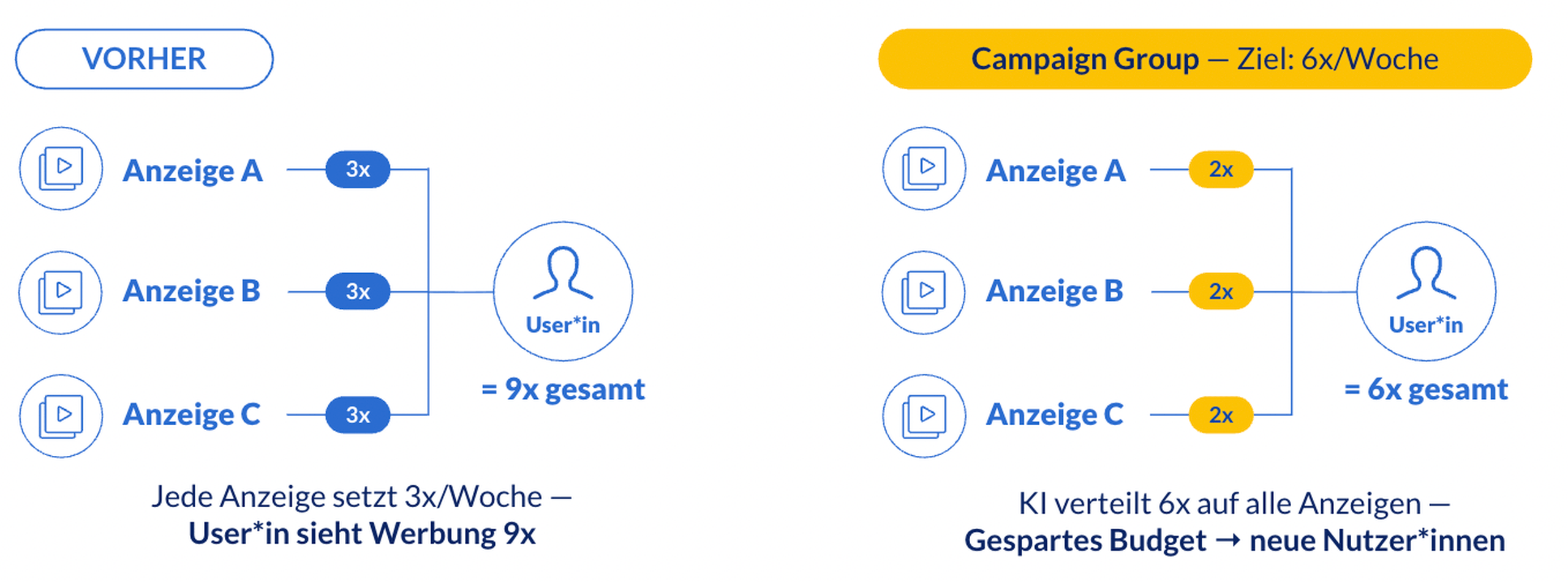
Image: Frequency optimization across all ads and providers. Source: e-dialog
Conclusion: From Silo to System
CTV offers enormous reach potential—but only if you break down the silos. As long as YouTube, CTV deals, and direct bookings operate separately, wasted reach remains invisible and budget is squandered.
The GMP AdStack offers a clear solution: DV360 as the central buying and management platform, and CM360 as the overarching measurement solution that even captures non-programmatic fixed bookings. Together, they make overlap and incremental reach measurable—and lay the foundation for directing budget where it delivers real value: to new, previously unreached audiences.
Anyone who takes CTV seriously should view it not as a collection of individual bookings, but as a cohesive system. That is precisely where the key to greater reach on the same budget lies.

Featured image: AI-generated