Guide: Technical SEO as the Foundation for Content Success

Management Summary
Why Technology Is the Foundation of Content Success
Especially when it comes to technical topics, I find it helpful to use an analogy: Imagine your content is a carefully crafted gift. But without technical SEO, the address is missing from the package, or access to the building is blocked. The delivery service—in this case, the search engine—can’t deliver your gift at all. Technical SEO ensures that the infrastructure is in place so your content has any chance of reaching the recipient. In short: Without this foundation, even the best content remains invisible to the recipient.
Best Practice:
Don’t treat technology and content as separate silos. A technical audit should always be the first step before launching a major content campaign.
Three key aspects are particularly relevant:
- Accessibility and indexability
- Performance and User Experience
- Site Architecture and Structure

Accessibility and indexability
Sticking with our analogy, what matters here is whether the package can be delivered. Only content that is accessible to the search engine will ultimately end up in the index and reach the recipient.
One important difference to keep in mind here:
- Crawling: Includes all pages that a crawler can find via sitemaps and links
- Indexing: Includes all pages that have been added to the search index
It is not uncommon for our audits to reveal significant discrepancies between the two figures. If a website allows thousands of URLs to be crawled but only a few hundred ultimately make it into the index, this strongly suggests the presence of a technical barrier.
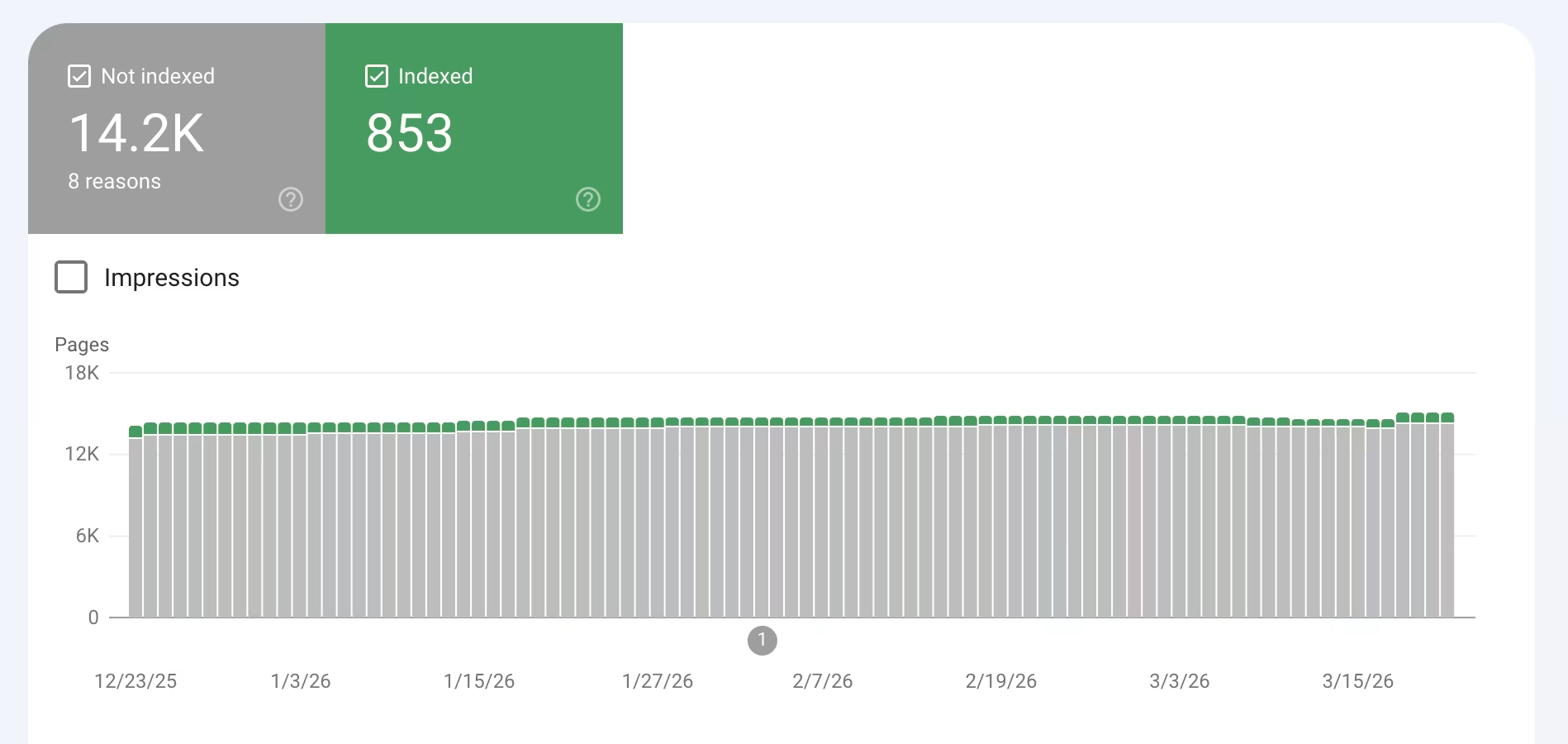
For an initial assessment, Google Search Console is the tool of choice. Review the metrics individually and pay special attention to pages with the status “Crawled – not currently indexed.” You’ll often find valuable content here that the search engine doesn’t (yet) consider relevant or that technical issues prevent from being included in the index.
Things you should keep an eye on for your website:
- Crawling errors: 4xx, 5xx errors, or (unintended) redirects
- XML sitemap—this should serve as a guide for search engines
- Robots.txt defines sections of the website that should not be crawled
Performance and User Experience (Core Web Vitals)
This is about how the user feels once they’ve received the content. It’s not just the content itself that matters, but also how it feels to interact with it. The so-called Core Web Vitals measure exactly that: How smooth and enjoyable is the user experience on your site?
Core Web Vitals are performance metrics developed by Google that measure the user experience on a website. They influence SEO rankings and have a direct impact on user behavior and conversion rates.
The focus is on three key aspects:
- LCP (Largest Contentful Paint): Page Load Speed
- INP (Interaction to Next Paint): Interactivity
- CLS (Cumulative Layout Shift): Visual Stability
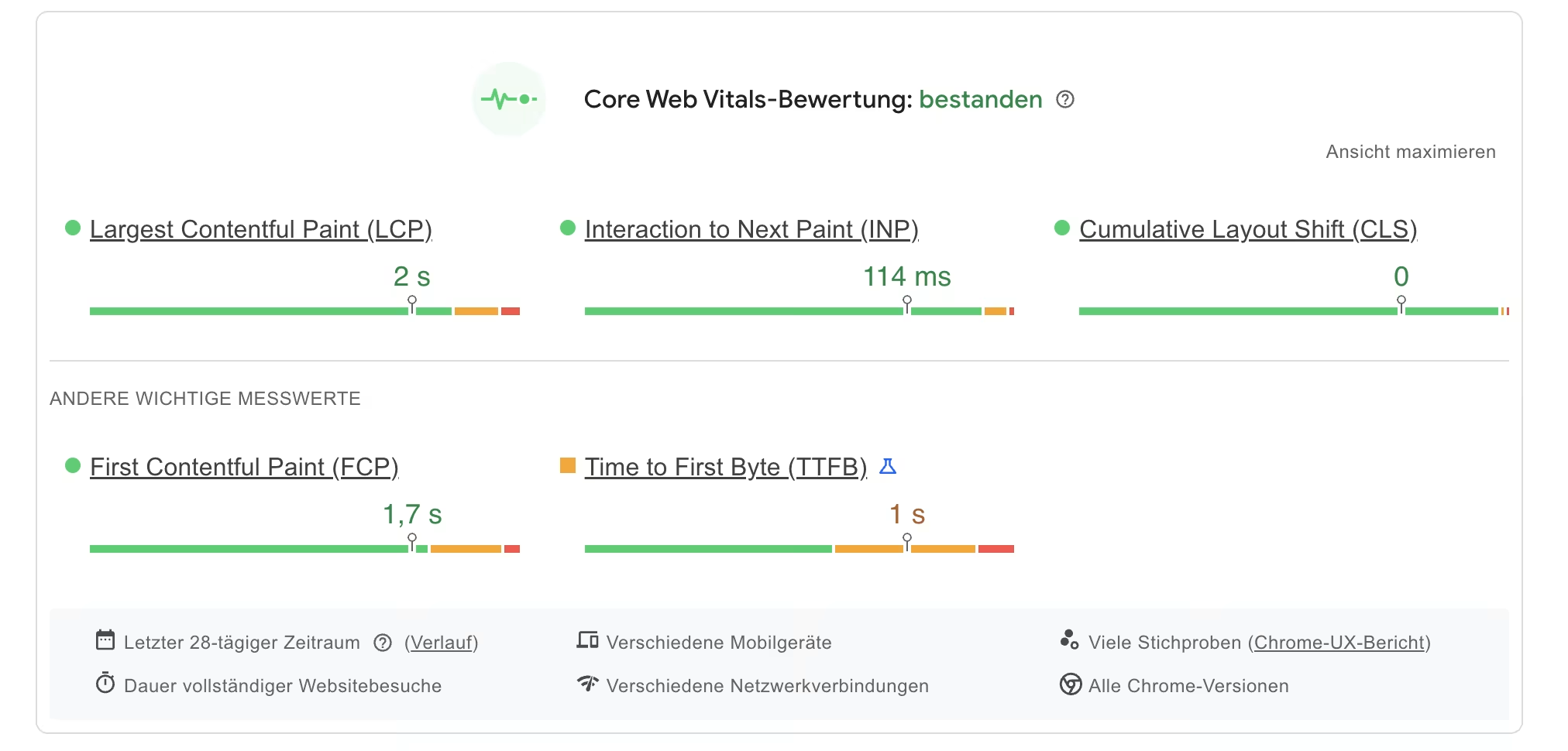
Tip: Use the PageSpeed Insights tool to get an initial overview of your Core Web Vitals. You’ll also receive regular updates in Search Console about changes to your page load times and user experience.
Often, it is performance bottlenecks—such as outdated image formats, lazy loading, or blocking scripts—that unnecessarily drive up the LCP. Ongoing technical monitoring provides the detailed analysis needed to move from general reporting to troubleshooting.
You can also learn how to analyze these metrics using GA4 in this blog post on Core Web Vitals in GA4.
Site Architecture and Structure
Your website’s architecture is like the sorting process in a large logistics center. If the packages are scattered all over the place, no one can find what they’re looking for. A clear structure not only helps the crawler but also intuitively guides users to their destination.
The Door Opener: Meta Tags. In the initial organic interaction, meta tags form the foundation for visibility in search results. The meta title serves as the first point of contact between the searcher and the website. In addition, the meta description acts as a summary that explains the page’s value and invites the user to continue their customer journey on the website.
Depending on your site structure, there are other tags that may be relevant to your website:
- Canonical tags to prevent duplicate content
- Hreflang tags for indicating multilingual content
- Structured data to help machines understand your website
Best Practice: It can be difficult to set priorities, especially with very large websites. Experience shows that it helps to first ask yourself: Which pages would I most want to be found organically? Ideally, create a top-20 list and start by specifically optimizing those pages.
SEO in the Age of AI Agents: Back to Basics?
The world of SEO is constantly evolving, and it has recently welcomed a new player: today, we no longer optimize solely for traditional search engines, but increasingly for AI agents as well. Those who have been in the SEO business for a while may feel as though they’ve been transported back to the early days of SEO: the requirements are constantly evolving and changing.
But even though the playing field is new, the rules remain fundamentally the same. My clear recommendation, therefore, is to keep doing your best when it comes to SEO. A clean technical structure is and will always be the foundation for ensuring your AI visibility. Much of what contributes to organic optimization also helps AI models better understand the website and classify the content as relevant.
Best Practice: Trustworthiness is particularly important here. This is where structured data comes into play as a tool for making high-quality content verifiable by machines. By ensuring that information about authors, organizations, and subject matter experts is stored in a technically sound manner, you reinforce your website’s credibility.
Conclusion
Technical SEO remains relevant, especially as we transition toward AI-driven visibility. Only by implementing these fundamentals can you ensure your website’s long-term organic visibility and give your carefully crafted content the opportunity to rank well.