Agentic Commerce: Why Your Feed Is the New Landing Page

Management Summary
Imagine your customer says to her AI assistant: “Find me a waterproof running jacket in size 38, under 150 euros, with delivery by Friday.” The agent compares a dozen stores in seconds, selects a product, and buys it—without ever opening your website.
That’s exactly what Agentic Commerce is all about. In this article, you’ll learn how far this trend has progressed in the DACH region, which four factors determine your Agentic Commerce readiness, and the three steps you can take to get started next week.
What is Agentic Commerce, and why does it already affect you today?
“Agentic Commerce refers to the automated purchasing process in which autonomous AI agents, acting on behalf of users, compare and select products based on real-time data and complete the transaction directly.”
Agentic Commerce means that an AI agent handles parts of the shopping process for users. It understands the request, compares products, recommends a selection, and, in the best-case scenario, even completes the purchase.
The technical foundation for this already exists. In January 2026, Google, in collaboration with Shopify, introduced the Universal Commerce Protocol (UCP). This open standard governs how agents communicate with merchants—from product search through the shopping cart to checkout. The first applications are running in Google AI Mode and in Gemini.
At the same time, Google introduced new conversational attributes in Merchant Center in May 2026. These are additional feed fields designed to help agents understand a product as well as skilled salespeople do.
You’re wondering why this matters right now? Because search behavior is already shifting in measurable ways.
What do the figures show about traffic trends in the DACH region?
Organic traffic in the DACH region fell by 20.3% year-over-year in the second quarter of 2026. This is shown by the update to the e-dialog traffic study, which analyzed 74 websites and 1.2 billion sessions.
By way of comparison: In February 2024, Gartner predicted that search engine volume would drop by 25% by the end of 2026. By 2028, Gartner even expects a 50% decline in organic traffic. In April 2026, the situation still looked manageable. Our first traffic study, covering data through the end of 2025, showed only a −4.2% decline in organic traffic. Since mid-2025, however, the decline has accelerated significantly:
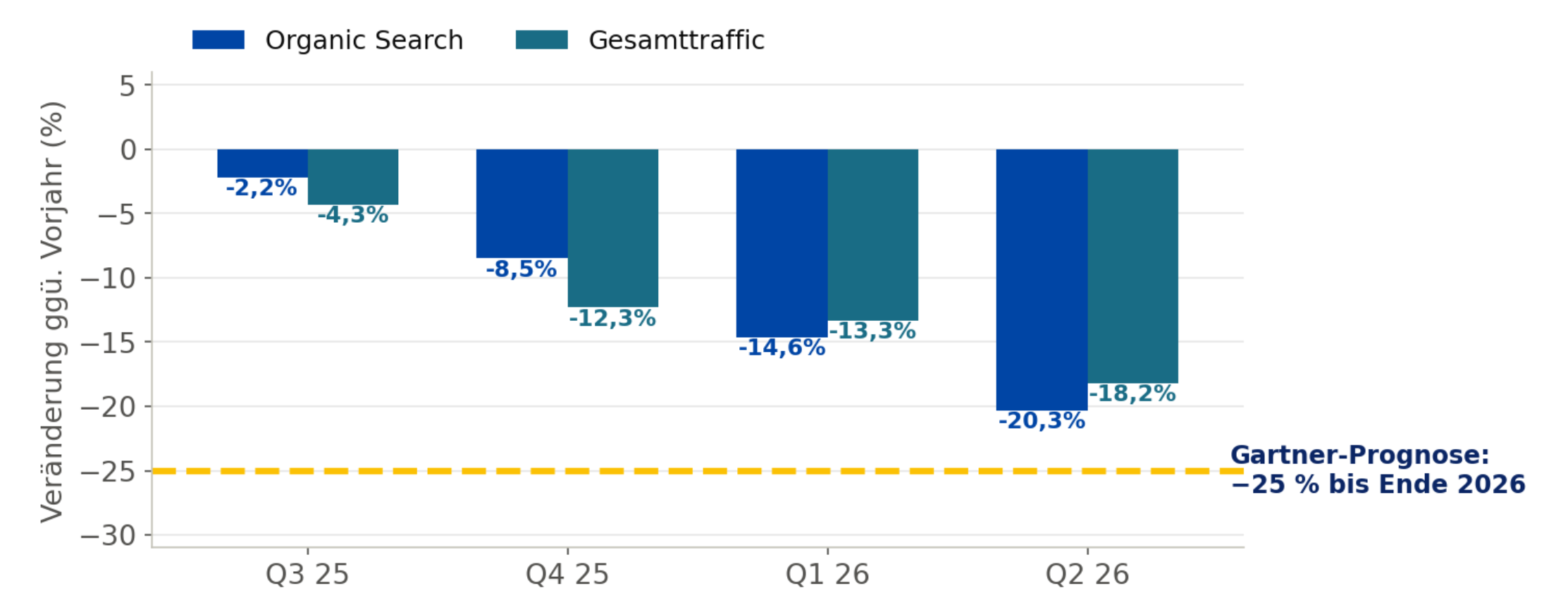
Q3 2025: Organic Search −2.2%, Total Traffic −4.3%
Q4 2025: Organic Search −8.5%, Total Traffic −12.3%
Q1 2026: Organic Search −14.6%, Total Traffic −13.3%
Q2 2026: Organic Search −20.3%, Total Traffic −18.2%
Figure 1: Change in organic search and total traffic compared to the same quarter of the previous year (Source: e-dialog Traffic Study, H1 2026 Update)
At the same time, AI referrals are the only channel experiencing strong growth. In the first half of 2026, this traffic tripled. However, its share of total traffic remains below 1%. What organic search loses, AI traffic does not regain.
Retail was hardest hit in the first study: -12% organic traffic compared to +18% paid search. Product searches, in particular, are shifting to AI-powered chats. And that’s precisely where Agentic Commerce comes in.
How does Agentic Commerce change the customer journey?
In agentic commerce, the feed drives the purchase decision, not the landing page. The difference becomes clear when you compare both journeys side by side (Figure 2):
Classic commerce: Search → Search results page → Landing page → Decision → Checkout
Agentic Commerce: Intent → Agent compares via data → Decision → Checkout
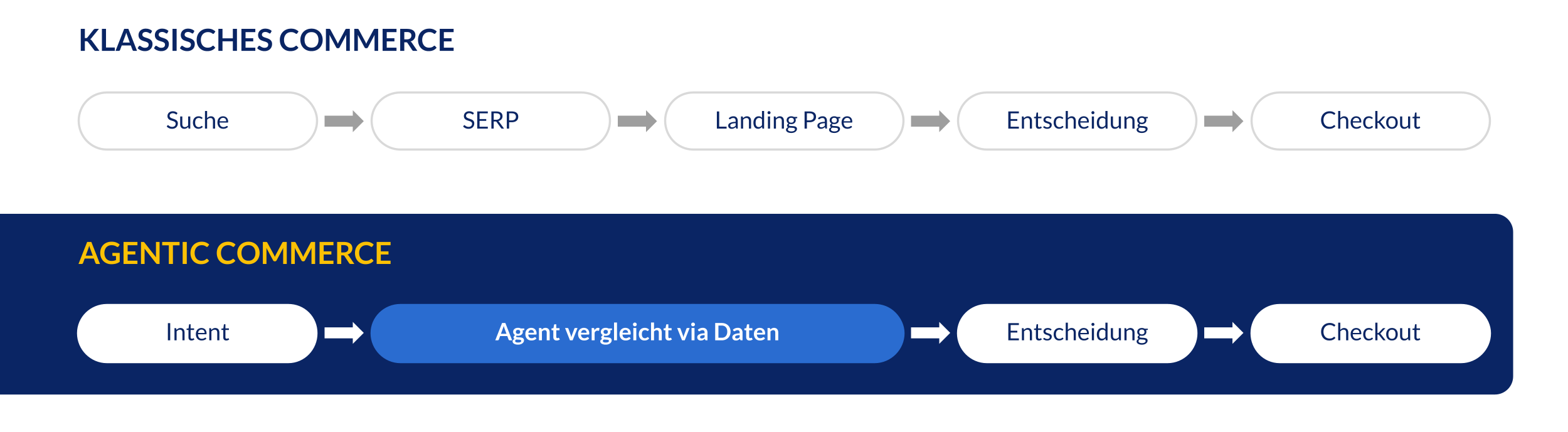
Figure 2: Customer Journey in Traditional Commerce and Agent-Centric Commerce (Source: e-dialog)
The agentic journey omits two steps that have traditionally consumed a significant portion of the marketing budget: the search results page and the landing page. The agent doesn’t see a hero image or read a brand story. They only see your feed, your attributes, and your signals—such as price, availability, and delivery time.
This leads to a key principle: The feed is the new landing page. If it isn’t optimized, your products will become invisible—regardless of how beautifully your product page is designed.
The good news: Feed optimization isn’t a project for the future. It’s already paying off today in Google Shopping and Performance Max.
What are the four dimensions that determine your Agentic Commerce Readiness?
Agentic Commerce Readiness is not purely a technical issue. It is shaped by four dimensions that encompass operational, strategic, technical, and organizational considerations (Figure 3).
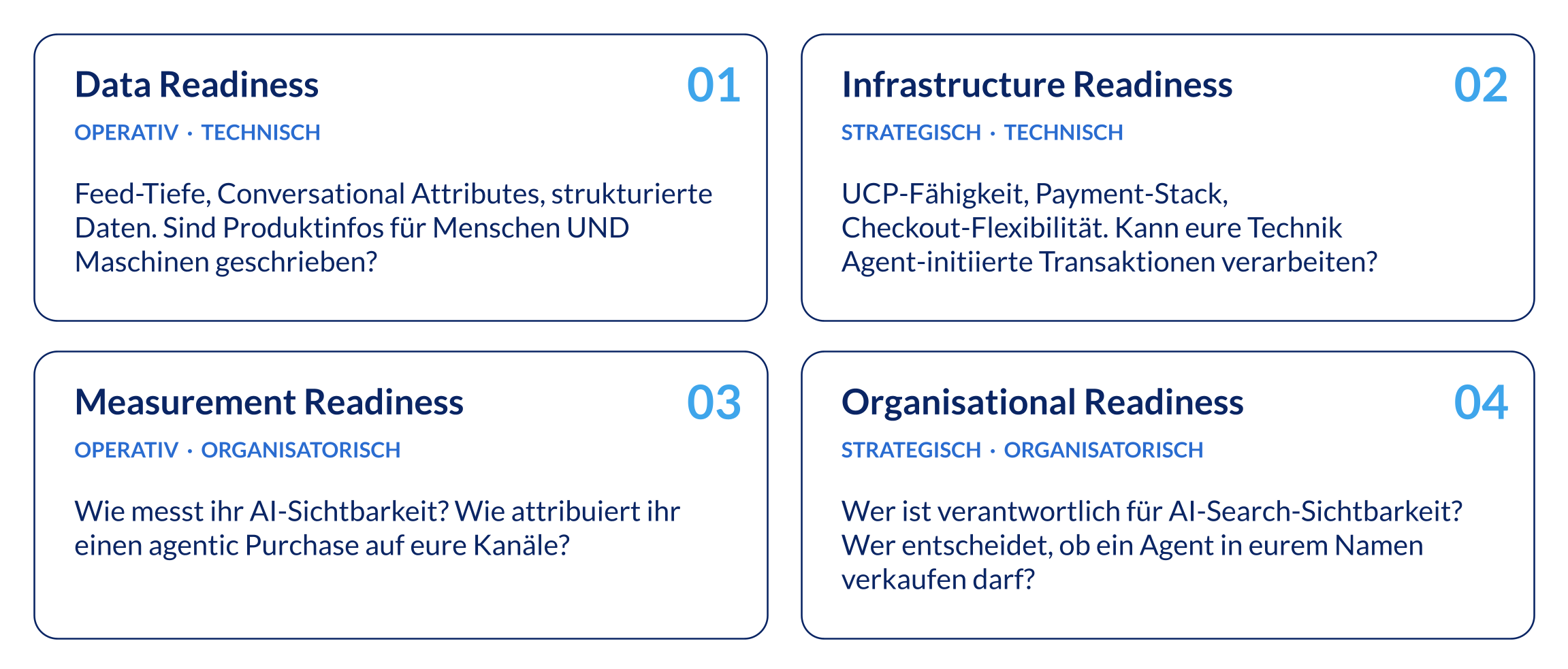
Figure 3: The Four Dimensions of Agentic Commerce Readiness (Source: e-dialog)
Data Readiness: Is your product data written for machines?
Until now, feeds have primarily been optimized for shopping ads: title, price, image, GTIN. An agent needs more context. It has to answer questions like “Does this fit my device?” or “Is this also available in navy?”
To address this, Google introduced Conversational Attributes in Merchant Center in May 2026, for example:
| Conversational Attributes | Function for the AI agent | Practical example for the feed |
|---|---|---|
| question_and_answer | Answers product FAQs directly on the product page for specific questions. | Question: “Is the jacket machine-washable?” Answer: “Yes, at 30 degrees on the gentle cycle.” |
| related_product | Defines semantic relationships such as accessories, replacement parts, or alternatives. | Store the ID for a compatible waterproofing spray or the corresponding running pants. |
| document_link | Links to additional PDFs, such as user manuals or data sheets. | URL to the manufacturer’s certificate confirming the guaranteed 10,000 mm water column. |
| item_group_title | Specifies the umbrella name for the entire product family. | “ProRunner Weather Protection Series” |
| variant_option | Identifies the dimensions that distinguish individual product variants from one another. | “Color: Navy,” “Size: 38” |
| popularity_rank | Sends the store’s internal bestseller rankings to the system. | “1” (for the best-selling item in the jackets category) |
These fields are optional and, according to Dataïads, are already available in all countries.
Infrastructure Readiness: Can your checkout process do what the agent requires?
When an agent initiates the purchase, your technology must accept the transaction without a human click. Your stack needs four capabilities for this:
- UCP Capability: Integration with the Universal Commerce Protocol
- Payment Stack: Payments Initiated by an Agent
- Checkout Flexibility: Checkout via API instead of a rigid landing page flow
- Data Consistency: Real-time feed, availability, and pricing
Technically, many setups are already capable of this. However, hardly anyone has configured it.
Measurement Readiness: How do you measure visibility that you can’t see?
An agent recommends your product and the customer buys it directly. Where does that appear in your reporting? For many companies, this is a blind spot. A modern view of visibility comprises four levels:
- Paid Search Visibility: The Channel You’re Already Tracking
- Organic Search Visibility: SEO and Rankings
- AI Search Visibility: AI Overviews, AI Mode, and Gemini
- Social & Alternative Search: TikTok, Reddit, and Perplexity
Without a consolidated view, you’re flying blind in Agentic Commerce. To learn how to increase your visibility in AI responses, read our article on GEO and AI overviews.
Organizational Readiness: Who decides what the agent is allowed to do?
Ask this question internally: Who is responsible for AI Search Visibility at our company? If no one answers, that’s the answer. There are four roles you should clarify:
- AI Search Ownership: Who Is Responsible for AI Visibility as a Goal?
- Agent Mandate: Who decides whether an agent is allowed to sell on your behalf?
- Feed Control: Who determines what appears in the feed?
- Budget and Priority: Who funds the preparations before launch?
Plan for a lead time here. Organizational readiness typically takes six to twelve months.
When will Agentic Commerce launch in the DACH region?
The agent-based checkout is launching in the U.S., with Europe to follow. According to Pimberly, Google has so far expanded UCP to Canada, Australia, and the U.K. The current status for the DACH region:
- AI Mode has not yet been fully rolled out in all markets.
- UCP Checkout and Direct Offers are currently in the US pilot phase.
- Conversational Attributes, on the other hand, can already be populated in all countries.
Our assessment: Initial launches in the DACH region are realistic within three to six months, with widespread availability expected by 2027. Still, it’s not worth waiting—for four reasons:
- Feed quality is already paying off today—specifically in traditional shopping campaigns.
- What works for Shopping today will also drive AI Mode later on. The data foundation is the same.
- Organizational readiness takes six to twelve months. Anyone who waits until launch to get started will be too late.
- Early adopters shape visibility in their category before the competition can react.
Those who are prepared now will be ready for the launch. Those who wait will have to catch up on months of work all at once.
What three steps can you take right now for Agentic Commerce?
You don’t have to wait for the launch. With these three steps, you can get started as early as next week:
-
01
Conduct a Feed Audit
Compare your current feed with the new Conversational Attributes. What’s missing? Who in your organization can fill in the gaps? Start with your top products by revenue or margin.
-
02
Check Merchant Center
Which pilots and features are already available in the DACH region? Talk to your Google contact or your agency.
-
03
Schedule a 30-minute meeting
There’s just one question on the agenda: Who’s responsible for AI search visibility at our company? Most of the time, the answer is: no one. That’s exactly where the gap lies.
One final note: Your agency should be able to have these conversations with you. If not, that’s also a sign of readiness.
Conclusion: Get your store ready for Agentic Commerce today
Agentic Commerce isn’t live in the DACH region yet, but the groundwork has been laid. Organic traffic is declining faster than expected, and product searches are shifting to AI chats. If you want to be found there, you’ll need clean data, a flexible checkout system, a new understanding of visibility, and clear responsibilities.
The most important points at a glance:
- In Agentic Commerce, an AI agent compares products based on data and makes purchases on its own. The feed becomes the new landing page.
- Organic traffic in the DACH region fell by 20.3% in Q2 2026, and the decline is accelerating.
- Readiness is defined by four dimensions: Data, Infrastructure, Measurement, and Organization.
- The UCP Checkout is launching in the U.S. You can already populate the Conversational Attributes worldwide today.
- Organizational readiness takes six to twelve months. So get started now.
From our perspective, the feed is the most important lever. It’s no longer just the foundation for shopping ads—it’s your most important selling point when dealing with AI agents.