Our Highlights Of Dmexco 2023 Ai Retail Media Dooh Ingame Audio And Much More
Management Summary
This year’s DMEXCO was all about artificial intelligence (AI), innovation and creativity. We were there live this year too and have summarized the most important highlights for you.
AI is the future
Artificial Intelligence (AI) or Gen AI is currently a hot topic that is changing the entire marketing industry and was of course represented on all stages of DMEXCO.
According to a study by OWM (Organization of Advertisers in the Brand Association), 52% of the companies surveyed are already using AI in marketing. It is mainly used for text creation, but also for personalizing content, in creative processes and for data analysis. Other areas where AI is already being used include media planning, marketing automation and optimizing customer journeys.
The main argument for using AI is efficiency. Of course, there are also some challenges associated with the new technologies, such as regulation of copyright rights, damage limitation and responsibilities as well as fake news. However, AI is not a hype or a trend, but the future and although legal regulations are slow, they are definitely coming. Experts agree that AI will make our everyday lives easier once we know how to use it.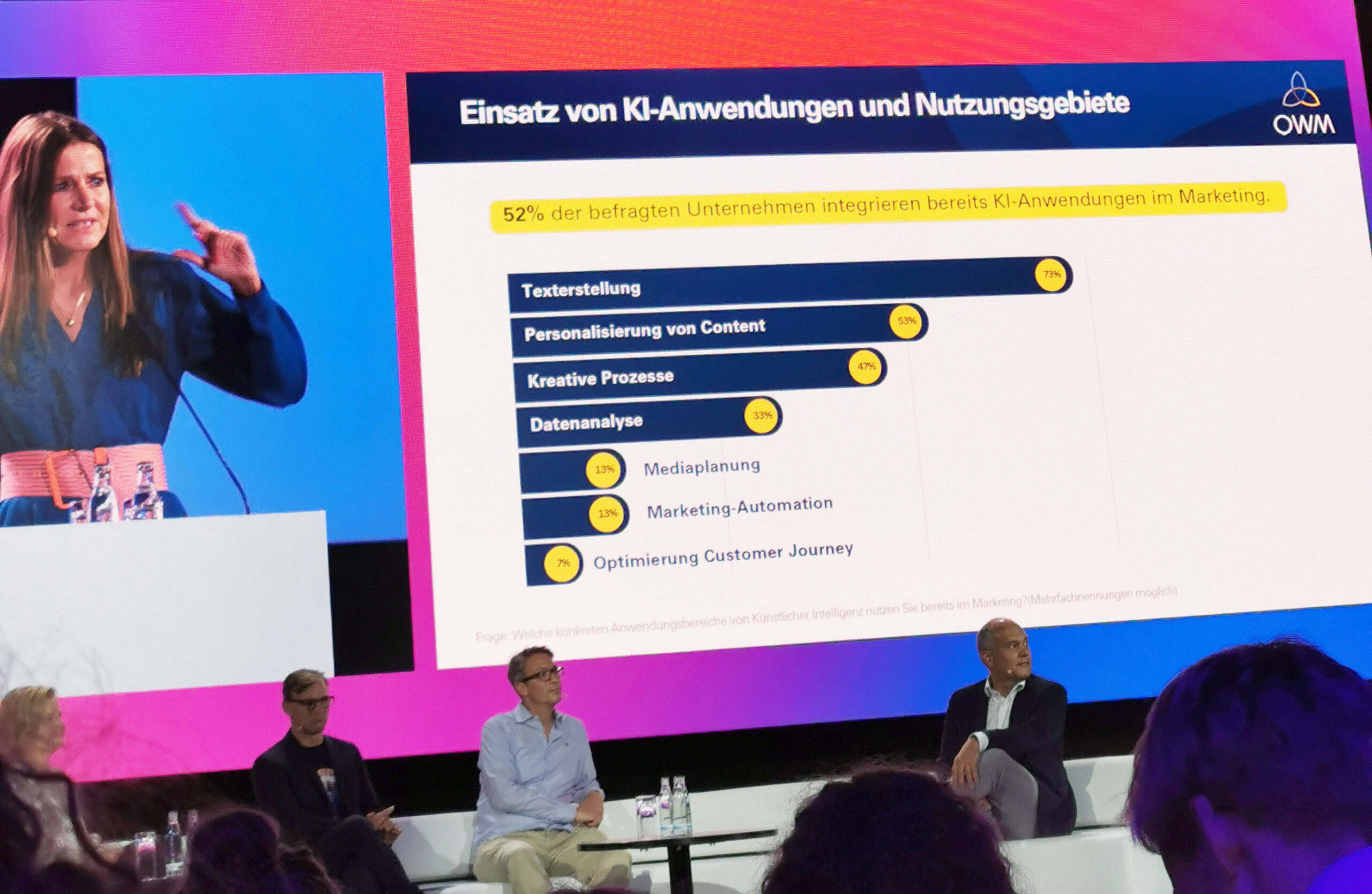 Use of AI applications and areas of use, source: e-dialog / photo from the lecture at DMEXCO 2023
Retail Media*: Retailers become publishers
Retail media is a huge trend in Europe, where more and more retailers are becoming publishers and providing advertising space in their physical or digital ecosystem. These can be DOOH screens in the store, but also sponsored advertising in the online shop and much more. The advantages for the advertiser are manifold. The advertiser has the opportunity to present their product or brand in an environment where relevance, visibility and customer acceptance are very high. You can use retail media in a full-funnel strategy and accompany consumers along their customer journey. The whole thing is data-driven and can partly be booked programmatically in Germany. Accessibility, standardization and measurability are the basic building blocks of retail media and we work hard to ensure them. This new type of media buying is therefore very promising and shows great potential.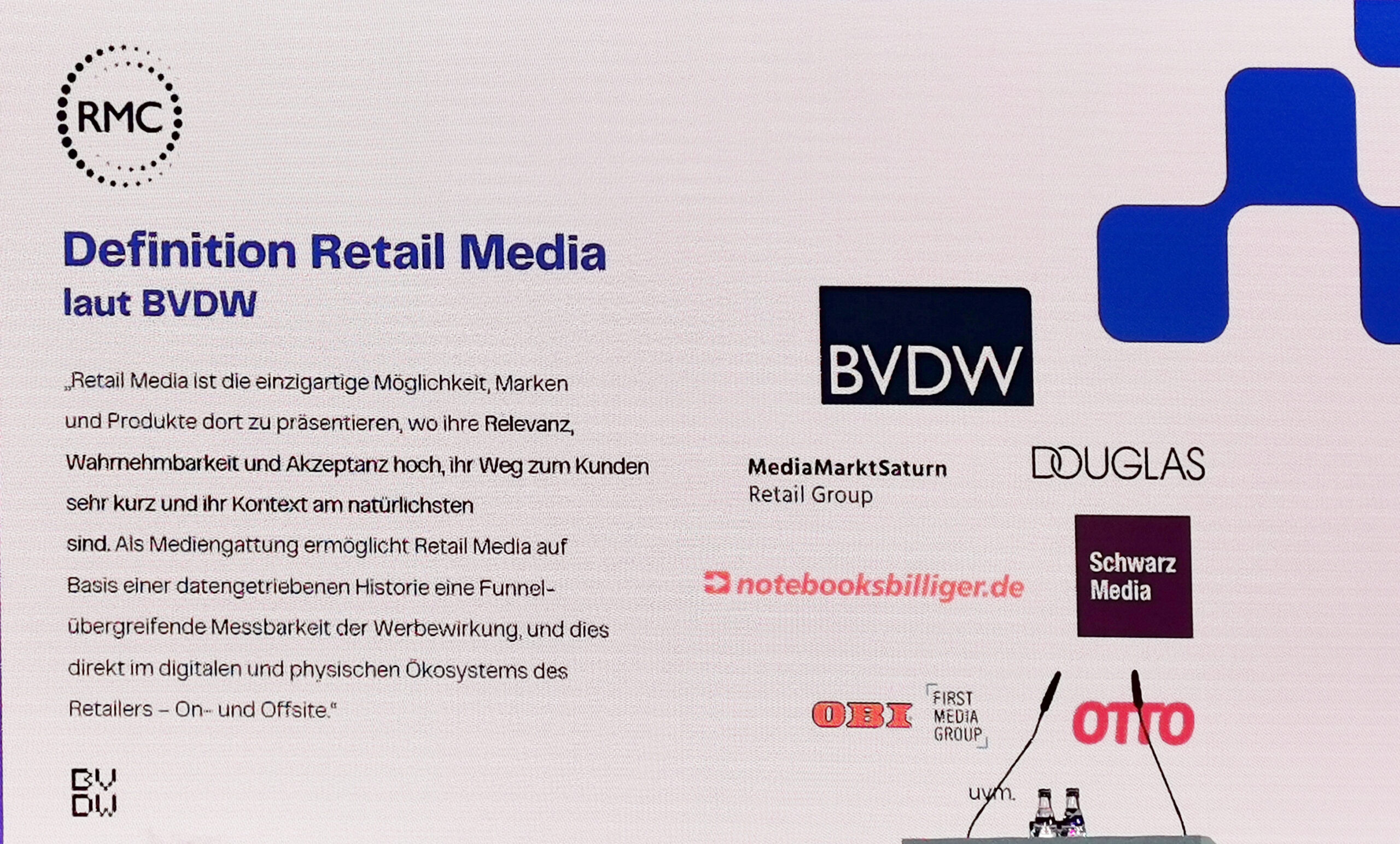 Definition of Retail Media by the BVDW, source: e-dialog / photo from the lecture at DMEXCO 2023
*Retail Media is the unique opportunity to present brands and products where their relevance, visibility and acceptance are high, their path to the customer is very short and their context is most natural. As a media genre, retail media enables the advertising impact to be measured across funnels based on a more data-driven history, directly in the retailer’s digital and physical ecosystem – on and offsite. (Definition of retail media according to BVDW)
DOOH
According to experts, Digital Out Of Home (DOOH) is a standard component in all media plans. As an awareness channel, it offers a great opportunity to address the target group in a real environment on the way to work, while shopping or while driving. With the help of first-party data, companies can specifically control their display and, for example, advertise near their stores. In cooperation with other data providers, traffic data can also be used to reach people who are currently stuck in traffic. Mobile retargeting of people who have walked past the DOOH screens is also possible. When creating advertising material, you also have many opportunities to test new things and run extraordinary campaigns. Current trends include 3D creatives, dynamic advertising materials, adjustment of creatives in real time and advertising material analyzes using AI. DOOH has long been bookable programmatically, which has the advantage of cross-media and cross-country control.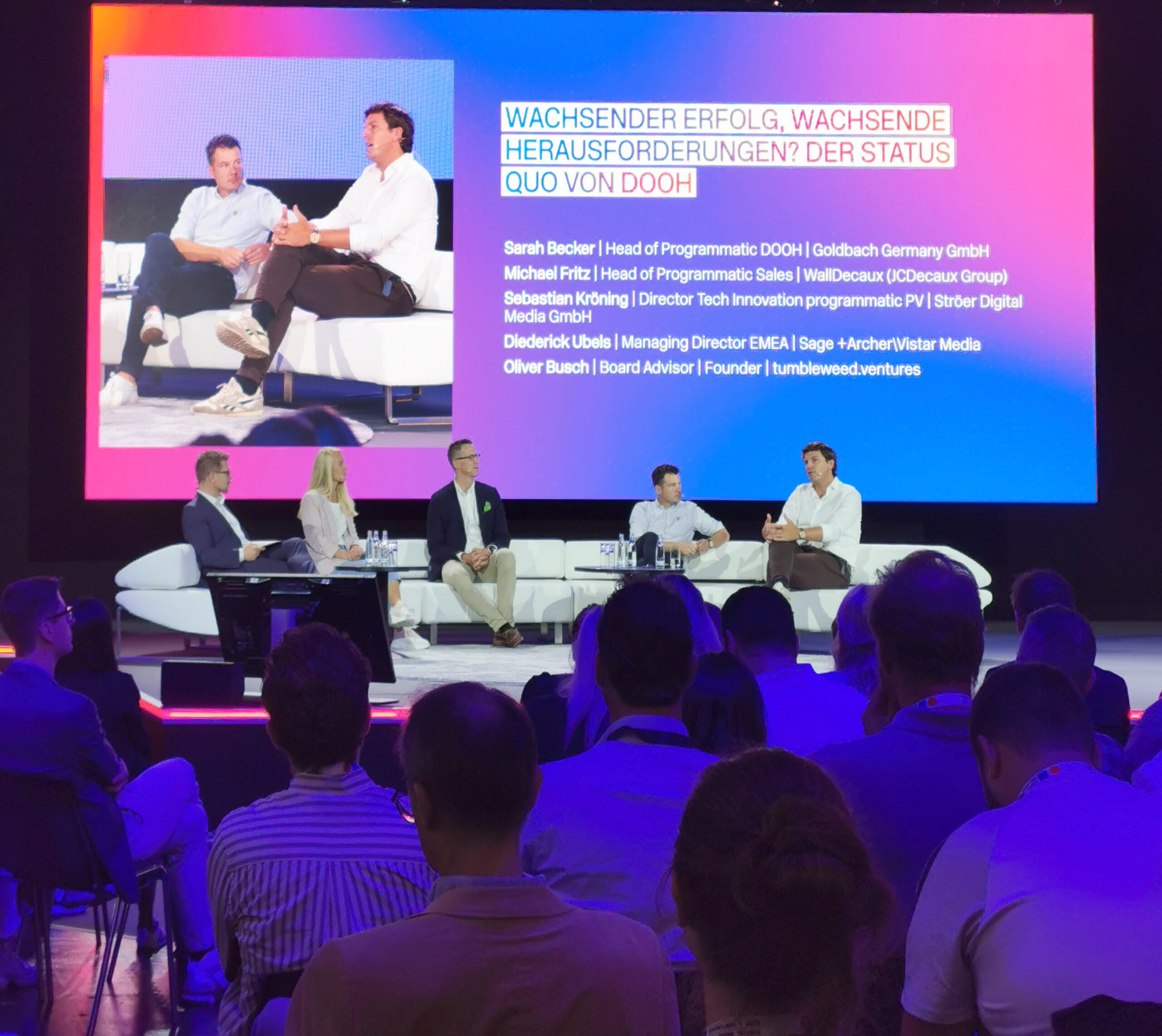 DOOH discussion at DMEXCO 2023, source: e-dialog / photo from the lecture at DMEXCO 2023
In-game audio
The so-called casual gamers are an important target group for many brands. According to a study by RMS, 74% of Germans play mobile games, their average age is 36 and the distribution between male and female gamers is almost equal. There is now also the option to address casual gamers through audio advertising while playing. The advantage is that the audio advertising happens unobtrusively, without interrupting the game, thereby creating a better user experience. There are two types of in-game audio ads. The first variant is InGame Audio Rewarded Ads, which the user watches in order to receive a reward and thus associates the advertising with something positive. The second option is InGame Audio Skippable Ads. Both formats are currently available in Germany and can also be booked programmatically. DOOH discussion at DMEXCO 2023, source: e-dialog / photo from the lecture at DMEXCO 2023
Attention matters
It is no longer enough to have high viewability rates and good click rates; the advertising should actually be seen by users and attract attention. Attention is THE new KPI for campaign success in digital advertising. The goal is for advertising to be seen earlier, generate emotions more quickly and stay in the user’s memory longer. With the help of artificial intelligence (AI), attention can be measured more easily and even optimized for it. The measurement is carried out using an index that analyzes whether the advertising is played in an environment and at a moment where the user is very attentive. This is based on different metrics, such as the proportion of advertising space on the screen, the visible time of the advertisement, activity and interaction of the user.
Cookieless Future with the Google Privacy Sandbox
The cookie-less future is already here! On September 21st, Google announced that 1% of 3rd party cookies would disappear in just 100 days. At the same time, they announced that 100% of Google Chrome browsers are already equipped with Privacy Sandbox technology. With this new technology and identifiers, the privacy of consumers should be significantly increased and at the same time tracking should be made possible without any 3rd party cookies.
More information aboutPrivacy Sandbox and what exactly it includes can be found here.
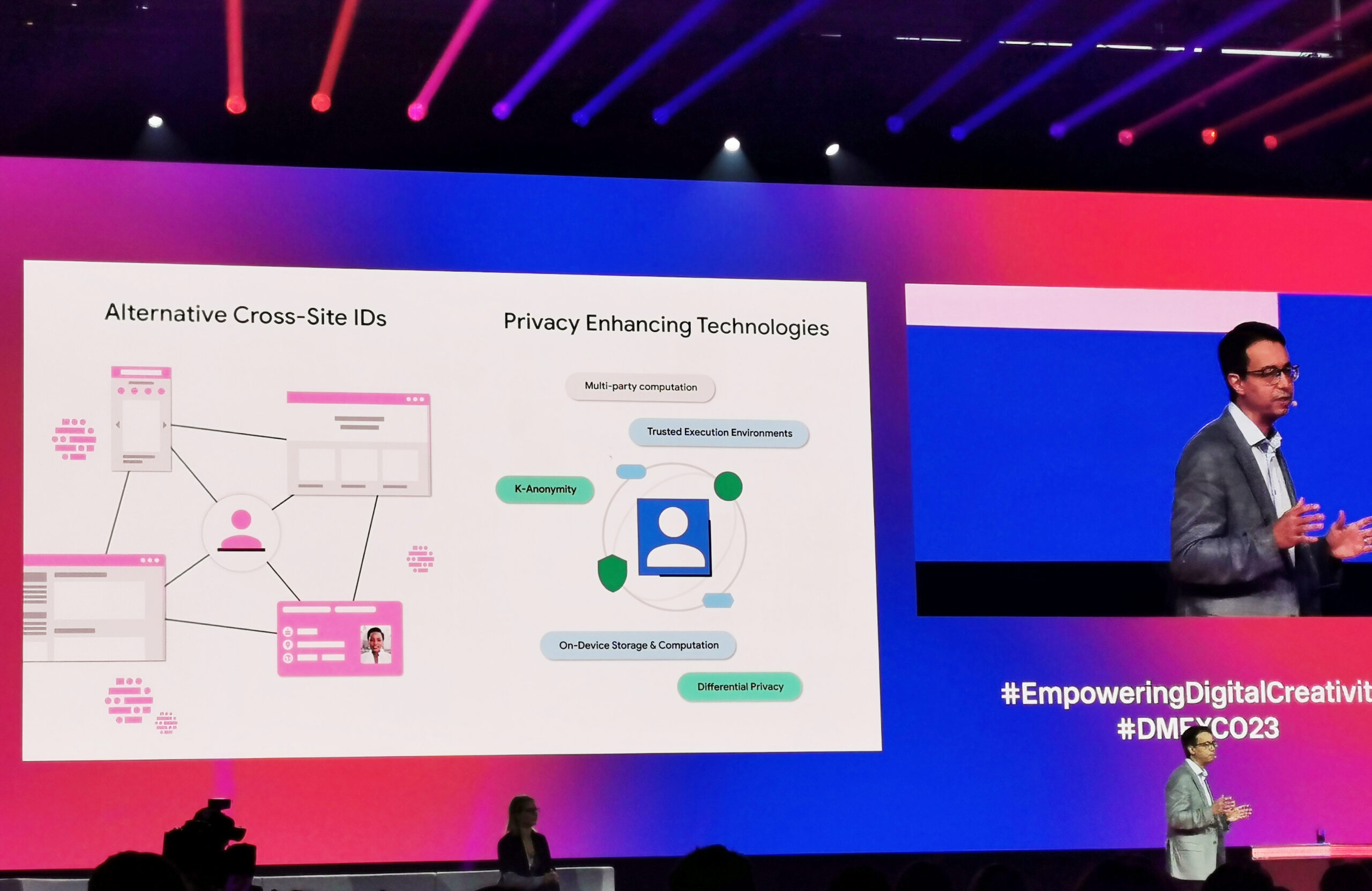 Google Privacy Sandbox, source: e-dialog / photo from the lecture at DMEXCO 2023
Sustainability in digital advertising
A very important and rapidly growing topic in the digital marketing industry is sustainability. The sense of responsibility in companies has increased significantly in recent years. While in 2021 only just under 15% of companies took sustainability into account in their media planning, in 2022 it was already 33% of the companies surveyed. (Source: OMG Momentum)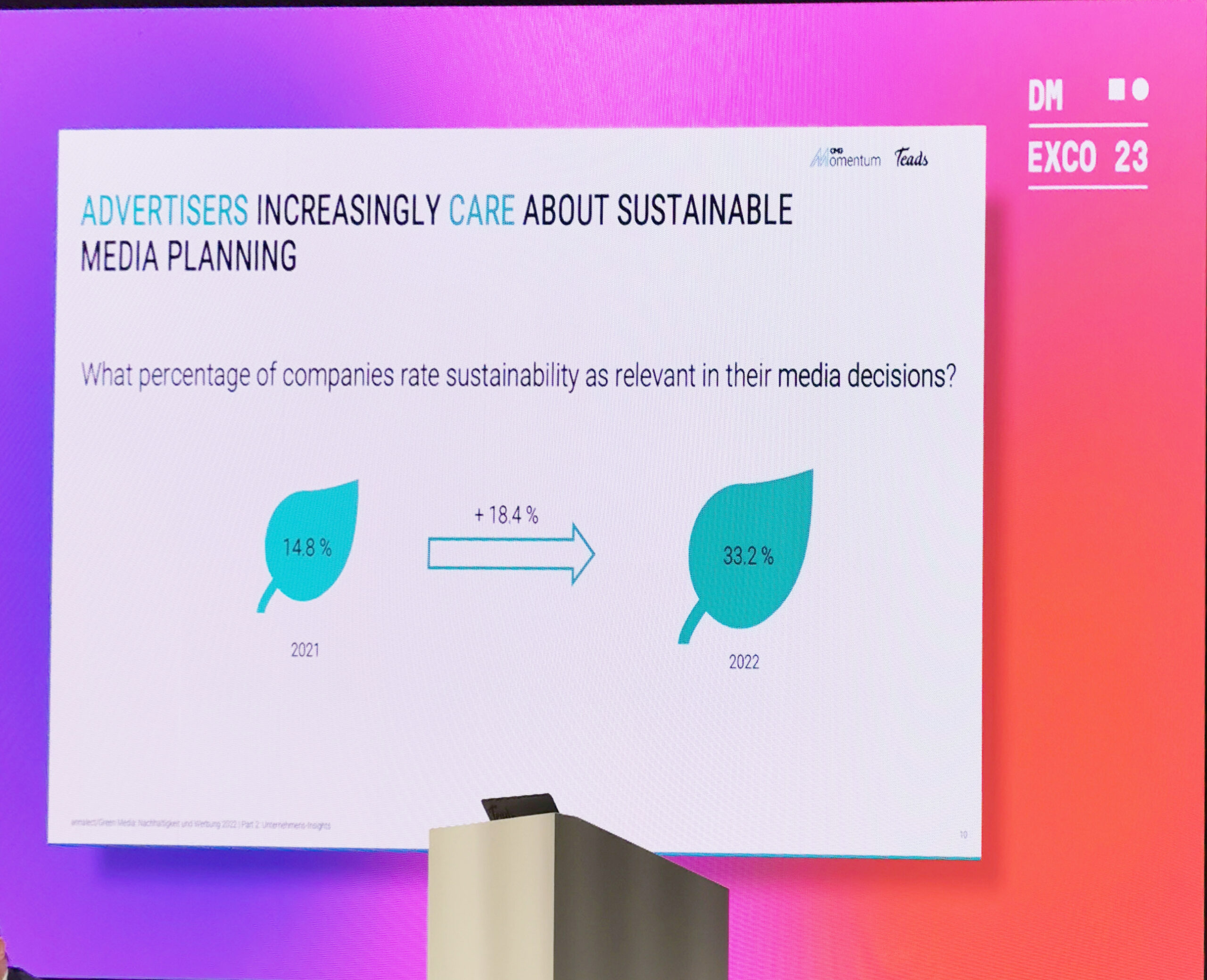
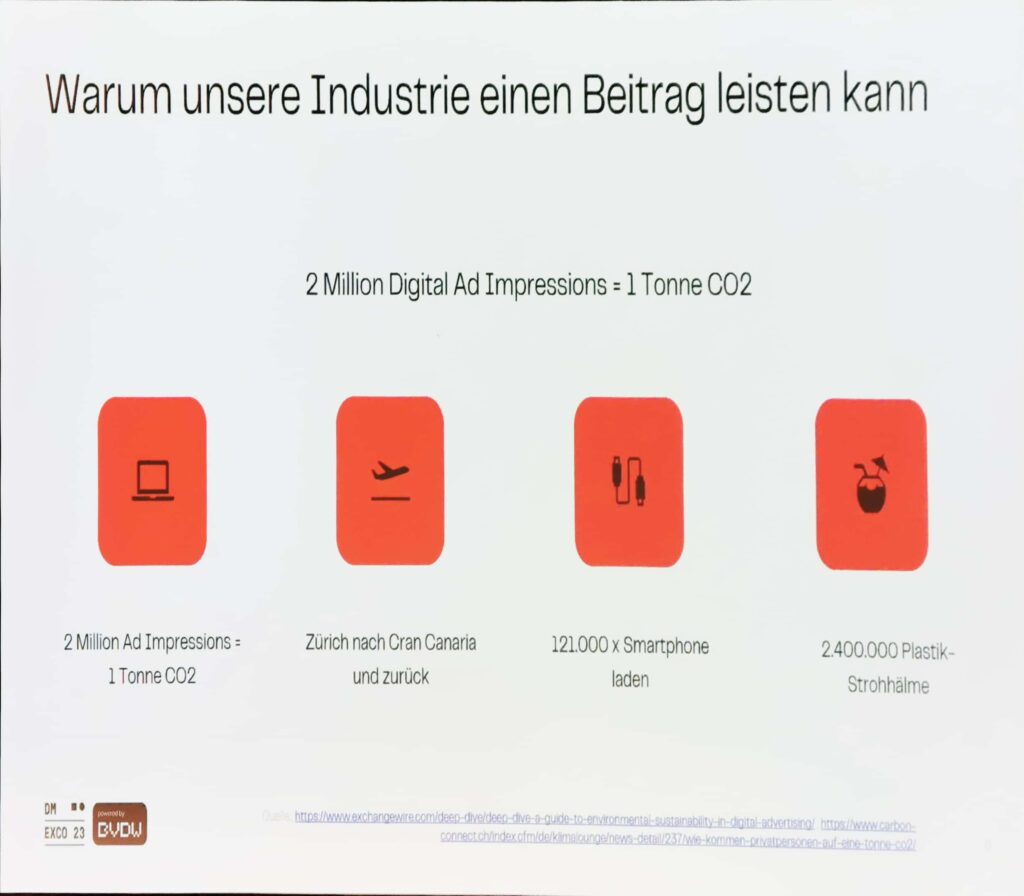 Sustainability awareness among companies & Why our industry can make a contribution, source: e-dialog / photos from the lecture at DMEXCO 2023
How important this topic is in the digital marketing industry is shown by the fact that the digital world causes more CO2 emissions than, for example, the aviation industry. Two million digital ad impressions even generate one ton of CO2 emissions. This corresponds to a return flight from Zurich to Gran Canaria (source: BVDW). When it comes to emissions, a distinction is made between Scope 1, 2 and 3, with Scope 3 taking up a large proportion in the media industry. These include indirect emissions of a company that arise in the value chain, such as server energy, device energy, ad production or data transfer energy. According to WPP Group’s own study, 98% of its emissions are Scope 3 emissions and more than half of them (55%) arise from media buying.But what can companies do about it?First and foremost, as a company you can look at the direct and indirect emissions from Scope 1 and 2 and consider how you can act more sustainably. On the one hand, this includes emissions that arise directly at the company’s location, such as heating and coolants or the company’s own vehicle fleet. On the other hand, indirect emissions such as electricity or district heating can also be considered. However, Scope 3 emissions are difficult to influence and to do this you would have to look at the entire supply chain in detail. Here it is advisable to enter into collaborations with the right partners and work towards a common goal. Sustainable media purchasing means sourcing high-quality inventory that produces the lowest CO2 emissions, using efficient algorithms and perfecting frequency capping. The first campaign tests show that a sustainable strategy does not have to come at the expense of performance. On the contrary, the performance could even be improved. (Source: GroupM study)
A sustainable strategy is not about being perfect and you should therefore not be afraid of green shaming, said Holger Thalheimer from Omnicom Media Group Germany. It’s about taking a step in the right direction, testing and continually learning from it.
Conclusion:
This year’s DMEXCO was innovative, full of inspiration and exciting discussions about the digital industry. In this blog article we have taken a look back and summarized the most important insights for us. What were your highlights from DMEXCO 2023?